Prepare Black Friday pages by assigning each page a clear buying job, confirming the offer and checking the complete mobile purchase path. Keep an established seasonal URL when its purpose remains the same. Measure consistent search data afterward, and evaluate discounts against contribution before promoting them.
In this article
Prepare your store’s SEO pages for Black Friday 2026 by checking three things together: the page’s buying purpose, the offer it can honestly present and the destination a visitor reaches. Publishing a promotional title before the stock, prices and checkout conditions are ready creates a weak purchase journey even if the page receives search visibility.
Black Friday falls on Friday, 27 November 2026; Cyber Monday follows on Monday, 30 November. These dates are shown in the November 2026 calendar. A merchant’s promotion may use different dates. Publish its actual start, end and time zone rather than implying that the whole market follows one offer schedule.
Give category, product and campaign pages different jobs
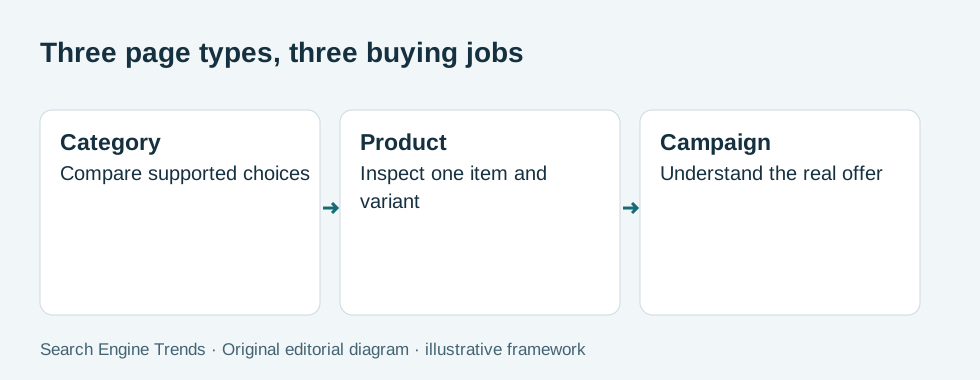
Start with a page inventory. A category helps shoppers compare a supported selection. A product page explains the particular item and its available variants. A seasonal campaign page brings together a defined offer. These pages can link to each other without repeating the same promotional paragraph.
For a hypothetical desk-accessory store, the category might help shoppers compare organisers by footprint and included compartments. A product page should show the selected organiser’s dimensions, materials and stock. The Black Friday page can explain which items qualify for a genuine campaign and direct visitors to those items.
Record the page type, current URL, purpose, offer dependency and missing evidence. If a category already answers the selection question well, improve its availability information instead of launching another category with “Black Friday” added to its name.
A campaign page must also work when the campaign is inactive. Explain whether details are forthcoming or the offer has ended, and provide a relevant path to currently available products. An expired percentage displayed as a live saving makes the page misleading.
Reuse an established seasonal URL when the purpose remains stable
Google’s deal-page guidance recommends preparing pages early and reusing the same seasonal URL across years. Apply that guidance to an enduring campaign purpose. A stable Black Friday selection can be refreshed; an unrelated product launch should not inherit a previous campaign page merely because the old URL has links.
Review existing links before making a structural change. If last year’s campaign still has a suitable destination, update its dates and supported products. If the page no longer represents a service the business provides, decide its replacement based on user relevance, not a desire to preserve every historical click.
Keep internal links descriptive. A category link promising “desk organisers in the November offer” should lead to that selection, not an empty collection or a generic homepage. Check navigation, email destinations and campaign banners against the same page inventory.
Use the Q4 preparation hub to organise the review sequence. For an international store, inspect each language and market’s actual promotion separately. An English offer does not establish that its discount, currency or delivery conditions apply to the French destination.
Rewrite titles around the real selection and offer
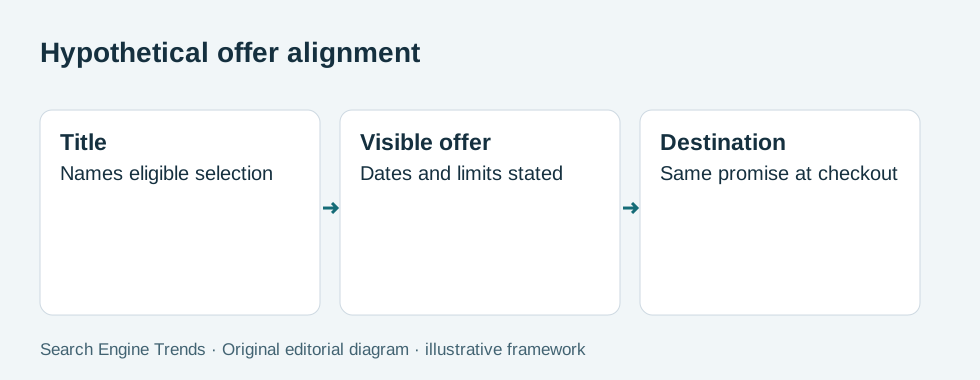
A useful title helps a shopper understand the page before visiting. In a hypothetical example, “Huge Deals! Best Black Friday Sale!” could become “Black Friday Desk Organisers: Eligible Styles and Offers”. This is an editorial before-and-after example; no click-through improvement has been measured.
Google’s title-link documentation recommends concise descriptive titles and explains that Google may use several page signals to generate the displayed title. Align the title element, main heading and visible campaign information. Updating only the title while retaining an old heading leaves inconsistent signals.
Write the description from the page’s actual content. Name the selection, useful buying criteria and relevant offer conditions. Do not insert “up to 70% off” unless the claim is accurate, substantiated and presented with its proper scope.
Inspect the main image in context. Does it show eligible products or a generic scene that could imply a wider offer? A banner depicting a bundle should not lead to a single-item page unless that distinction is clear. Mobile cropping can remove qualifying text, so check the rendered result rather than the original design file alone.
Check whether the discount supports a viable order
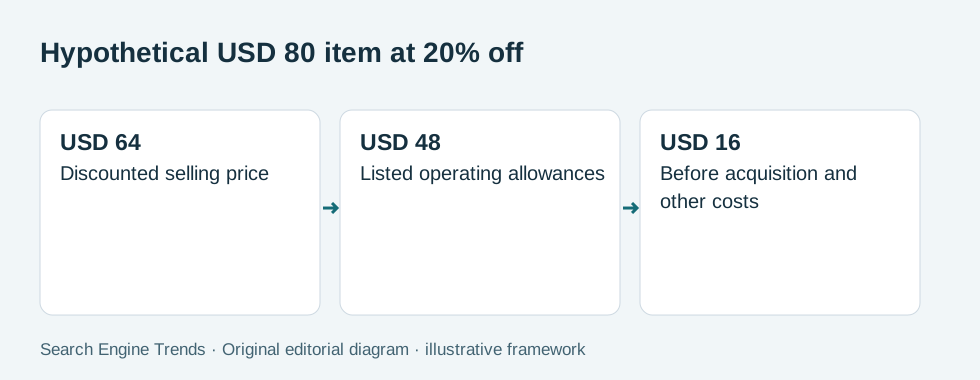
Search visibility does not fix a loss-making promotion. Consider a hypothetical item sold for USD 80 before a 20% discount. The reduced price is USD 64. All figures below are assumptions for the exercise, not supplier quotes or payment-provider rates.
| Hypothetical per-order item | USD |
|---|---|
| Discounted selling price | 64 |
| Product cost | −30 |
| Fulfilment and packaging | −7 |
| Shipping subsidy | −6 |
| Payment cost allowance | −2 |
| Expected support and refund allowance | −3 |
| Remaining contribution before acquisition and other costs | 16 |
The original-price version would leave USD 32 under the same listed cost assumptions. The discount reduces that contribution by USD 16. If an assumed acquisition cost is USD 12, the discounted order leaves USD 4 before other costs; a USD 20 acquisition cost would exceed the USD 16 available contribution.
This model does not predict demand or account for every tax treatment. Use the store’s real cost basis, actual fees and applicable tax handling before making a commercial decision. Shopify’s promotions documentation is a platform starting point, not evidence that any particular campaign will be profitable.
Use the business tools to structure the comparison and the resources to organise the supporting records. Clearly distinguish a planning worksheet from a completed calculation based on the merchant’s invoices.
Run the page review through a mobile purchase path
Open the intended page directly on a narrow screen. Select an eligible variant, inspect the current price, enter a supported delivery destination and confirm that the applicable offer behaves as described. Also inspect an excluded product and an unsupported address so that the normal journey does not conceal boundary errors.
Check that the intended page is accessible to crawlers and review its indexing evidence through the store’s appropriate tools. Keep these separate from the visual review: a page can look correct to staff while presenting an unintended canonical or access restriction.
Black Friday page checklist
- Assign category, product and campaign purposes.
- Verify the actual promotion dates, market and time zone.
- Keep the seasonal URL only when its intent remains suitable.
- Align title, heading, image and visible offer.
- Confirm variant availability and destination eligibility.
- Review crawl and indexing evidence.
- Complete normal and excluded mobile basket cases.
- Reconcile search performance and retained order contribution after the campaign.
Save a dated record of major changes before the sale. When reviewing results, compare consistent date ranges and markets, and annotate price or stock changes. A CTR difference alongside a discount is not proof that the title change caused it.
FAQ
Must every product have a separate Black Friday page?
No. Existing product pages can carry the applicable offer while a campaign page explains its scope. Another URL needs a distinct useful purpose.
Should the year appear in the URL?
A recurring campaign can use an enduring URL and update its visible year. Make that decision around continuity of purpose and existing navigation, rather than creating annual duplicates automatically.
Can a better title guarantee a higher CTR?
No. The displayed title and audience context can vary. Record the change and compare consistent reporting evidence without promising or inventing an uplift.

SEO for Your Online Store
Explore this related DIY Marketing Guide guide to work further on the method. DIY is part of our business group; contents, language and price are shown on its store.
See the English guide