Inventory pages and templates, check claims in body text and metadata, assign corrections and inspect the published result. Google’s October 1 guidance clarifies that review without announcing an automatic AI penalty.

In this article
- An AI content review needs to cover the whole page
- Turn 100 pages into a usable inventory
- Match each claim to a specific piece of evidence
- Assess added value without inventing a Google score
- Trace recurring problems back to their template
- Start with a defined batch and expand when defects repeat
- Close each action with evidence from the published page
- Frequently asked questions
An AI content review needs to cover the whole page
To review AI content across a 100-page publication, build an inventory, inspect claims in the body and metadata, and record a decision for each issue. Reading the article alone can miss an exaggerated title, an outdated description or structured data that invents a qualification. The workflow below organizes that review; it does not predict search rankings.
The Google changelog for October 1, 2026 announces additions to its AI content guidance using the Quality Raters Guidelines. The current guide refers to sections 4.6.5 and 4.6.6 and stresses manual checks, including titles, descriptions, structured data and image alt text. It also explains that raters' scores do not directly influence rankings.
Our example publication is fictional: 40 guides, 35 service pages and 25 news articles. Its page counts, errors and decisions illustrate a proposed workflow. They are not findings from a client audit or evidence of a measured traffic improvement.
Turn 100 pages into a usable inventory
Export URLs from the CMS and assign a template family to each one. Record its title, reader question, last review date, responsible editor and known use of automated generation. A checked box marked “reviewed” needs a date and an accountable person. An old publication status provides neither.
Add a field for information likely to change. A launch announcement needs a different check from an established process. A service page might describe current terms in its body while an older promotional panel still carries an expired offer. The inventory gives reviewers a place to record these differences.
Preserve the starting versions. If you find a template defect, you can identify affected pages and compare them after correction. Keep excluded URLs in the file with a reason, such as an existing redirect, a duplicate already consolidated or a document reserved for a separate review.
Use the principles in SEO reporting that drives decisions to keep this inventory practical. The deliverable is a set of assigned actions with evidence. A large error count is less useful when nobody can tell which change to make next.
Match each claim to a specific piece of evidence
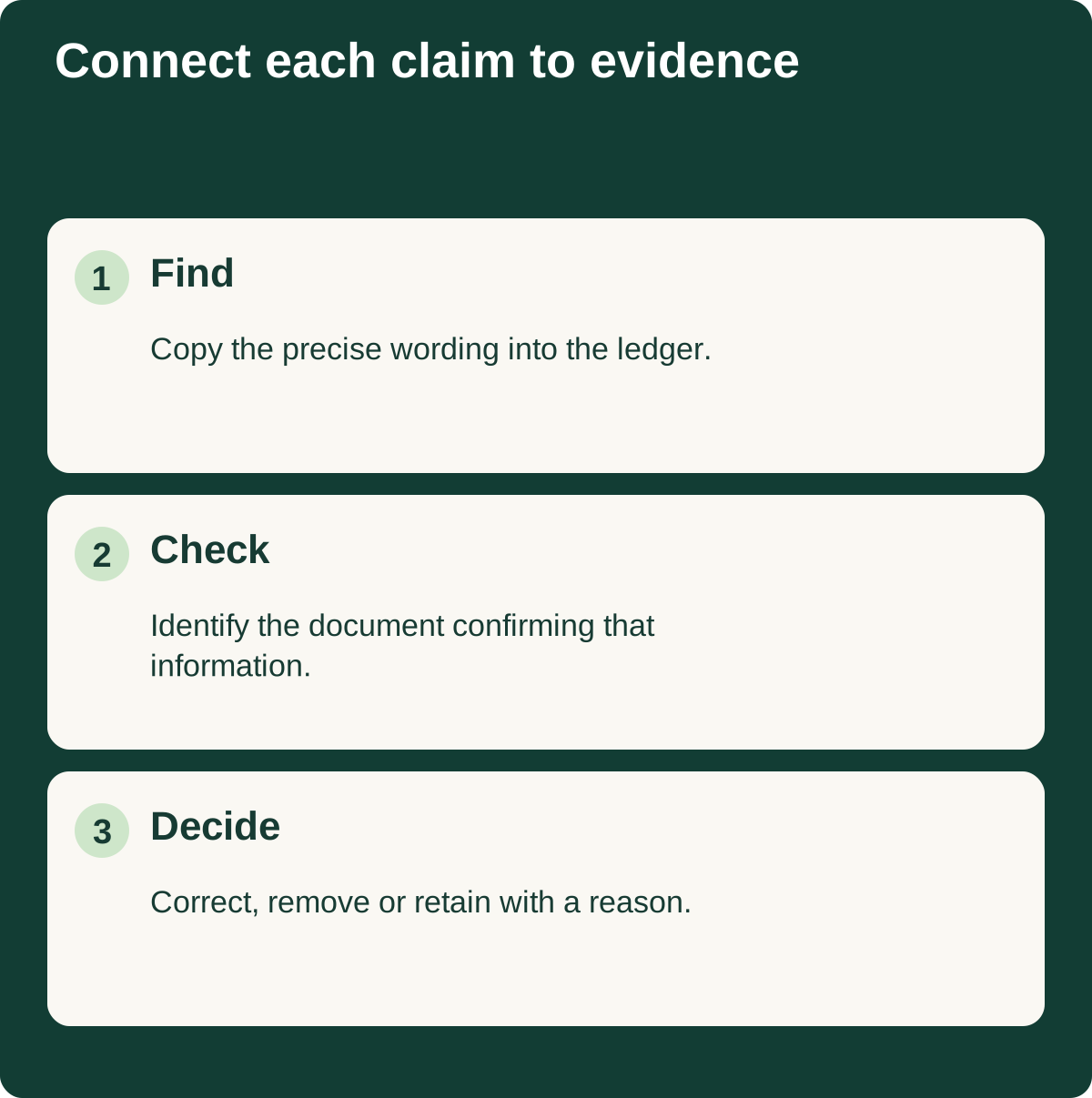
Consider the sentence “this service includes thirty days of support.” The relevant evidence is the current offer description or an approved commercial term. General documentation explaining support does not establish what this particular business includes.
Apply that distinction to figures, dates, qualifications, reviews, features and examples. Copy the precise claim into your ledger. Writing “reliability issue” leaves the editor to locate the sentence, interpret the problem and begin the investigation again.
| Fictional page element | Claim being made | Proposed check | Illustrative decision |
|---|---|---|---|
| Service title | Thirty days of support | Current offer terms | State the confirmed support period |
| Search description | Available free | Access conditions | Remove when purchase is required |
| Photograph alt text | Locally handmade | Image and product evidence | Describe only confirmed information |
| Article markup | Certified expert author | Identity and qualification | Correct the unsupported credential |
Distinguish unavailable public evidence from evidence that does not exist. An internal document might confirm a service term without being suitable for publication. The responsible person can verify it and approve accurate public wording. Missing evidence calls for correction or removal, rather than an optimistic guess.
Assess added value without inventing a Google score
A page can be accurate and still fail to help its reader. Our proposed review asks three questions about each guide: what decision does it support, which example makes that decision easier, and what does the page add beyond a generic summary? These are our editorial prompts, not an official scoring system.
The linked Quality Raters Guidelines PDF is dated September 11, 2025. It discusses content with little effort, originality and added value. October 1 dates the updated guide referring to it, rather than a newly published PDF or an automatic penalty for every use of AI assistance.
In our fictional publication, a guide to requesting a quote could include a worksheet, an incomplete request and a corrected version. These additions should solve a real reader problem. An empty table or several paragraphs repeating the opening cannot substitute for a useful explanation.
Write down the reader's next action before approving an enrichment. If the guide helps someone assemble the information a supplier needs, each example should support that task. Remove decorative sections that increase the word count while leaving the task unresolved.
Trace recurring problems back to their template
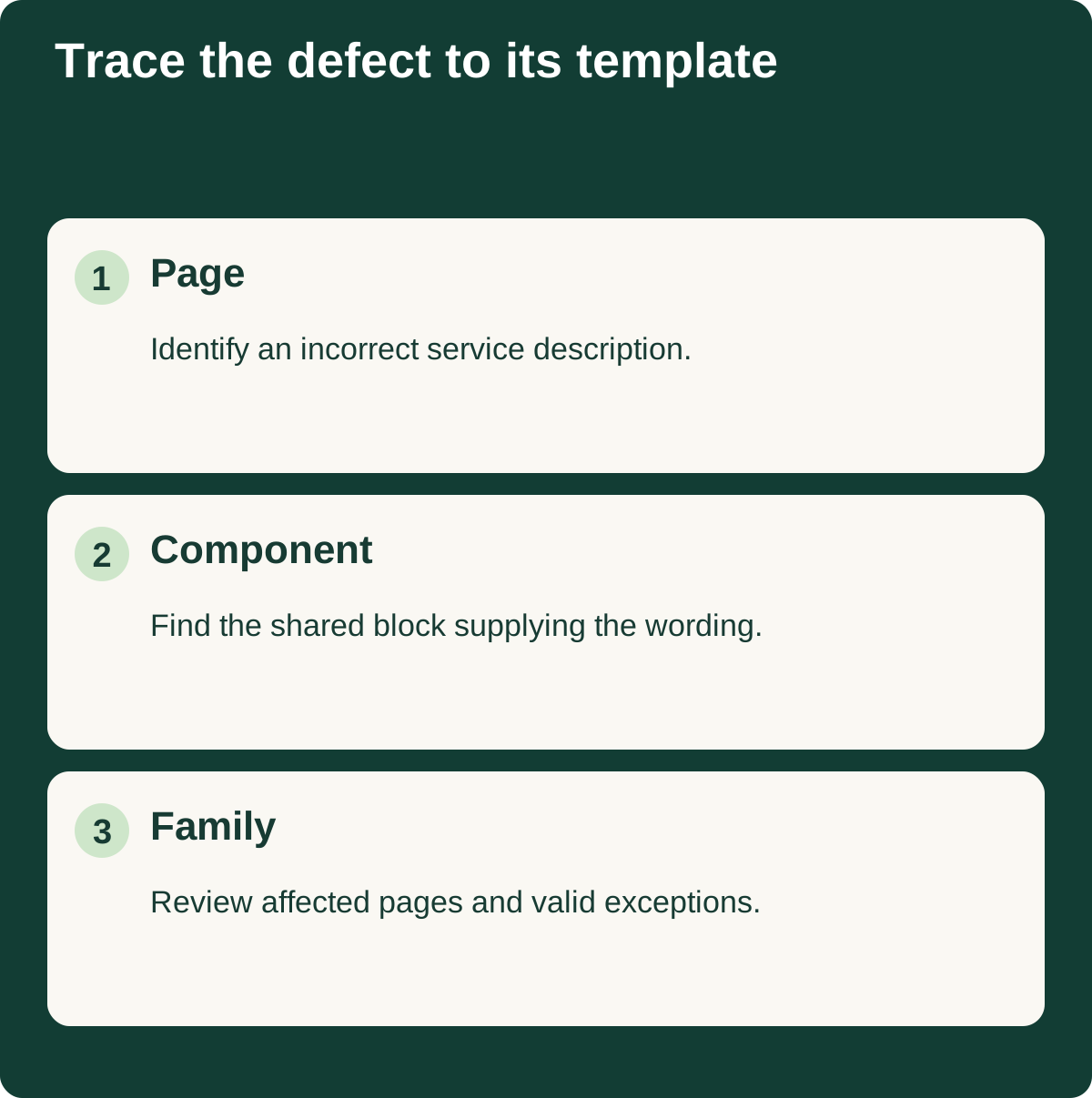
Suppose eight service pages share a description offering a free consultation. Reviewing each page reveals eight instances, but the repair should reach the component that supplies the wording. Then check all pages using that component, including ones outside the initial sample.
Inspect generated titles, author panels, benefits lists, commercial blocks and structured data. A template change can fix several problems and introduce another if it overwrites a legitimate exception. Keep documented differences between offers rather than making every page identical for convenience.
For imagery, compare the alt text with the image actually displayed. A recently replaced generic photograph might retain wording describing a specific product. Review the final image-text pairing on the page, beyond what the media library says about its original file.
Assign ownership by the information involved. An editor can correct wording, the offer owner confirms commercial terms, and the CMS maintainer repairs the shared component. One reviewer does not have to pretend to know all three domains to move the audit forward.
Start with a defined batch and expand when defects repeat
Our suggested first batch is fifteen pages: five guides, five services and five news pieces, covering the different templates. This is a practical starting point rather than a statistically representative sample. It tests whether your ledger produces corrections the team can actually complete.
When a defect repeats, examine its whole template family. When it is isolated, correct the page and continue the planned review. Claims that could mislead a commercial decision deserve attention before small stylistic improvements. State that priority explicitly so reviewers do not spend the whole session polishing introductions.
Choose an action such as correct, enrich, consolidate or retain. Give it an owner and an achievable deadline. A page retained without changes also needs a reason: its information is verified, it satisfies its question and no competing page deserves consolidation.
The distinction between mentions, citations and clicks remains useful when you later discuss discovery. A completed editorial review establishes what was checked. It cannot turn every corrected page into a proven AI citation success.
Close each action with evidence from the published page
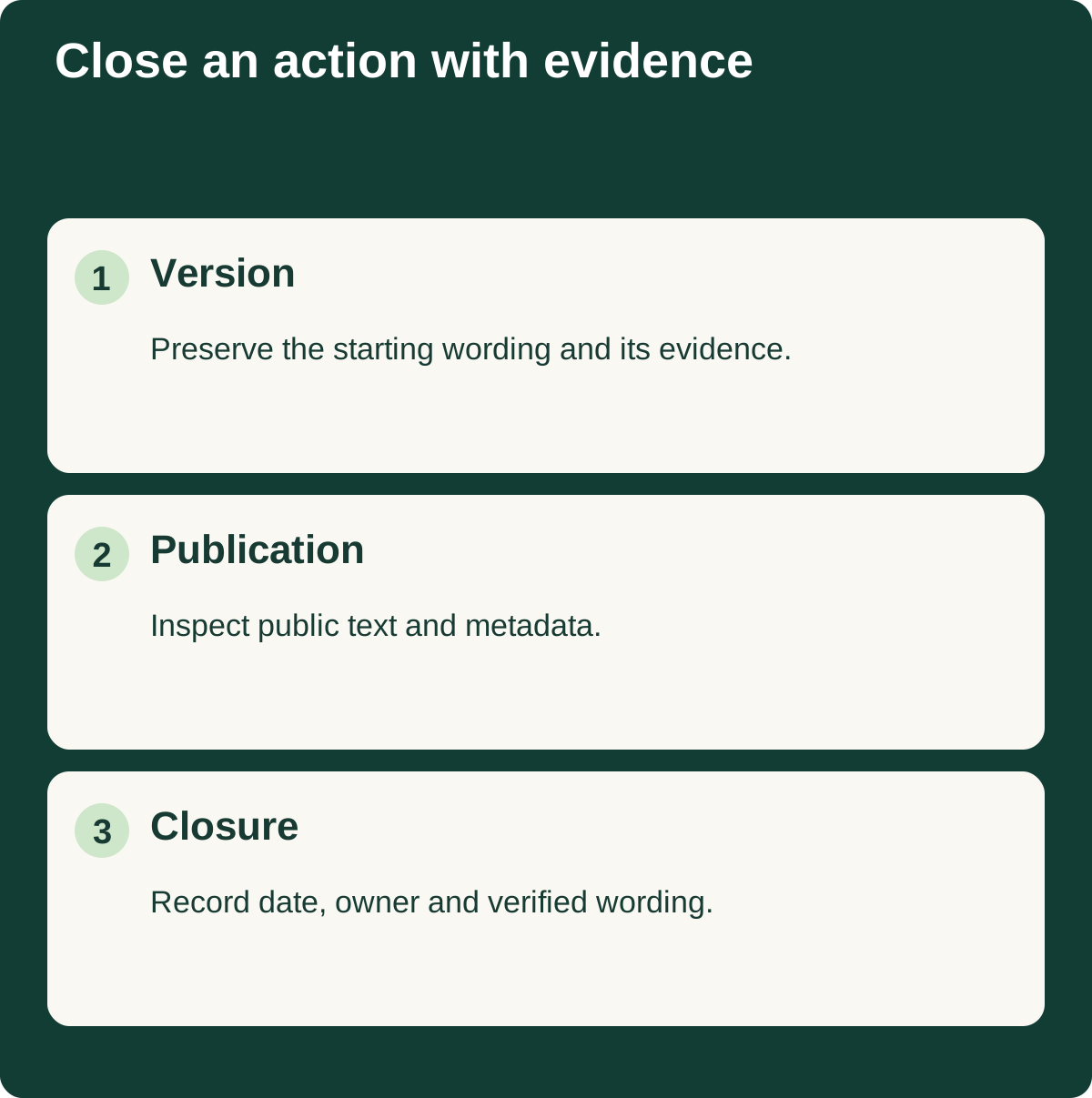
Before closing a task, compare the public page with the ledger. Check the affected body text, final title, description, images and markup. A fix saved in a draft does not show that the production template has updated successfully.
Record the verification date and corrected wording. If you later examine impressions or conversions, preserve the period and note other site changes. Movement following an edit does not establish its cause. The workflow's first measurable result is the number of claims verified and defects actually resolved.
Keep a short exception list for unresolved issues. Name the missing fact and its owner instead of repeatedly marking the page “pending.” If a commercial claim remains unsupported, agree on temporary accurate wording and record what evidence would allow a more specific version later.
Start with one template family and a review batch your team can finish. Expand once reviewers can carry actions from discovery to resolution. The website audit guide can help structure that handover without turning the process into a dashboard nobody uses.
Frequently asked questions
Should we calculate how much of each page was AI generated?
This workflow checks information and usefulness. A detector's percentage does not replace reliable evidence or inspection of the published page. Document known tool usage without treating an estimate as proof of authorship.
Does adding a source automatically make the page useful?
A source lets the reader check a claim when it genuinely supports it. The page still needs to explain something or support a decision. A reference list alone does not complete that job.
Do fifteen reviewed pages validate the entire publication?
No. The first batch tests the process and reveals shared problems. It cannot establish that the remaining 85 pages contain no errors. Keep the actual reviewed scope visible in your report.
Does this review guarantee more search traffic?
It improves editorial traceability and corrects defective information. Acquisition also depends on circumstances beyond this review. Report verified quality improvements separately from traffic and business results.