
Connect campaign links to articles and orders using stable public UTM names, supported ecommerce events and order-ledger reconciliation. Keep acquisition and attribution scopes separate, exclude personal information from URLs and report refunds before making a budget decision.
In this article
Connect the campaign link to a reconciled order
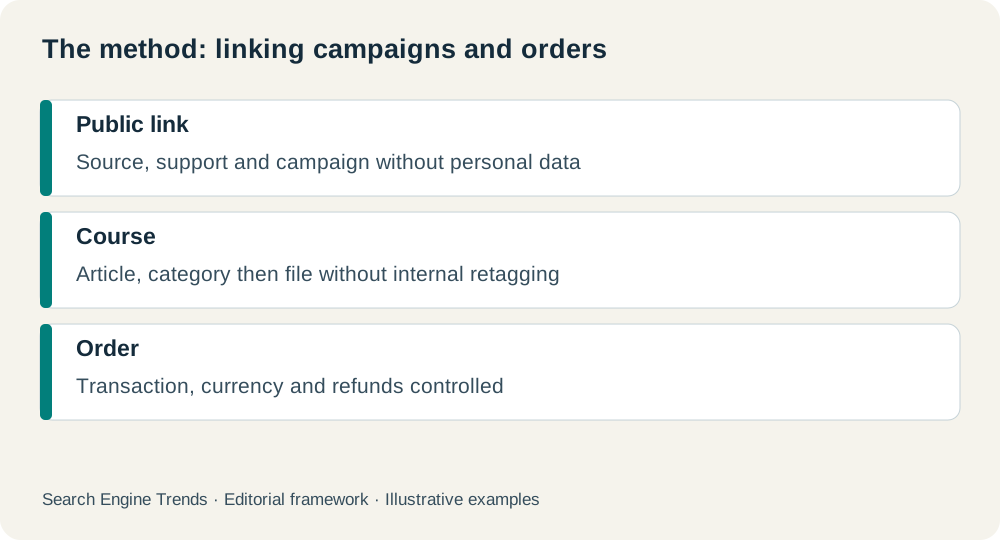
To link campaigns and orders, give campaigns a stable name, check incoming links, and reconcile observed purchases with your business system. A store targeting Ottawa can follow this journey in CAD without placing personal data in the URLs. The goal is to understand which actions are associated with orders, with the limitations of digital attribution.
A reader may consult an article during one visit and purchase during a later visit. So the last link before purchasing doesn't tell the whole story. Keep entry source, viewed content and the purchase event separately within the limits of your measurement setup.
The figures given below are hypothetical. They explain a checking method and do not represent any local campaign performance. A good tracking table should show refunds, missing data and the attribution convention before being used to allocate a budget.
Create a readable UTM convention
Set a public source, medium, and campaign name, using a consistent naming format. You can add a variation ID to distinguish two messages from the same campaign. Avoid names that change depending on who is building the link; capitalization or spelling can fragment reports.
The register stores the destination URL, parameters, launch date and promoted content. It does not contain a customer name in the link. A campaign ID does not need to become a recipient ID: the URL can be shared or saved in logs accessible to others.
Google documents the campaign parameters used to collect this information. Check the recognised parameters in your configuration and check whether they are retained after redirects. The presence of a UTM in a campaign file does not prove that it actually reaches the final page or analytics tool.
A hypothetical article then product journey
Let's imagine a campaign called storage-guide-autumn, distributed by a partner on a public link. The destination is an article about storage; a contextual link leads to a category and then a product page. The campaign name identifies the promotional activity, without claiming to follow each reader individually.
| Illustrative step | Useful information | Control |
|---|---|---|
| Partner link | Source and campaign | Public campaign parameters |
| Article | Article topic | Correct destination |
| Category | Products compared | Accessible navigation |
| Product page | Selected product reference | Identifiable variant |
| Order | Amount and transaction | Order reconciliation |
Don't add campaign UTMs to every internal link. You risk confusing the acquisition source by reclassifying the visit when it moves from the article to the product. Internal steps must be measured with the appropriate events and dimensions, while maintaining the context of arrival.
Check purchase and refund records
An order must have a stable transaction ID in events that require it. Check values and currency, without confusing product revenue and an order total that includes additional charges. The Google Analytics technical documentation describes purchase and refund events; your implementation must follow their applicable parameters.
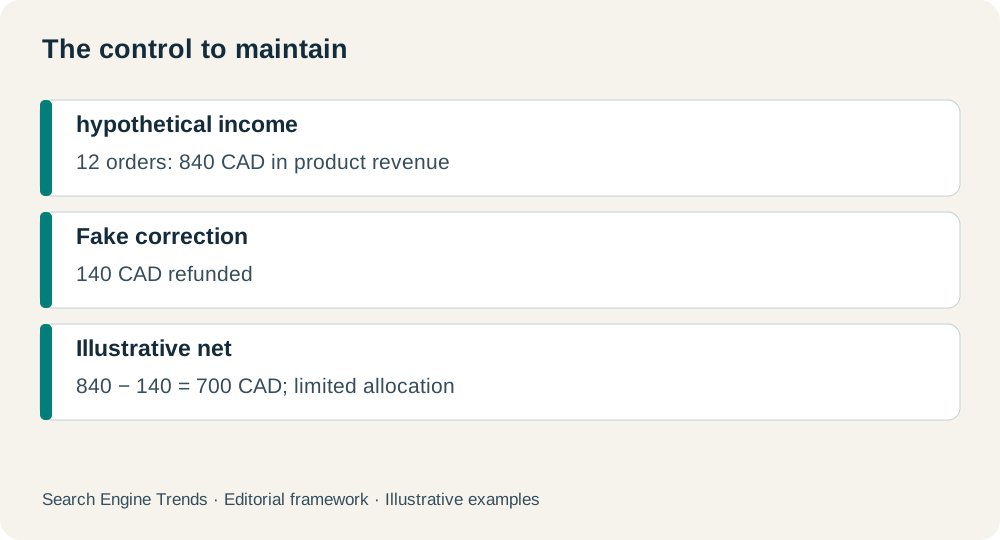
In a hypothetical example, twelve orders represent 840 CAD of product revenue. Two refunds total 140 CAD. The net revenue used in our table becomes 700 CAD. If a 70 CAD order is sent to the tool twice, the report may overestimate the result until the duplication is properly processed.
Reconcile analytics events with an anonymised sample from the order ledger. Test confirmation-page reloads, return visits and partial refunds. Controls must use a suitable environment or mode, without requiring unnecessary actual payment to demonstrate operation.
Choose an explicit attribution convention
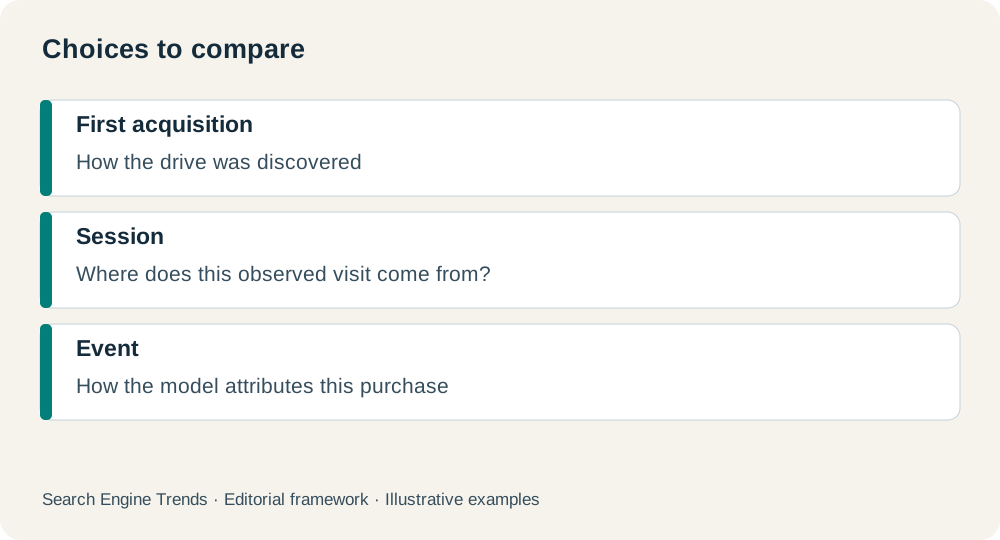
Distinguish between first acquisition, session and event attribution reports. Their questions are different. A reader who arrived through a partner and later returned through search can appear under two sources depending on the report. This is not necessarily a mistake; it is a difference of scope to explain.
Indicate the window and model actually used by your tool. Do not rank one campaign using last-click attribution against another using first-visit attribution. Add orders without an identifiable source rather than redistributing them proportionally by presenting them as observed.
The attribution does not demonstrate whether the campaign generated an incremental sale. To decide on a significant investment, a comparison or a suitable experiment may be necessary. The first table is used to detect an inconsistency, a weak page or a costly campaign; it should not be sold as complete proof of causation.
Review the report and preserve corrections
Define who validates corrections and who can rename a campaign. A content team and a sales team using two different campaign registers may produce incompatible totals. The reviewer needs a common campaign ID and a record of changes, without needing to receive personal data from buyers.
The review brings together published campaign links, sessions observed, useful actions, orders, net revenue and known expenses. Show counts beside rates. In one illustration, twelve purchases over 300 sessions represent 4%, but two refunds change the economic reading without necessarily erasing the initial purchase event.
Keep the corrections with date and reason. A renamed campaign, duplicate event, or late refund may change the history. The table should make it possible to understand why a figure announced the previous week differs from the final figure.
To get started, audit five public links, check a redirect, and test key events. Then choose an article linked to an offer and check the path to the order. This method produces a traceable journey without exposing customer information in campaign parameters or making your decision dependent on a single click metric.
Campaign-to-order checklist
- Review five public links for consistent source and campaign spelling.
- Follow redirects and verify the final destination.
- Keep internal navigation free of acquisition UTMs.
- Inspect a purchase event's transaction identifier, value and currency.
- Reconcile a full and partial refund with the order ledger.
- Label first-user, session and event reporting separately.
A test purchase should be excluded from live commercial reporting through the supported test setup. Record whether the test demonstrated event delivery, financial reconciliation or both; those are different checks, and a successful event alone cannot establish retained revenue.
Links and Sales FAQ
Can we put the customer's email in a UTM?
No. Parameters should describe a public campaign, not a person. A URL can be copied and saved outside of your initial control.
Why do the tools report different revenue?
Check scope, currency, refunds, duplicate transactions and attribution scope. The figures cannot be compared before this reconciliation.
Should we consider only the last article read?
It describes one step in the journey, rather than the complete acquisition history. Keep the steps observable and name the convention used to attribute the order.
Official reference consulted: Google Analytics: collecting campaigns with custom campaign URLs. The scenarios and calculations are hypothetical editorial examples, not measured results from a local business.