
A clear returns journey tells customers what has happened and what comes next. For a shop serving Birmingham, separate the request, instructions, physical receipt, assessment and financial outcome, keep partial quantities accurate, and check the applicable rules before publishing the policy.

In this article
- Give the customer an understandable case history
- Assign an event and owner to each state
- Preserve a partial return from request to closure
- Write messages around completed events
- Reconcile stock and money separately
- Design exceptions as part of the normal process
- Measure waiting stages rather than one vague speed target
- Review three representative cases before expansion
Give the customer an understandable case history
A customer should not need to interpret your order software to find out whether a return has arrived or a refund has been issued. Map the events that matter, then write a message for each transition. The internal workflow can be detailed while the customer explanation remains short and accurate.
This guide uses a fictional shop serving Birmingham. No customer case or local business has been audited. The quantities and GBP calculations are illustrative. The purpose is to design a traceable operational journey and identify unnecessary uncertainty; it does not establish legal deadlines or grounds for refusing a request.
Review the official GOV.UK returns and refunds guidance for the actual sale and circumstances. Internal labels must not replace applicable customer rights. An assessment stage is an operational event, not a general permission to suspend obligations whenever a case is inconvenient.
Assign an event and owner to each state
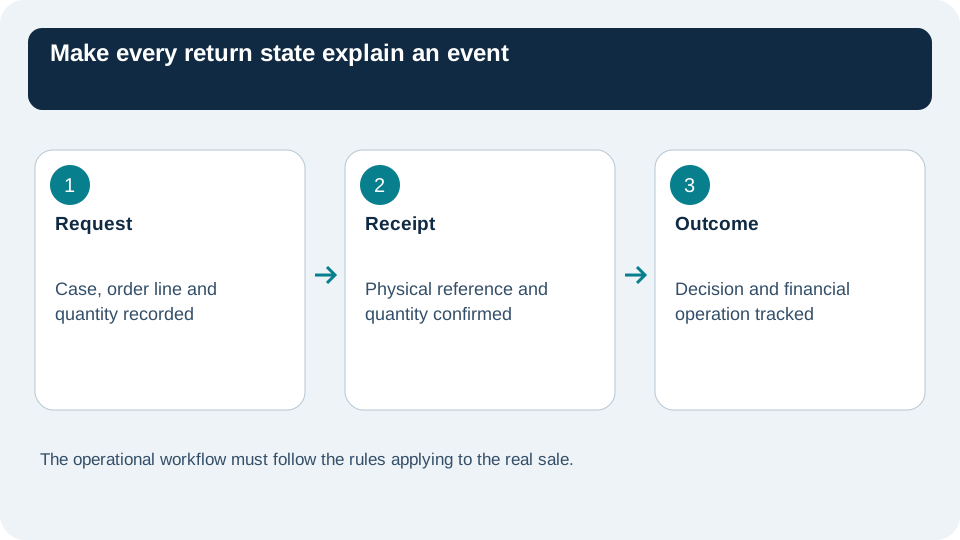
Write a trigger, owner and next step for request received, instructions sent, item received, outcome decided and financial operation issued. Close the case when the required operations are complete, not simply when someone has sent a reassuring message.
Avoid one catch-all status such as processing. It could mean the customer has not posted the parcel, the item is waiting for assessment or the refund has already been submitted. Each situation needs different information and a different action. Make the distinction visible to the team before choosing the words shown to the customer.
An owner should know what evidence allows a transition. A warehouse receipt supports physical arrival; a payment reference supports an issued transaction. A return label does not establish either. Keep the event dates separate so a later review can locate the actual waiting stage.
Preserve a partial return from request to closure
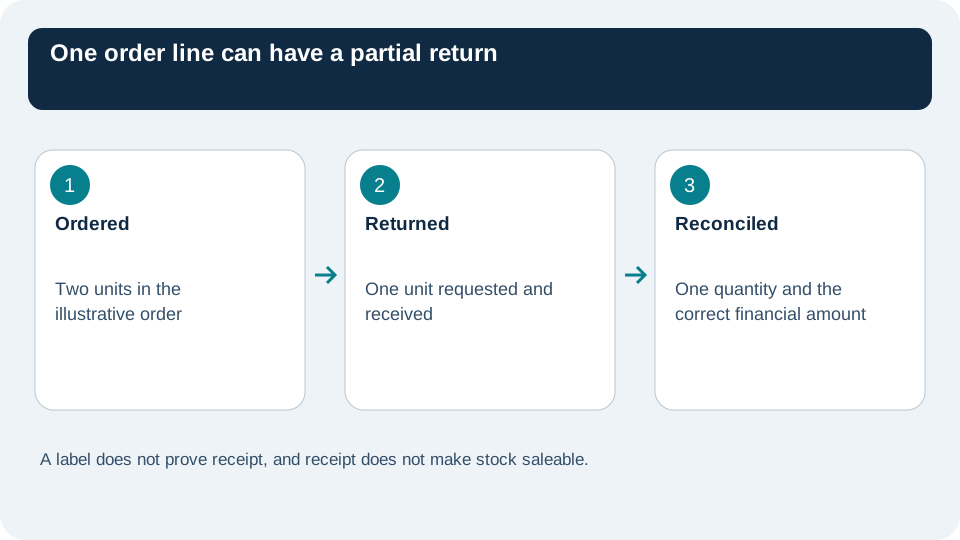
Imagine an order containing two units of one reference, with only one unit being returned. The case should identify the order line and quantity one throughout. Automatically processing the whole order could create a wrong refund and an incorrect inventory movement.
| Illustrative state | Evidence to retain | Customer information |
|---|---|---|
| Request received | Case, line and requested quantity | Request recorded |
| Instructions sent | Approved message | How to continue |
| Item received | Actual reference and quantity | Arrival confirmed |
| Outcome recorded | Decision and relevant reason | What will happen next |
| Operation issued | Financial reference | Exact transaction state |
| Case completed | Required checks finished | Closure and useful contact |
Compare the expected and received quantities before updating the case. If the parcel differs, record the discrepancy and investigate. An automatic accusation can turn a data problem into a dispute. The message should explain the check and how the customer can provide relevant information.
Write messages around completed events
The acknowledgement includes the case reference, item and quantity. Instructions explain the next action and the information genuinely needed. The receipt message confirms what physically arrived and identifies any unresolved difference. Do not request unrelated personal details simply because the form has empty fields.
For a financial outcome, distinguish the amount requested, the amount confirmed and the operation issued according to your system. A payment provider may control when an issued refund becomes visible on the customer's account. Check its current documentation before describing that stage; do not invent one timing promise for every method.
A delay message should state the known status and the next update. If the item has not been located, say what is being checked rather than implying an assessment is complete. Accurate uncertainty gives the team a useful follow-up task and prevents a later contradiction.
Reconcile stock and money separately
Physical receipt does not automatically make an item saleable. It may need assessment, repair or another disposition. A completed refund does not turn a damaged product into new inventory. Document the states used by your shop and the person permitted to change them.
For partial returns, compare order quantity, received quantity, inventory movement and financial amount. Also prepare a case with several items receiving different outcomes. One button in the software may trigger several operations, but the team still needs to understand what those operations do.
Use identifiers in shared tracking files where they are sufficient. Full addresses and payment details should not be copied into every worksheet. Check the access and retention arrangements required for the actual business. The case history needs enough information to support the work without creating unnecessary duplicate records.
Design exceptions as part of the normal process
Include scenarios for an unrecognised parcel, wrong reference, incomplete contents and a customer who cannot find the instructions. Specify who investigates and what information is needed. An exception should not disappear into a generic queue without an owner or next action.
When information is uncertain, keep that uncertainty explicit. A missing order reference may require a lookup, while a mismatch in quantity requires a physical check. These are different problems. Record the resolution and any correction made to the case so another team member can reconstruct the decision.
Check how cancelled operations are handled. If a refund attempt fails, the customer should not receive the same message as a completed transaction. If an item is moved between storage areas, the tracking record should still explain where it is. The process must follow actual evidence rather than the intended outcome.
Measure waiting stages rather than one vague speed target
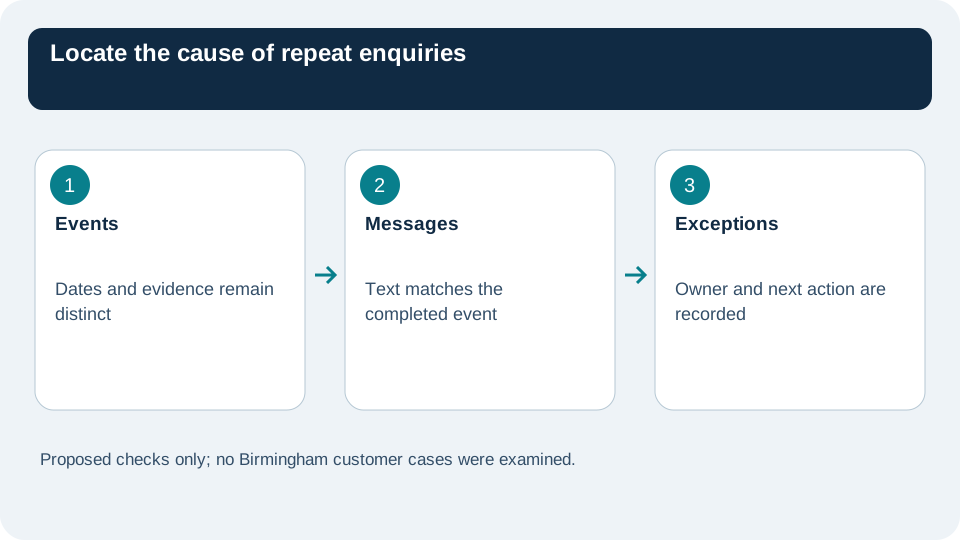
Track time between events and the number of requests for updates. A total duration can hide the stage that needs attention. Waiting before the customer posts an item differs from waiting after an assessment is complete but no message has been sent.
In an invented sample of thirty cases, five repeat enquiries concern an unclear status. Five divided by thirty is approximately 16.7%. This is a teaching example, not a Birmingham benchmark. After changing messages, compare compatible cases and inspect the reasons before attributing every difference to the new wording.
Keep unresolved cases in the denominator appropriate to the indicator. Removing difficult cases can make the process look faster without making it better. Record missing evidence as missing, and avoid a single average that merges different types of return without explanation.
Review three representative cases before expansion
Draw three anonymised or simulated histories, including a partial return and a financial exception. Check events, quantities, messages and closure operations. Ask the relevant person to review the public conditions against applicable requirements. This guide proposes those checks; none has been performed on a real shop here.
Then revise the stage that causes repeated uncertainty or quantity errors. Keep a version of the previous messages so the change can be understood. A clear returns journey improves communication because its statements follow real events, while the business continues to apply the rules relevant to each customer case.