
A delivery promise includes preparation as well as the selected carrier service. For a store serving Liverpool, define when the clock starts, verify address and basket eligibility, distinguish label creation from handover, and measure each stage against the information actually shown to the customer.
In this article
- Count the wait from the customer's order
- Define preparation for each type of basket
- Build an event calendar before announcing a date
- Test address and service eligibility at checkout
- Put exceptions where they change the decision
- Keep tracking messages tied to evidence
- Measure preparation and delivery separately
- Review a small sample against the displayed promise
Count the wait from the customer's order
The customer begins waiting when the order is accepted, not only when a carrier receives the parcel. A transit estimate therefore describes only part of the journey. The promise should explain the preparation stage, the transport service selected and any conditions that affect the start of either stage.
This guide uses fictional fulfilment scenarios for a store serving Liverpool. No current carrier rate or delivery commitment is supplied. Any GBP charges must come from the services and quotes applying to your own operation. The arithmetic below illustrates a method rather than a contractual calendar.
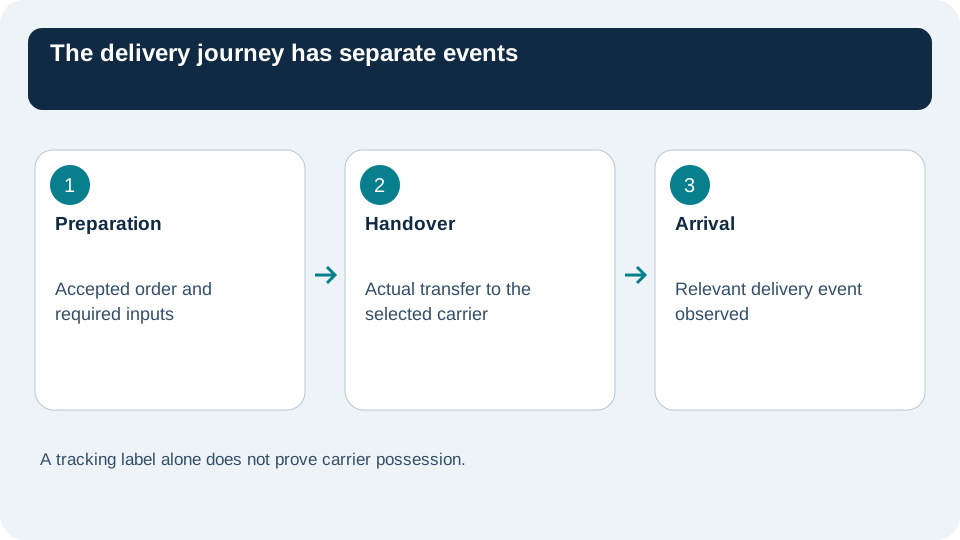
Payment, packaging, label creation, carrier handover and arrival are distinct events. Tracking information should describe the event that has actually occurred. A label and tracking number can exist before the parcel enters the carrier's possession. Do not announce dispatch solely because that number appears in the system.
Define preparation for each type of basket
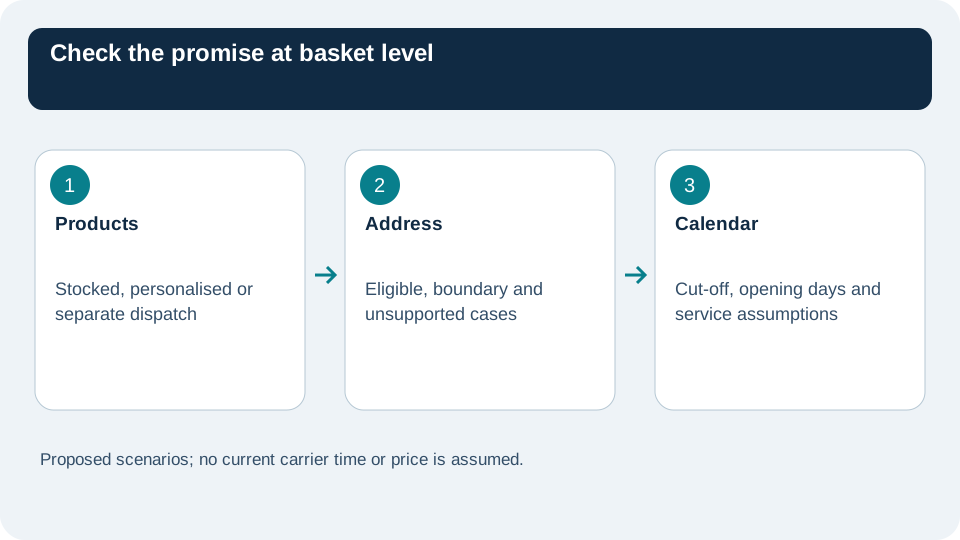
Identify stocked products, made-to-order items, personalisation and goods dispatched from another location. These situations may need different preparation rules. A basket mixing them should explain whether items wait together or travel separately, according to the actual operation.
Write the event that starts preparation: order acceptance, confirmed payment and any required customer information. A personalised product missing its text cannot follow the same ready-to-pack path as a standard item. Put important dependencies where the customer chooses the service, rather than hiding them in a distant note.
Shopify's fulfilment-time and delivery-date overview distinguishes the elements used to display delivery expectations. Review the settings available in your configuration. A fast-sounding label should not replace the preparation and transit assumptions really used at checkout.
Build an event calendar before announcing a date
Imagine an order accepted on a fictional operating day. Preparation takes one operating day, followed by two days of transport under our illustrative assumption. The simplified wait is three days of activity, not two. Actual opening days, cut-offs and carrier calendars would still need to be checked before announcing a date.
| Illustrative event | Evidence available | Accurate message |
|---|---|---|
| Order accepted | Valid order record | Preparation will begin |
| Parcel closed | Correct references gathered | Ready for handover |
| Label created | Tracking number obtained | Carrier possession not yet established |
| Carrier handover | Relevant event confirmed | Transport has begun |
| Arrival observed | Applicable delivery evidence | Arrival according to the recorded status |
A calendar should account for confirmed closures and exceptions. Do not add a preparation number and a transit number mechanically if their definitions use different days or starting points. Keep the calculation and its assumptions in the procedure so another team member can check it.
Test address and service eligibility at checkout
Prepare representative addresses: eligible, outside the zone, near a boundary and incomplete. Use permitted test information and an appropriate environment. Check which services appear, their costs and the basket restrictions. A heavy or unusual product may require a different shipping profile.
For each method, confirm the actual service behind the displayed name. A commercial label does not create an additional guarantee beyond the provider's current terms. If two services are offered, explain their verified differences rather than describing one as fast and the other as slow without a basis.
Include multi-item and multi-parcel baskets. Check what happens when a rate is unavailable. The interface should provide an understandable next action, not an arbitrary price or a service that cannot be purchased. Record the result rather than assuming a correct single-item checkout establishes all combinations.
Put exceptions where they change the decision
State the preparation cut-off with its relevant days and timezone. Buying before a displayed hour is not the same as having a parcel immediately available for handover. If orders after the cut-off enter the next cycle, explain the rule at the point where the customer evaluates delivery.
Check orders immediately before and after the boundary. The banner, checkout and confirmation should not contradict each other. If the rule depends on confirmed payment, an order with pending payment needs wording that reflects that condition. Retain an example of each scenario in the procedure.
Other exceptions should come from real constraints: a particular product, an unsupported address or a confirmed closure. The detailed policy can explain them, but the material limit should also be visible in the buying journey. A broad headline promise is not repaired by a long list the customer is unlikely to find.
Keep tracking messages tied to evidence
Prepare wording for order accepted, parcel ready, handover confirmed and delay under investigation. Each message should state what is known and what the customer can do or expect next. Avoid saying the parcel will arrive soon when its location or handover is still unknown.
When a carrier status conflicts with an internal record, investigate before changing the customer message. The team may need a collection record, a scan or another relevant event. Keep the distinction between a planned handover and a completed one. This prevents the workflow from claiming progress merely because a task was scheduled.
The same discipline applies to arrival. Use the relevant status and evidence rather than inferring delivery from elapsed time. If the customer reports an issue, the service process should allow investigation without treating the dashboard as an infallible description of their experience.
Measure preparation and delivery separately
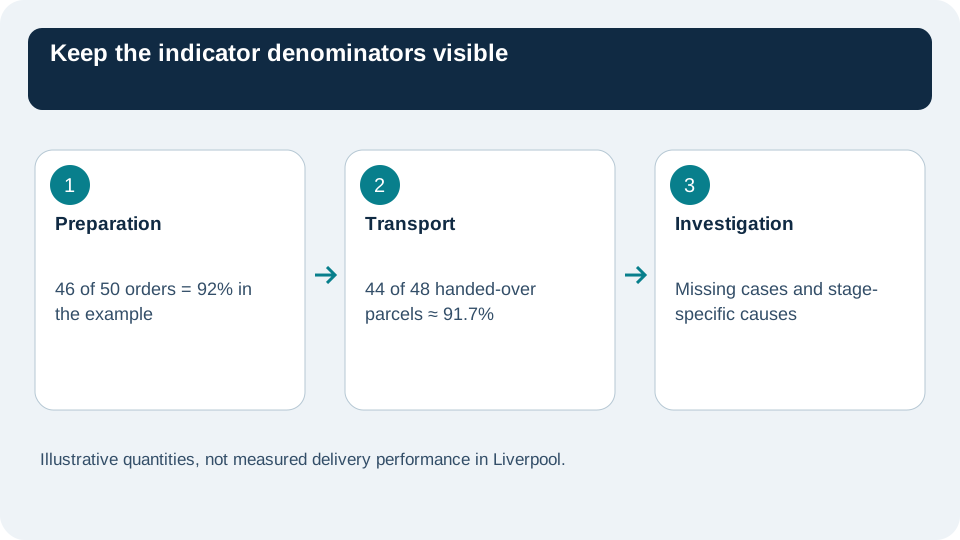
In an invented series of fifty orders, forty-six are prepared within the displayed commitment. That is 92% of orders in that defined set. Among forty-eight parcels handed over, forty-four arrive within the monitored window, approximately 91.7%. The denominators differ and should remain visible.
These numbers do not describe Liverpool performance. They illustrate why a high label-creation rate cannot stand in for handover or punctual arrival. Inspect missing cases before building a combined indicator. Different product types or service calendars may require separate reporting.
Track the event dates and exception reasons alongside the ratios. A repeated delay in preparation calls for a different response from a transport problem after confirmed handover. The measure becomes useful when it points to the stage the business can investigate and improve.
Review a small sample against the displayed promise
Reconstruct ten anonymised or simulated orders with relevant basket differences. Compare their events with the dates and messages displayed at checkout. This guide proposes the review; it does not report tests performed on a real Liverpool shop.
Correct wording that runs ahead of reality, then verify the service choices on representative addresses. Keep the documented assumptions current when stock, staffing or transport conditions change. A reliable delivery promise grows from the complete order journey and its evidence, rather than from the carrier name alone.