
Choose one problem your digital guide can help the reader solve, publish an applicable preview and explain its limits. Check the file, purchase and delivery journey, calculate retained value from explicit GBP assumptions, and use real buyer questions to decide the next improvement.

In this article
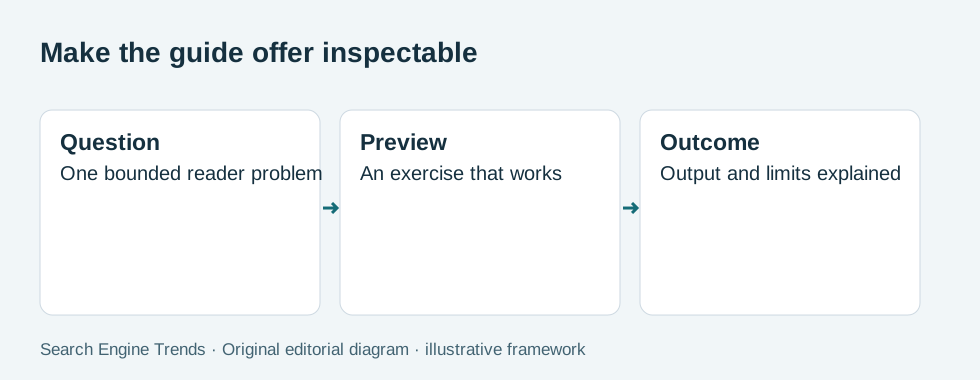
A Bournemouth first digital guide should solve one defined problem before it promises a new income stream. Choose a reader, a starting situation and an output they can produce. A DIY guide explaining how to build a product-page evidence worksheet is easier to evaluate than a broad promise to master all of marketing.
Choose a question small enough to answer well
For this hypothetical Bournemouth creator, the reader runs a small shop and needs to organise product facts before rewriting descriptions. The guide helps them build a source record, identify missing attributes and produce one reviewed page. It does not promise rankings, guaranteed sales or professional advice for every regulated product.
Describe prerequisites plainly. The reader needs access to their product information and the ability to edit the relevant worksheet or store fields. If the guide assumes a particular platform, name that scope and explain which instructions are general. Avoid claiming that a few screenshots cover every tool configuration.
Test the outline against the outcome. Each section should contribute to the record, review or publication task. A long chapter about motivation does not help the reader resolve a missing product measurement. Remove it or replace it with a concrete example.
Build a preview that works by itself
Give the prospective buyer an excerpt with an applicable exercise, such as a three-row claim register. It should show what information to record, how to identify an unsupported claim and what to do next. A preview consisting only of a title and an earnings promise gives little basis for a buying decision.
Keep the preview’s example explicitly hypothetical. It can contain an invented product and cost to illustrate the method, but should not include a fabricated customer quotation or claimed sales improvement. The creator’s credibility can come from clear reasoning and a usable artifact.
State the complete guide’s contents, format, language and supported use. If the file is a PDF, tell the buyer; if an editable worksheet is included, identify its actual format. Do not show a spreadsheet in promotional imagery unless it is genuinely supplied or clearly labelled as an illustration.
Prepare maintainable files and a real delivery path
Use a version identifier and review date inside the file. Keep screenshots and platform instructions tied to the configuration they describe. When a tool changes, the creator should know which chapter and example need review rather than treating the entire ebook as timeless.
Inspect headings, links and readability on representative devices. Provide useful link text and a support route for file access problems. A file can be technically downloadable while its small text, broken navigation or missing worksheet makes it difficult to use.
Shopify documents file delivery through its Digital Products app. If using another system, read that provider’s current instructions. Verify the actual product-to-file mapping and delivery setting instead of assuming every digital checkout behaves identically.
Set an initial price using explicit assumptions
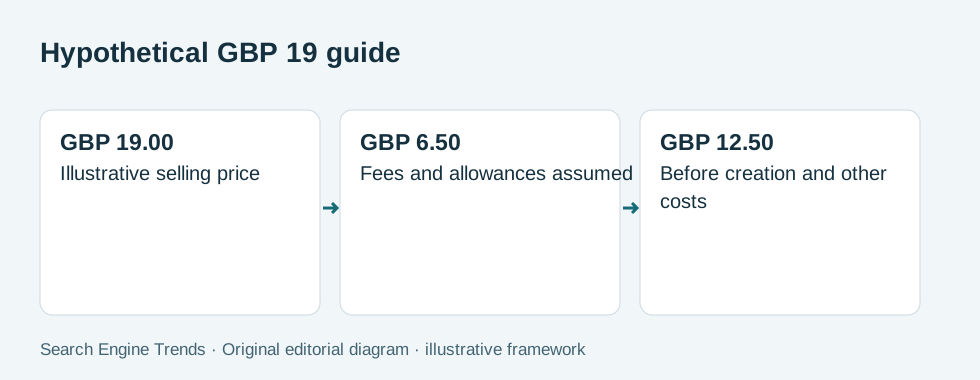
Suppose the fictional guide sells for GBP 19. For illustration only, assume GBP 1.50 of selling and payment costs, GBP 3 of expected support allocation and GBP 2 of refund or correction allowance. The remaining amount is GBP 12.50 before creation cost and other excluded items.
| Hypothetical price model | GBP per sale |
|---|---|
| Selling price | 19.00 |
| Illustrative selling and payment costs | 1.50 |
| Support allocation | 3.00 |
| Refund or correction allowance | 2.00 |
| Remaining before creation and other costs | 12.50 |
These figures are not platform fees, current market prices or an earnings forecast. Replace them with the actual provider terms and your own scope. Show tax treatment where relevant rather than treating every amount collected as available revenue.
If hypothetical creation cost is GBP 250, twenty sales at GBP 12.50 remaining would cover that amount under the model. It does not establish demand or guarantee break-even. A limited first release can test the buying journey and usefulness without assuming those twenty purchases will occur.
Review UK purchase conditions and the first launch
For UK downloadable content, GOV.UK’s online-selling guidance states that customers must agree to an immediate download and acknowledge the resulting loss of the fourteen-day cancellation right before downloading; the required information must also appear in the contract confirmation. Configure the actual purchase flow accordingly and review other applicable obligations. A generic “no refunds” sentence is not a substitute for the required process or other consumer rights.
Test order receipt, the delivery email, the download destination and a failure case using the platform’s appropriate test method. Do not make an unnecessary live payment simply to claim the system has been verified. Record what the test checked and what remains pending.
Choose one initial distribution channel the creator can manage. Give controlled campaign links consistent names, inspect the landing page and reconcile completed purchases with delivery and refunds. A click on the preview is interest, not retained income.
Digital-guide launch checklist
- Define one reader problem and delivered outcome.
- Publish a usable preview with honest limits.
- Identify the exact files and supported language.
- Check links, readability and version information.
- Review the applicable purchase and download conditions.
- Test the product-file mapping and failure path.
- Calculate retained value with real fees before expanding promotion.
Use buyer questions to select the next improvement. Repeated confusion about the worksheet suggests an example or instruction change; repeated access failures suggest a delivery problem. Adding more pages does not necessarily solve either issue.
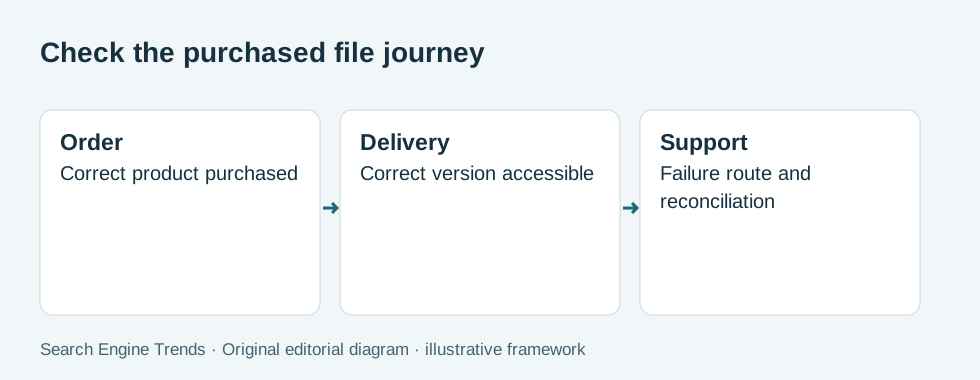
Keep a release record alongside the purchased files. If the worksheet changes, check that its instructions still match the guide’s worked example and that buyers receive the intended version. A corrected spelling and a changed calculation require different review effort. Explain significant corrections through the support route without implying that every purchase automatically includes unlimited future editions.
FAQ
Does a first guide need to cover all of marketing?
No. A bounded outcome with a useful method and evidence is easier to explain, maintain and evaluate than an unsupported promise of complete expertise.
Can a guide be priced before demand is proven?
Yes, as an initial commercial assumption. Keep the pricing model separate from a forecast and use actual purchases and feedback to review it.
What should count as a successful first sale?
The appropriate payment, correct file delivery and retained outcome under the defined scope. A checkout event without delivery or later reconciliation is incomplete evidence.

Build Your Own Website
Explore this related DIY Marketing Guide guide to work further on the method. DIY is part of our business group; contents, language and price are shown on its store.
See the English guide