
Choose an ecommerce channel by comparing customer access, contribution and operational workload for the same offer. For a seller serving Manchester, start with a route you can maintain accurately, verify current eligibility and costs, and add another channel only when stock and orders can be reconciled.

In this article
- Choose a channel you can operate reliably
- Compare the same underlying offer
- Build a three-option worksheet
- Calculate contribution with visible assumptions
- Keep product facts aligned across channels
- Check shared stock before opening a second route
- Run a bounded pilot with decision criteria
- Decide whether expansion solves a specific problem
Choose a channel you can operate reliably
Opening another storefront does not automatically fix an unclear offer or an unreliable order process. Before choosing where to sell, describe the product, the customer task and the work needed to deliver it. A channel is useful when you can maintain its content, availability and service alongside the contribution it produces.
This example concerns a fictional accessories seller serving Manchester. The financial figures are illustrative GBP calculations. They are not platform fees, measured local demand or a forecast of orders. Confirm the conditions of your own account and offer before using any scenario as a decision.
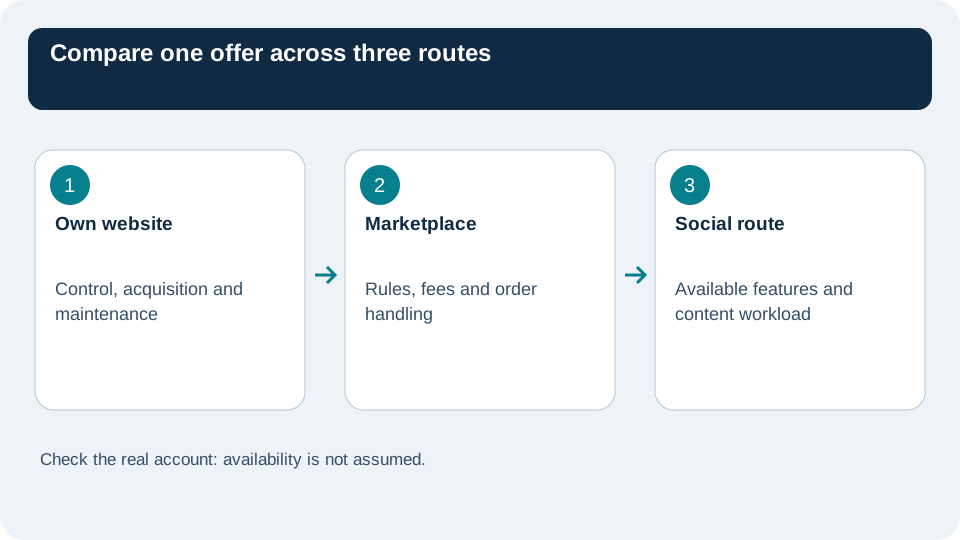
A website, marketplace and social route provide different kinds of control. Your website may let you explain the offer in more detail. A marketplace imposes its own presentation and service rules. A social route may support an integrated purchase or simply lead to another checkout. Verify the actual route rather than assuming every selling feature is available.
Compare the same underlying offer
Select one product, bundle or small range. Keep the quality, contents and service assumptions consistent while comparing channels. If a channel requires a different pack size or prohibits a product, record that difference. It is no longer a direct comparison of the same offer.
Prepare a common file with selling price, product cost, preparation, delivery paid by the seller, returns and available images. Add the fees and acquisition costs confirmed for each channel. An unknown charge should remain marked for confirmation, not be filled with an old average found in a blog.
Shopify's sales channel documentation explains how different channels connect to its environment. It does not guarantee eligibility for every third-party service. Review the platform's current requirements, the integration and the data you need before adding it to your operation.
Build a three-option worksheet
For your own website, ask how customers will arrive, which presentation you control and what maintenance is required. For a marketplace, check commissions, service standards, catalogue fields and the handling of refunds. For a social route, establish whether checkout is integrated or external and how the content is produced.
| Route | Cost question | Content question | Operational question |
|---|---|---|---|
| Own website | Acquisition, payment and tools | Can the offer be explained clearly? | Who maintains checkout and stock? |
| Marketplace | Confirmed fees and return costs | Which fields and formats are imposed? | How are orders reconciled? |
| Social route | Costs applying to the real account | Purchase feature or outbound link? | Who produces and moderates content? |
Do not score a channel highly simply because many people use it. The relevant question is whether your offer reaches suitable customers through a route you can serve. Record the evidence behind each rating. A feature unavailable to your account cannot be treated as a benefit in the comparison.
Calculate contribution with visible assumptions
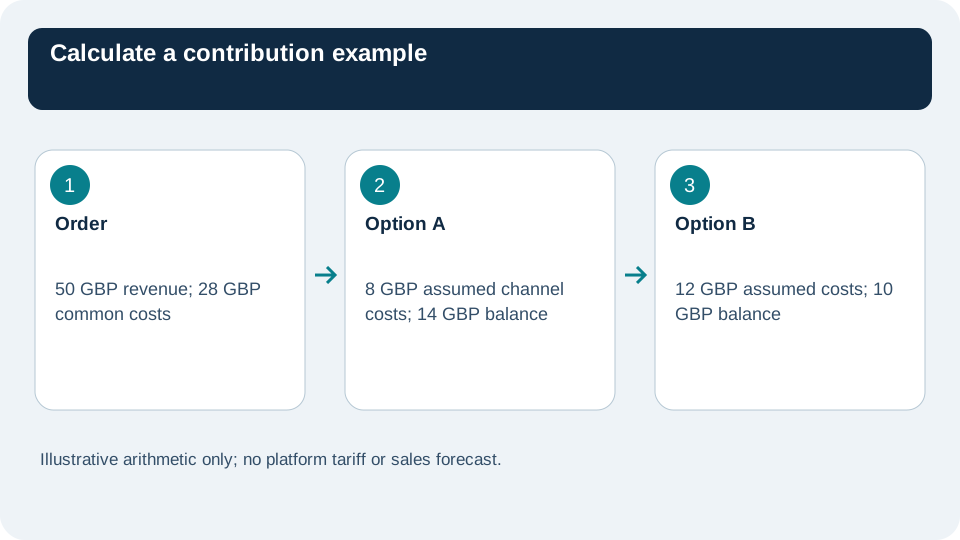
Take an invented order worth 50 GBP. Product cost is 18 GBP, preparation 4 GBP and seller-funded delivery 6 GBP. That leaves 22 GBP before the channel-specific costs and other items defined in your model. Suppose option A adds 8 GBP of costs and option B adds 12 GBP: the illustrative balances are 14 GBP and 10 GBP.
Neither option represents a real platform. The calculation shows that the same sale can contribute different amounts after direct costs. Include payment fees, returns and other relevant deductions according to a written convention. Check whether a fee already contains another cost so you do not subtract it twice.
Then add fixed expenses and management time. Twenty hypothetical orders contributing 14 GBP produce 280 GBP before fixed costs; twenty contributing 10 GBP produce 200 GBP. If the first route requires substantially more staff time, its higher unit contribution may not produce the better overall result. Replace the assumed workload with a recorded workload during a real pilot.
Keep product facts aligned across channels
Maintain a master record for each reference, including dimensions, contents, variants and source documents. Channel-specific wording can change the format without changing the product. A short marketplace title and a longer website description must still identify the same item and essential conditions.
Record where each version has been published. A supplier change should lead to an update on every active route, not only the website. Old photographs can misrepresent a revised component, and a forgotten listing can continue making an outdated promise. Assign someone to review these changes and confirm completion.
Review the information available for customer service. Can your team locate the order, identify the purchased variant and handle an incident? Technical access to customer details does not imply unrestricted permission to reuse them for marketing. Check the rules applying to the channel and your intended use.
Check shared stock before opening a second route
A product sold in two places still has one physical quantity unless you intentionally separate reserves. Examine how updates reach each channel and what happens when synchronisation is delayed. Do not treat two displayed stocks as independent supplies.
Prepare scenarios for the last unit, a cancelled order and a changed variant. In an appropriate test mode, check how quantities and order states move. Record the expected result, the actual behaviour and the correction required. These are proposed checks, not tests already completed for a Manchester seller.
If the integration cannot protect the availability you need, reduce the exposed quantity, change the process or postpone the second route. A channel that produces orders you cannot fulfil can damage the usefulness of the entire comparison, even when its estimated acquisition cost looks attractive.
Run a bounded pilot with decision criteria
Set a duration, spending ceiling and limited product range that your operation can manage. Choose the indicators before launching: confirmed orders, contribution, incidents and hours of administration. Views alone cannot show whether the route is economically or operationally suitable.
Keep a register of exceptions. A missing field, delayed stock update or customer question may reveal work absent from the initial estimate. Distinguish a one-off setup task from a recurring burden. Both matter, but they affect the decision differently as volume changes.
Decide whether expansion solves a specific problem
At the end of the pilot, compare the confirmed costs and workload with your original assumptions. Identify what remains unknown. You may keep the channel, adjust the range or stop before investing more. The conclusion applies to the tested offer and conditions rather than every product or seller in Manchester.
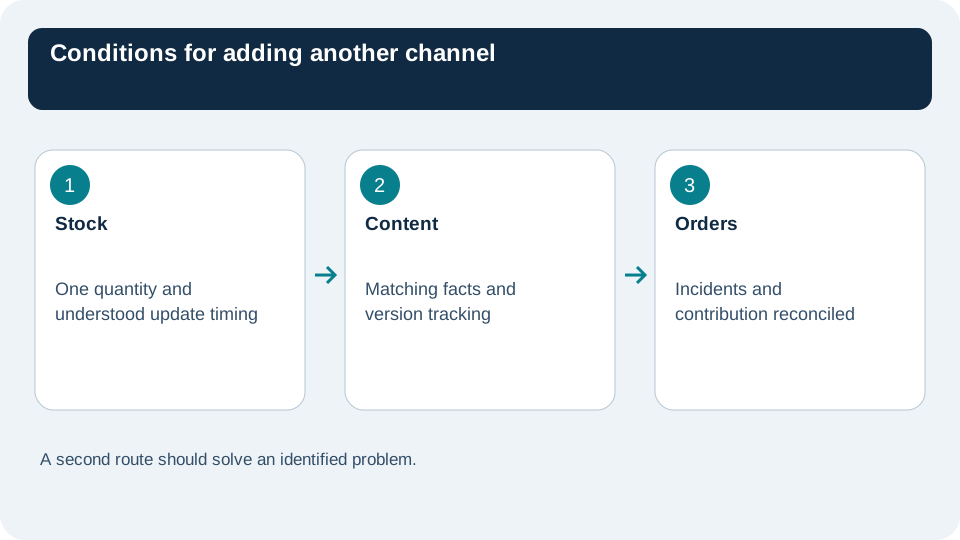
Add a second channel only with a reason: access to a relevant audience, a distinct shopping need or a verified operational benefit. Prepare its stock, content and service process before promoting it. A manageable principal route provides a stronger foundation than several storefronts whose facts and orders cannot be kept aligned.

Find Your First Prospects
Explore this related DIY Marketing Guide guide to work further on the method. DIY is part of our business group; contents, language and price are shown on its store.
See the English guide