
A useful packaging test records the product, packing method, applied stress and acceptance criteria. Compare like configurations, inspect the contents and preserve failures. A limited internal trial informs a next decision; it does not guarantee protection on every transport route.
In this article
Test the stresses the product needs to withstand
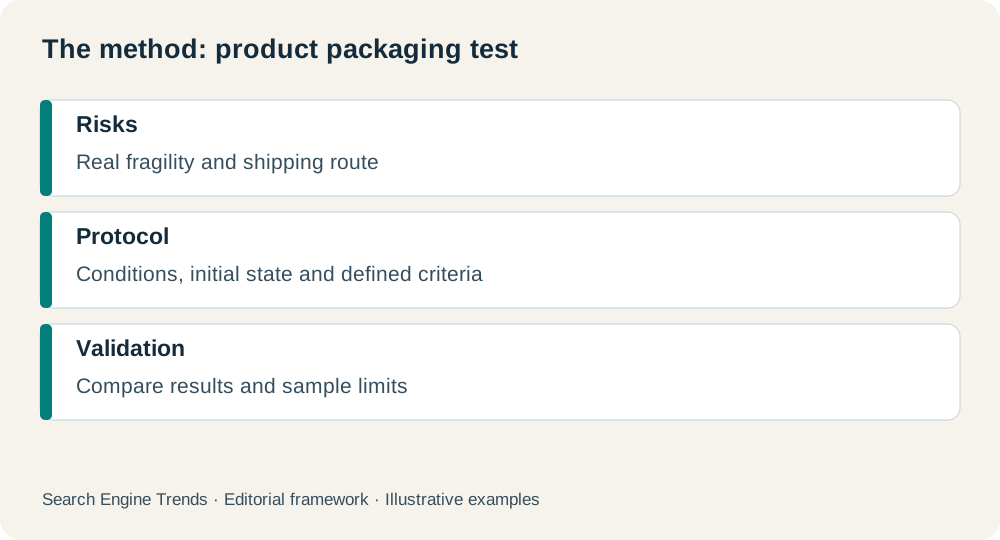
A product packaging test begins with risks specific to the contents and shipping route. For a seller in Edmonton, choose tests that match the actual product, with observable criteria and documented limitations. An intact box on the outside does not prove that the item still works on the inside.
Impact, moisture and temperature need different checks. The protocol must indicate what is simulated and what is not. No limited internal testing guarantees protection in all climatic situations or on all transportation services.
The example concerns a hypothetical decorative object, without any claim of safety or compliance certification. Any costs are noted in CAD based on your purchases and quotes. For a regulated, dangerous or perishable product, the applicable requirements must be verified with the relevant organizations and professionals before any shipment.
Build a reproducible test sheet
Describe product, reference, batch, mass, dimensions and known fragilities. Record the outer packaging, cushioning, dividers and closure method. Photograph the configuration before the test so that you can redo the preparation exactly, rather than just remembering the generic name of a box.
Define the expected observation for each risk: scratch, leak, displacement, deformation or loss of function. Record the product’s initial condition to avoid attributing to the test a defect that is already present. The post-test inspection must include the same points.
UPS Canada publishes packing and protection tips tailored to different situations. Review the instructions for your actual service, but don't present reading them as validation of your setup. A fragile product may require packaging expertise and a suitable protocol beyond the checks in this guide.
Three fictional configurations to examine
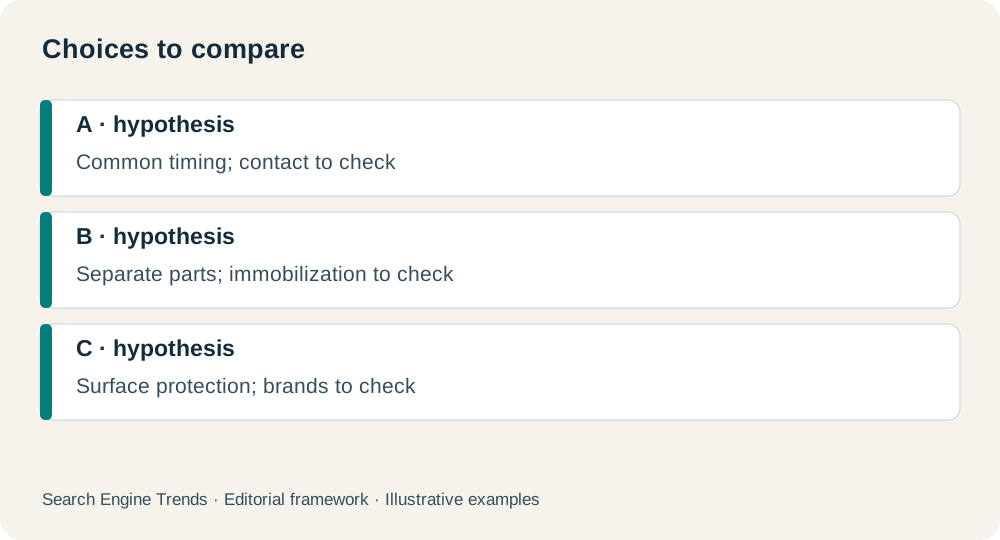
Let's imagine a small decorative object made up of two parts. Configuration A uses a single cushioning insert; B separates the parts and immobilizes each; C adds surface protection in a more closely fitted carton. All three are hypotheses to be tested, not already validated solutions.
| Illustrative configuration | Hypothesis | Observation to check |
|---|---|---|
| A: shared cushioning | Quick preparation | Contact between the two parts |
| B: separation | Prevent contact between components | Components remain secured after handling |
| C: surface protection | Reduce surface marks | Surface condition and closure |
Keep the same product version in comparisons. If C also uses an item from another batch, the change in result could come from the product. Have another packer repeat the preparation to check whether the result depends on an undocumented technique used by the first packer.
Separate shocks, humidity and temperature
For shocks, define an internal method consistent with your objective or have a qualified protocol established. This guide does not prescribe drop heights or standards. It requires recording the stress actually applied, the orientation and the damage observed. Unrecorded handling does not produce a repeatable comparison.
For moisture, identify sensitive materials and the expected consequence: label deterioration, swelling or marking. For temperature, first check documented product and material limits. Do not expose an item to a hazardous condition without proper method and understanding the consequences.
Do not confuse assumed external risk with the condition measured in the package. A local weather forecast does not describe conditions throughout the journey. Use observations from the actual route or a clearly defined test. Any commercial guarantee must remain within the scope of the available evidence.
Set the criteria before looking at the result
Write a list of acceptance criteria before testing. A decorative object may require absence of breakage, absence of visible marks and stability of the assemblies according to a defined inspection. A functional component would require different checks. Build the protocol around the product’s specific functions and vulnerabilities.
Define how ambiguous results will be resolved: new observation, additional test or specialist advice. Do not change the criteria after the fact to choose the cheapest packaging. Retain failures with photographs and descriptions, even when the configuration is abandoned.
The person preparing and the person inspecting can be different when this improves objectivity. The test sheet must allow another reviewer to understand the test without a verbal explanation. A signature records who performed the checks; it does not make the internal test an independent certification.
Compare protection, cost and execution
Keep an untested control sample when it helps to compare the initial and final appearance. Clearly identify this control sample so that it is not confused with a result. Lighting and inspection conditions must remain similar between configurations. If a protective layer leaves residue or marks after opening, record this consequence even when the product has not broken. The recipient must be able to unpack the item according to the actual instructions; protection that cannot be removed properly also deserves correction.
Add preparation time, packed weight, dimensions and cost of consumables. Protective packaging that is regularly poorly assembled requires simpler instruction or training. A fitted solution can save space while increasing the closing error; measure both effects.
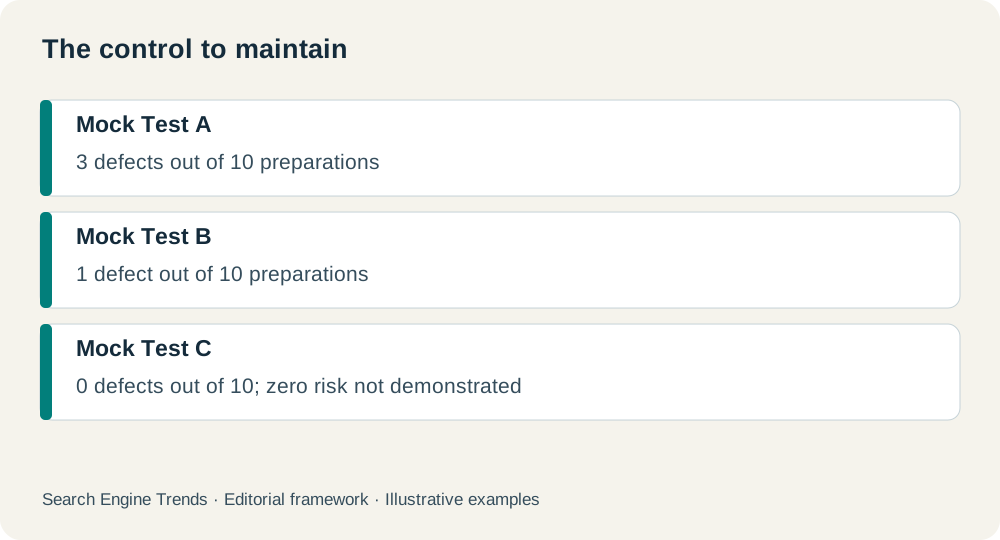
In a hypothetical series of ten preparations per configuration, A produces three observed defects, B one and C none under the limited conditions of the test. These results guide a next step, but zero out of ten does not demonstrate zero risk. Indicate the number and conditions next to the result.
To begin, choose a common product, two or three configurations and one primary risk. Record the tests, have the results reread and launch a controlled pilot batch only after appropriate validation. Subsequent transport incidents must be returned to the register to verify whether the tests really covered the causes encountered.
Packaging-test checklist
- Record the product's starting condition and revision.
- Photograph the exact insert placement and closure method.
- Define the applied stress and inspection criteria before testing.
- Compare like products under the same stated conditions.
- Retain failed configurations with their observed damage.
- Record sample size beside every reported outcome.
For the hypothetical two-part object, inspect contact marks between the components as well as visible breakage. A package can look intact and contain an item that is unsuitable to send to a customer. The test record should preserve that distinction rather than reducing the result to a simple intact-box count.
Packaging Testing FAQ
Does a successful test guarantee the absence of breakage?
No. It only demonstrates the result obtained under the recorded conditions. Actual transport may expose the package to other stresses and your sample remains limited.
Should each product reference be tested?
Products sharing packaging may still have different fragilities. Identify families and validate the scope of the protocol before generalizing.
Is checking only the carton sufficient?
The container and the product form a whole. Check the interior, the condition of the contents and their relevant function, not just the exterior appearance of the box.
Official reference consulted: UPS Canada: packaging advice. The scenarios and calculations are hypothetical editorial examples, not measured results from a local business.