
Compare shipping cartons using the finished parcel, not the unpacked item. Record outside dimensions and packed weight, obtain quotes under the same carrier contract and service, and include packaging labour and damage risk before selecting a smaller box.
In this article
Denver dimensional weight shipping decisions begin with a packed parcel. The product’s own weight does not capture the carton, padding or dimensions that the carrier evaluates. Compare three realistic packaging options using the same origin, destination, service and contract conditions, then check whether each option protects the item.
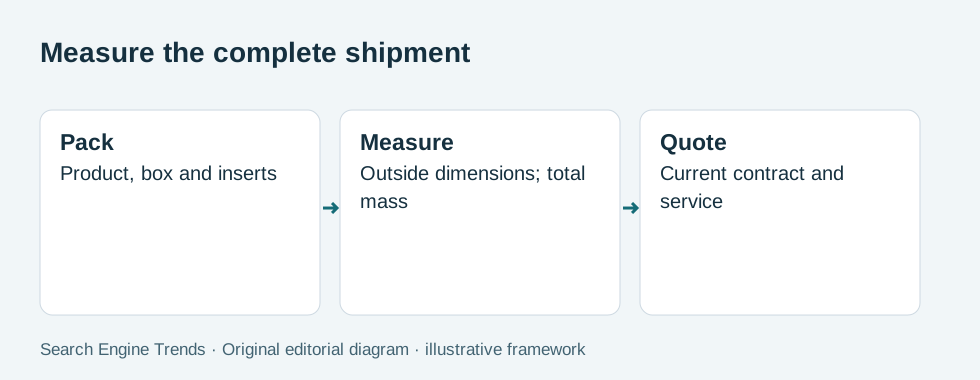
Measure the parcel that will actually travel
For a hypothetical Denver homeware store, the product might fit inside a compact box but require extra clearance for protective inserts. Measure the outside of the sealed parcel, including any bulges or protrusions. Weigh it after the packing slip, padding and label are added.
Record the measuring method and units. Do not mix inches and centimetres in a quote worksheet. Keep the raw measurements before carrier rounding, because rounding rules and dimensional-weight treatment depend on the service and agreement.
UPS explains dimensions and weight, while FedEx explains dimensional weight. Use current terms for the service you buy; this article intentionally provides no universal divisor or assumed carrier tariff.
Run a comparable packaging trial
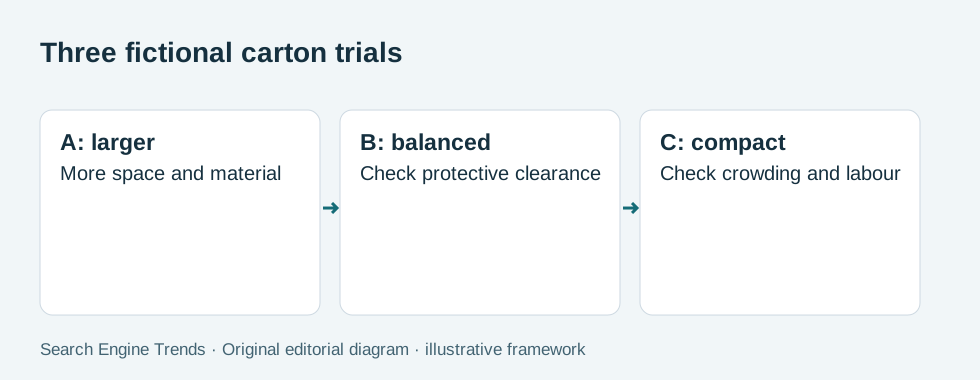
Use identical products for each trial. Record material consumption, packing time and visible protection. Obtain quotes at the same time for representative destinations, then note which surcharges are included or excluded. A cheaper headline rate can disappear once the actual parcel shape and destination are entered.
Finished measurements
Which dimensions and weight describe the sealed parcel? Measure the external box after packing and record the weight with all inserts included. Photograph the ruler placement for unusual shapes.
Check against a packed-parcel measurement sheet. If the quote uses product dimensions instead of outside packaging dimensions, review the affected case before continuing. Carrier billing evaluates the shipment presented, so an unpacked-product record is an incomplete input.
Comparable service
Are the three quotes for the same shipment conditions? Fix origin, destination, service and account. Record the date and included surcharges without assuming a public rate applies to the business contract.
Check against three dated quotes for one defined lane. If one option uses a different service or excludes a relevant surcharge, review the affected case before continuing. A useful comparison isolates packaging rather than silently changing the transport purchased.
Protection and labor
Does the smaller option remain practical to pack safely? Use the same product and an approved protective method. Time the packing operation and assess insert clearance, movement and ease of inspection.
Check against a packaging trial with labor and protection notes. If the insert is compressed or the item moves inside the parcel, review the affected case before continuing. A compact box only creates value when it can be packed consistently without increasing avoidable damage.
Compare three explicitly hypothetical cartons
The following invented dimensions illustrate the worksheet. They are not recommended protective clearances or carrier rates. Quote fields remain deliberately unpriced because the retailer must obtain current, account-specific amounts.
| Trial | Illustrative outside dimensions | Packed weight | Quote input |
|---|---|---|---|
| Carton A | 12 × 10 × 8 in | 3.0 lb | Current carrier quote |
| Carton B | 10 × 8 × 6 in | 2.8 lb | Same service and lane |
| Carton C | 9 × 7 × 5 in | 2.7 lb | Same service and lane |
Carton C has less volume, but it may crowd the protective insert. Carton B may be the better operational choice if it preserves clearance and reduces packing mistakes. Assess damage evidence and labor before treating the smallest carton as the winner.
Calculate total expected cost as quoted transport plus material cost plus packing labor plus an explicitly stated damage allowance. Keep the allowance visible as a planning assumption, then update it with observed claims and replacements after a controlled shipment trial.
Find errors between the quote and the invoice
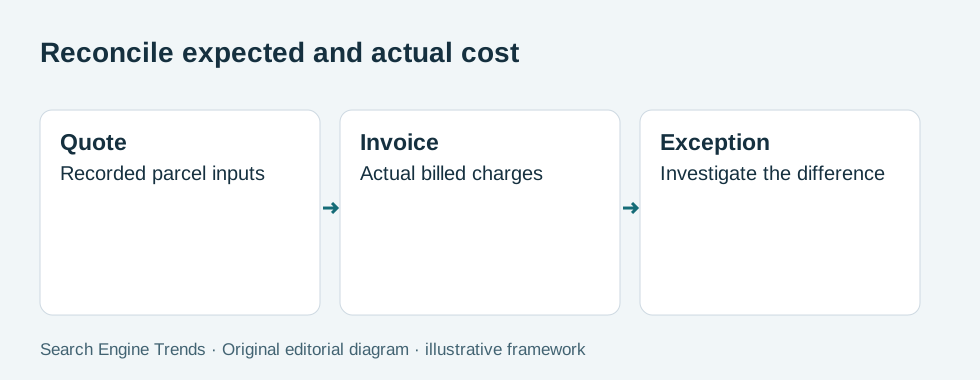
Compare invoiced measurements and charges with the trial record. A mismatch might come from measurement error, an unsuitable default box in the shipping system, a destination surcharge or a service change. Investigate the underlying reason rather than overwriting the trial to match the bill.
Keep product protection separate from contractual eligibility. A parcel can meet the carrier’s size limits yet still be poorly packed. Equally, a protected item in an irregular package may attract different handling treatment. Packaging approval and quote approval need their own evidence.
Review representative baskets, including two-item orders. A carton that works for a single item may become inefficient when customers buy a bundle. Store packing rules at the basket level where necessary, rather than assigning one default carton to an entire product family.
Compare a multi-item basket before changing the carton
Take the same hypothetical product and pack two units in each feasible carton. Record whether the items touch, whether extra inserts are needed and whether the parcel remains easy to close. A box that saves material for a single item may require a more complicated and slower method for the common two-item order.
Request a second set of carrier quotes for that packed basket using the same representative destination. Keep these results separate from the single-item comparison. Otherwise the team may apply one apparently favourable box to every order and discover the cost increase only on the invoice.
Store the approved carton rule with a specific basket condition, such as one unit with a particular insert or two units using a divider. Give packers a clear exception route for a mixed basket that does not fit either method. Avoid telling them simply to “use the smallest box”, because that instruction omits both protection requirements and the contract-specific transport consequences. The useful saving is repeatable across the orders actually received.
Checklist before changing the default carton
- Measure and weigh the sealed trial parcel.
- Keep measurement units and rounding assumptions visible.
- Quote the same destination and service for every option.
- Include material, labor and expected damage costs.
- Test single-item and common multi-item baskets.
- Compare a trial invoice with the original quote.
- Document the protective packing method for warehouse staff.
Release the chosen carton for a limited product group first. Review invoice variance and damage reports before wider adoption. A practical packing worksheet should preserve the inputs so the comparison can be repeated when suppliers, materials or carrier terms change.
FAQ
Is the lightest carton always cheapest?
No. Chargeable weight, dimensions, service terms and surcharges can change the total. Obtain comparable quotes for the finished parcels.
Can one dimensional-weight formula cover every carrier?
No. Use the formula, rounding and eligibility rules associated with the actual service and contract. Do not transfer a divisor from an unrelated online example.
Should damage risk be priced into the comparison?
Yes, using a transparent allowance initially and observed evidence later. A lower transport quote can be outweighed by replacement and support costs.