Reserve pickup stock at the chosen location and send the ready message only after the order has been prepared. Keep the order receipt, pickup appointment and actual collection as separate events, with consistent instructions in the languages your store supports.
In this article
Montreal store pickup inventory should be reserved at the location the customer selected. An order receipt acknowledges the purchase; it does not mean the bag is waiting at the counter. Align stock, preparation capacity and bilingual messages before offering collection slots.
Define the pickup states clearly
Imagine a hypothetical Montreal retailer with two pickup points, A and B. These are fictional examples, not claims about real premises. Each point needs its own availability, preparation queue and customer instructions. Stock at B cannot justify a ready message for A unless a transfer has actually completed.
Shopify’s inventory-state guide distinguishes available and committed quantities. Use that distinction to prevent a reserved pickup item being promised to a second buyer.
Link each message to an operational event
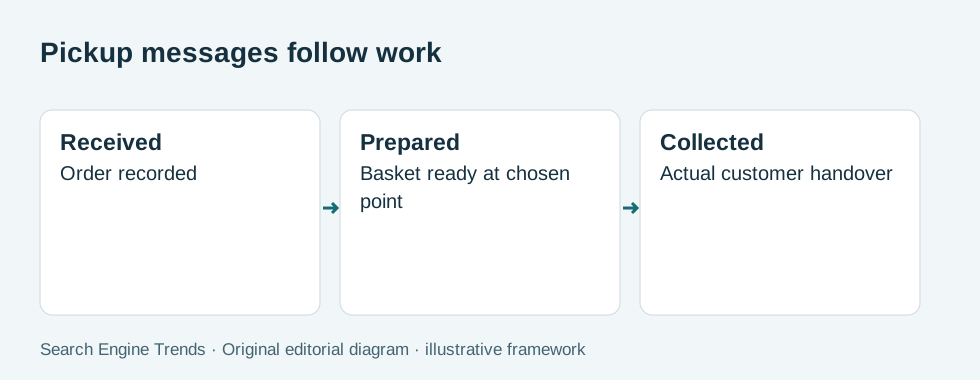
Send the receipt after the order event, the ready notice after picking and packing, and the completed notice after actual handover. Translate the essential location and collection instructions accurately, keeping the same order reference across messages.
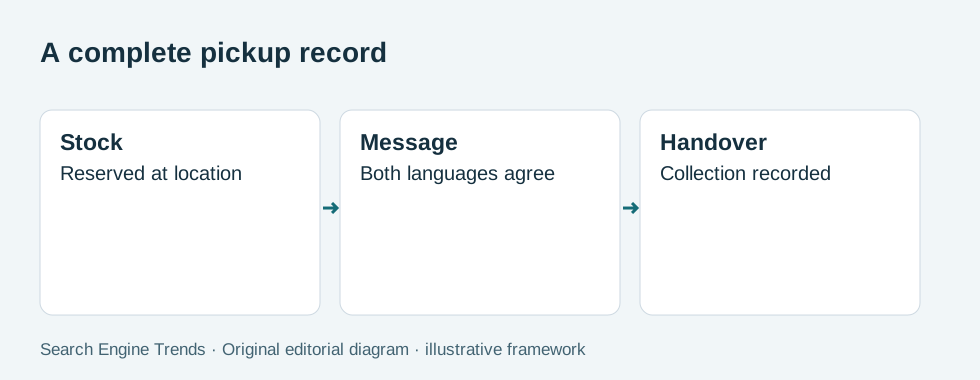
Location reservation
Where is the complete basket physically available? Reserve every item at the chosen point. Complete any transfer before marking the order ready, and keep location changes visible to the customer.
Check against a location-specific reservation record. If one component is available only at the other point, review the affected case before continuing. A citywide stock total can conceal the absence of a complete basket at the selected counter.
Preparation status
Has someone actually picked and packed the order? Use a preparation queue with the slot capacity and special-handling requirements. Send the ready message from a verified completion event rather than receipt of payment.
Check against a completed picking check and ready timestamp. If a message is sent while the basket remains unprepared, review the affected case before continuing. Customer travel begins with the ready promise, so that status needs physical evidence.
Bilingual handover
Do both messages describe the same place and next action? Review English and French instructions together, including address, hours and order identification. Record actual collection separately from readiness.
Check against a reviewed message pair and handover record. If the languages disagree or readiness is mistaken for completion, review the affected case before continuing. A translation error at collection can create a wasted trip even when stock and payment are correct.
Compare two hypothetical pickup queues
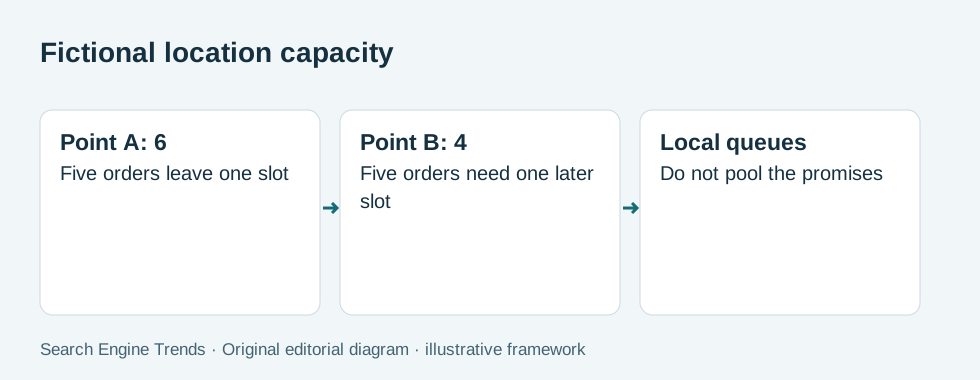
Suppose point A can prepare six standard orders in the next slot, while point B can prepare four. The figures are invented capacity assumptions, not Montreal service standards.
| Fictional pickup point | Available slot capacity | New orders | Planning action |
|---|---|---|---|
| A | 6 | 5 | One standard slot remains |
| B | 4 | 5 | Offer a later slot for one order |
An oversized or special-packing order may use more preparation time than the standard assumption. Do not let the total of ten nominal spaces hide a queue overloaded at one location. Assign each order to its actual pickup point and reserve its stock there.
Reconcile the shelf with the system
For bilingual notifications, have a reader compare the address, opening instructions and handover requirement in both versions. Avoid translating the word “ready” into language that suggests collection has already occurred. Log failed collections separately from completed pickups so available stock and customer messages remain accurate.
Test the last available unit at one pickup point
For the fictional Montreal locations, place the final sellable unit at A and none at B. Verify that the checkout or manual reservation process offers the item only under the supported location arrangement. If transfer is an available service, its preparation time and notification must reflect the actual transfer workflow; it cannot be assumed from the combined stock total.
Then simulate a cancellation before preparation. Check that the reservation releases correctly and that no ready message remains queued. A cancellation after preparation may require a different shelf-handling step. Keep both cases visible so the inventory change is not mistaken for a completed customer collection.
Make the bilingual collection instructions operational
Review the store name, address, opening period and identification instructions in both languages. Preserve the same order reference and pickup point even if the wording differs. Staff should recognise the order from either supported message, rather than requiring the customer to interpret an internal label.
Test the text on a phone with a narrow screen. The address and ready status should remain easy to find. If collection requires the customer to contact the store first, make that action clear and ensure the contact method exists. A translated paragraph is not useful if it points to an unsupported channel.
Reconcile uncollected orders separately
Keep a list of prepared orders that remain at the counter, with the promised collection arrangement and the last customer contact. Apply the store's defined no-show or cancellation process before returning units to availability. Do not quietly release an item that the customer still reasonably expects to collect. This review protects both stock accuracy and the next customer message, and gives staff a clear answer when someone arrives with an older ready notification.
At handover, verify the exact order rather than relying on a familiar customer name. Two people can share a name, and a buyer may have more than one prepared order. Use the store’s defined identification process and disclose only the details needed for collection. If someone is collecting for another person, follow the actual authorised arrangement instead of inventing a rule at the counter. Record the completed handover once, then confirm that both the inventory state and customer notification reflect that same event.
Pickup-day checklist
- Check stock at the selected pickup point.
- Reserve the basket before offering preparation capacity.
- Send ready status after physical preparation.
- Keep English and French instructions equivalent.
- Identify the order at handover through the store’s actual procedure.
- Record no-shows and release stock only through the defined policy.
FAQ
Can customers collect after the order receipt?
Only if the receipt explicitly reflects a completed preparation process. Otherwise tell them to wait for the separate ready notification.
Can two pickup points share one stock total?
A consolidated report can be useful, but the customer promise must reflect availability at the selected point and any real transfer process.
What if the customer chooses another language?
Preserve their order and location information while showing the supported translated instructions. Language choice should not change which pickup point holds the goods.