
Clear CHF pricing requires consistent information from product page to payment and refund. For a store serving Geneva, distinguish language, market and currency, document how local prices are set, and check each payment method so customers understand the currency and amount actually charged.

In this article
- Make the displayed currency an accurate expectation
- Define the master price and conversion policy
- Build a transparent CHF order summary
- Document rounding as an implemented price rule
- Verify each payment route
- Distinguish customer payment from seller payout
- Check refunds as a separate journey
- Calculate contribution in one coherent basis
Make the displayed currency an accurate expectation
A CHF label in the header is not enough if checkout later charges another currency without clear explanation. The customer should understand the product price, the order total and the currency of payment. Review the whole journey rather than treating currency as a decorative localisation choice.
This guide uses a fictional store serving Geneva. No current exchange rate, local tariff or store test is claimed. The Swiss franc figures are invented to explain pricing checks. Commercial and payment conditions must come from your actual offer and provider.
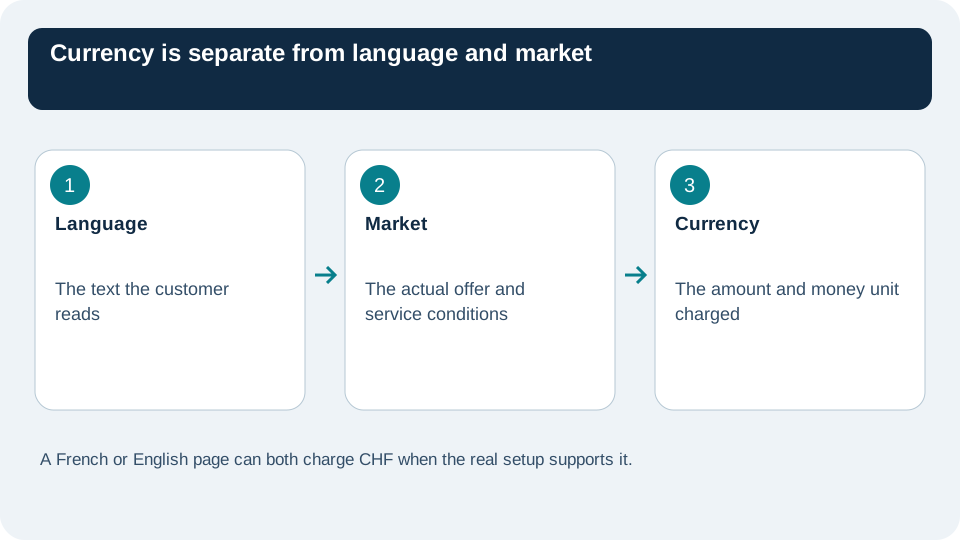
Language, market and currency remain separate choices. A French page can charge CHF, and an English page can do the same. Translation does not convert a price. If another currency is shown as an indicative estimate, its role should be clear before the customer reaches payment.
Define the master price and conversion policy
Record the currency used to establish the price and internal costs. Then decide whether the CHF price is entered directly or calculated from another base through the capabilities of the real platform. Keep the method, relevant date and adjustments visible to the person maintaining the offer.
Automatic conversion and a fixed local price need different maintenance. A converted price can change with the applicable settings, while a local price needs review when costs move. Neither approach should be presented as a permanent rate without checking the basis.
Shopify's market-currency documentation explains its configuration and payment-provider conditions. Review the settings applying to your account. A currency available for display should not be assumed to behave identically through every payment method, payout or refund.
Build a transparent CHF order summary
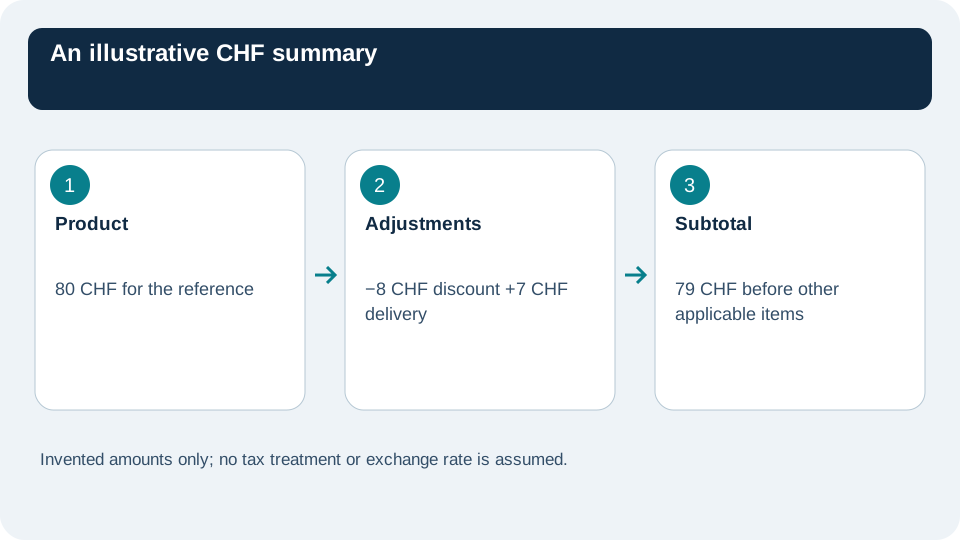
Imagine an illustrative product at 80 CHF, a discount of 8 CHF and delivery of 7 CHF. The resulting subtotal is 79 CHF. Other applicable items still need checking before this becomes the final amount of a real transaction.
| Illustrative item | CHF amount | Check |
|---|---|---|
| Product | 80 | Correct reference and price |
| Discount | −8 | Condition actually applied |
| Delivery | +7 | Selected service |
| Exercise subtotal | 79 | Other applicable items reviewed |
| Payment currency | CHF expected | Confirm at the payment step |
A product price and order total are different amounts. Keep the discount and delivery visible so the difference is understandable. If checkout introduces another charge, explain its basis before confirmation. The team should be able to reproduce the total from the same components shown to the customer.
Document rounding as an implemented price rule
If the platform rounds prices, record the trigger and scope. This guide concerns a store's presentation or calculation policy; it does not describe a cash-payment legal rule. Any official requirement applying to another payment context should be checked separately.
Suppose a calculated amount of 48.62 CHF becomes 49 CHF under an invented commercial rule. The difference is 0.38 CHF. Keep the before-and-after values in the price record so discounts and contribution can be understood. This is neither an exchange-rate example nor a price recommendation.
Check several quantities and promotions. A per-item rounding rule can produce a different result from rounding an order total. Establish which operation the actual system performs and compare it with the visible summary. Do not manually change a total merely to make it look tidy without retaining the reason.
Verify each payment route
Use an appropriate provider-supported test mode to inspect the currency displayed, amount authorised and order recorded. Review every method offered to the relevant customers. Success in one route does not establish that another provider uses the same currency behaviour.
Keep the product, basket and payment screenshots or equivalent evidence tied to the scenario identifier in the authorised record. Avoid collecting unnecessary customer or payment data. The useful evidence is the amount, currency, selected method and resulting state.
If a route charges the store's base currency instead of CHF, decide how the offer and checkout should explain that fact. Do not keep a misleading CHF headline while relying on the customer to notice the change late in the journey. Review the available technical options before promising a particular settlement behaviour.
Distinguish customer payment from seller payout
A seller's payout can be in a different currency from the customer's payment. Fees and conversion can also affect the amount received by the business. These items matter for the pricing model, but they should not be confused with the amount the customer has authorised.
Record the provider's applicable conditions and the date checked. Where a cost is in another currency, convert it using a documented method for the internal calculation. Do not add unlike currencies in one total or use an unexplained current rate assumed from memory.
A manual local price can simplify the visible offer while leaving exchange exposure in the business. Include that uncertainty when reviewing the contribution. The commercial decision should be based on the actual account and cost structure, not solely on the convenience of a rounded number.
Check refunds as a separate journey
Identify the refund currency, applicable provider conditions and how a partial refund is represented. The customer-facing amount and the seller's payout adjustment may follow different conversions. Read the current documentation before describing what a buyer will see.
Do not promise the same value in another currency without knowing the relevant rules. Preserve the original payment reference, confirmed refund amount and operation state. A refund issued is not automatically the same event as a customer seeing the result on their account.
Prepare a message that explains the known facts and the appropriate contact route for a discrepancy. Compare discount allocation and partial quantities when only one item is refunded. A full-order example alone does not establish that every partial case remains clear.
Calculate contribution in one coherent basis
In an invented scenario, product revenue of 80 CHF, product cost of 35 CHF, preparation of 6 CHF and other included variable costs of 9 CHF leave a contribution of 30 CHF before exclusions. This simplified balance is not net profit or a Geneva business result.
Track differences among the expected price, recorded payment and refund. A discrepancy may come from a discount, rounding or another item rather than a currency error. Keep its cause instead of overwriting the record with an unexplained correction.
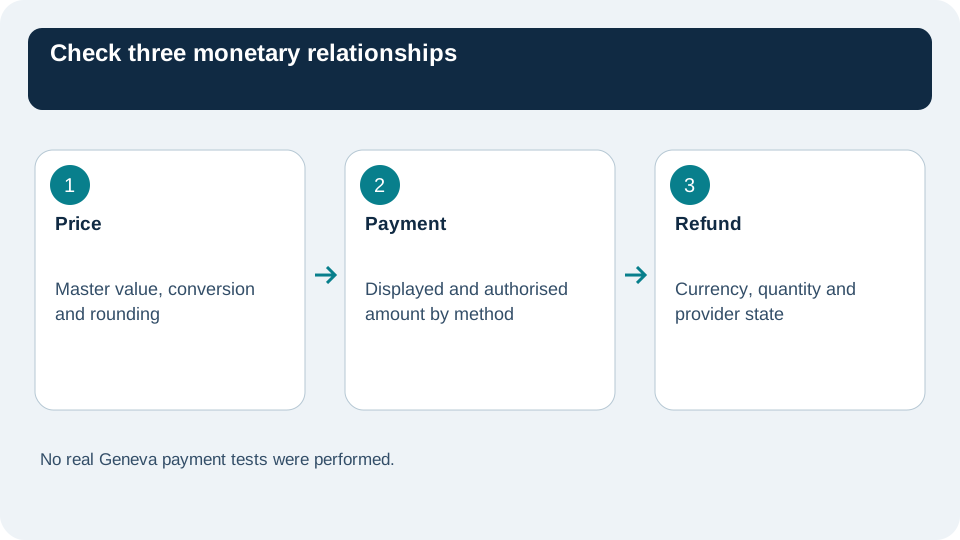
Begin with three references and two payment methods relevant to your offer. Review their product prices, basket summaries and provider-supported scenarios, then record remaining uncertainties. Clear CHF pricing is maintained through a documented price policy and an honest payment journey, not simply a country label added to the page.