A cross-border return needs a record connecting the original sale, the item sent back and the intended movement between countries. For an activity associated with Basel, separate incoming returns, outgoing returns and repair shipments, then confirm the applicable documents and responsibilities before creating the label.

In this article
- Identify the movement before preparing documents
- Create a movement sheet before the label
- Preserve the exact item in a partial return
- Gather evidence without inventing origin or value
- Confirm the recipient and service requirements
- Assign responsibilities and costs transparently
- Track movement, receipt and financial outcome separately
- Calculate operational costs with explicit exclusions
Identify the movement before preparing documents
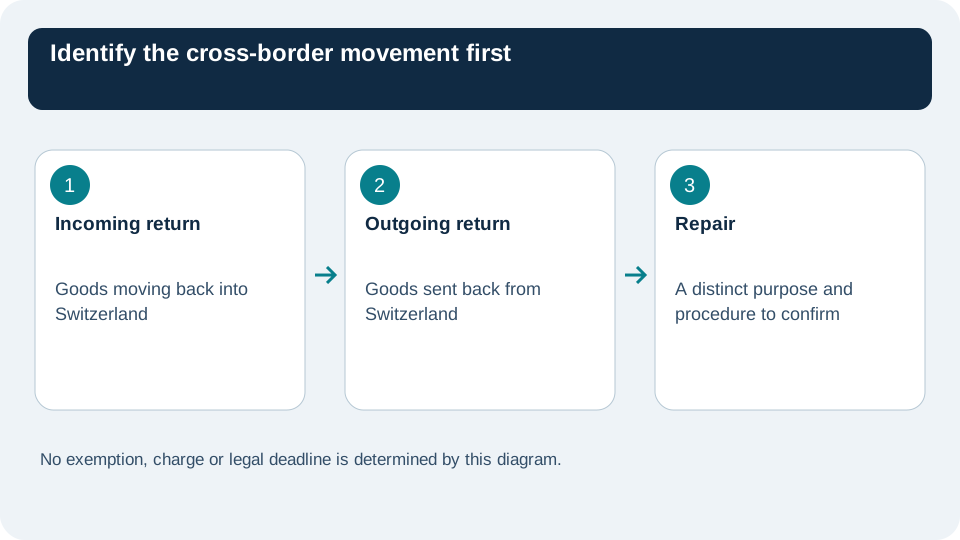
An item returning to Switzerland is not automatically the same documentary situation as an item sent back from Switzerland. A repair shipment can also require a different procedure from a return ending the original sale. Begin by naming the actual movement and purpose before completing transport or customs fields.
This guide organises the workflow for a fictional activity associated with Basel. It specifies no legal rate, threshold, exemption or filing deadline. No shipment or customs claim has been made. Check the current instructions of the Swiss Federal Office for Customs and Border Security, the other country and the chosen service for the real case.
The official Swiss guidance on returns, repairs and processing distinguishes relevant situations and links to their conditions. Use the section corresponding to your movement. A procedure for entry into Switzerland should not be copied unquestioningly onto an outgoing parcel.
Create a movement sheet before the label
Record departure country, destination country, original seller, return recipient, product reference and quantity. Add the condition and operational reason: reported defect, changed choice, refusal or repair, as applicable. The documentary classification must be confirmed for the actual operation rather than chosen merely to reduce a charge.
Identify who checks the documents and who supplies the missing information. An incomplete field remains unresolved until a relevant source is found. Do not let a hurried label creation establish a country of origin, value or product description that nobody has validated.
Separate customer communication from technical document preparation. The customer needs a clear next step and a real return destination. The team needs enough evidence to describe the goods and movement accurately. Both should refer to the same case and order line.
Preserve the exact item in a partial return
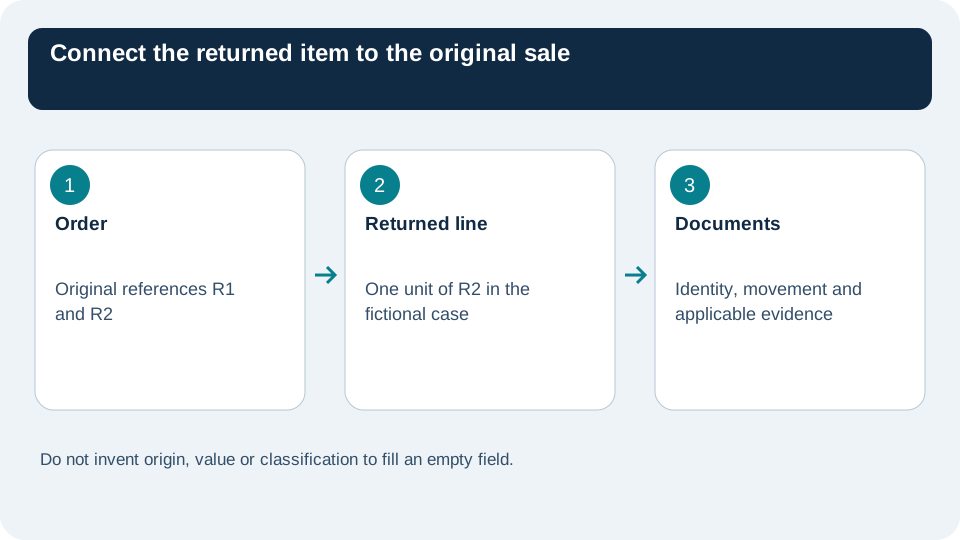
Imagine an original fictional order containing accessories R1 and R2. The customer sends back one unit of R2 for an agreed treatment. The dossier should retain that line and quantity, rather than attach every amount and document to both items indiscriminately.
| Illustrative record | Relationship to preserve | Check |
|---|---|---|
| Original order | R1 and R2 | Shared order identifier |
| Original invoice | The R2 line | Exact reference and relevant value |
| Return request | One R2 unit | Purpose and condition recorded |
| Transport papers | Intended movement | Current service instructions |
| Applicable customs record | Confirmed flow | Relevant verification |
The same discipline applies to an identifying serial number where one exists. The record should let the team recognise the goods received and compare them with the original sale. A partial quantity can affect the financial outcome and supporting evidence independently of the rest of the order.
Gather evidence without inventing origin or value
Retain the documents needed to identify the original goods and movement under the applicable instructions. Product reference, serial number where relevant and declaration records may support the link. Do not create a convenient origin merely because a field cannot be left blank in the interface.
Commercial price, customer refund and a value required for a declaration can answer different questions. Obtain the appropriate treatment from the relevant authorities or competent service actors. A zero value does not follow automatically from the fact that the customer is not making a new purchase.
For a repair, record the intended operation and expected later movement where applicable. Verify the relevant procedure before using ordinary return wording. This guide deliberately does not determine the classification or charges for a particular shipment; it provides the record needed to seek that determination.
Confirm the recipient and service requirements
Use the actual return address supplied and validated by the seller. An original dispatch address may not be the intended returns destination. Check the recipient, contact arrangements and acceptance conditions with the responsible party before the customer sends the item.
Ask the postal or transport provider for current instructions and a quote for the particular movement. Review tracking, collection and what happens if the parcel is not delivered. An old procedure can become unsuitable when the destination country, product or service changes.
Keep the confirmation date and relevant documents in the dossier. A transport label is a result of preparation, not proof that customs or commercial conditions have been satisfied. Do not present its successful creation as approval of the whole return process.
Assign responsibilities and costs transparently
State who prepares the parcel, who provides each document, who validates the address and who handles an exception. The customer message should explain the item, preparation steps and contact route in practical language. It need not expose every internal process detail.
Costs paid by the seller or customer must follow the valid conditions and applicable requirements of the actual transaction. An internal table of responsibilities cannot establish a general customer obligation. Check the legal and commercial basis before publishing a payment instruction.
Distinguish known costs from charges still awaiting confirmation. The customer should not be encouraged to send a parcel on the assumption that all later fees are already included when that remains uncertain. The team needs a defined way to resolve the missing information.
Track movement, receipt and financial outcome separately
A tracking event can support a transport status. Physical receipt supports arrival at the returns location. A financial request to an authority or provider has its own conditions and evidence. One completed stage does not automatically confirm the others.
At arrival, compare reference, quantity and condition with the original dossier. Route the goods to the appropriate inventory state rather than assuming every received item is saleable. Keep an exception record for a different reference or incomplete contents, with an investigation owner.
Where a possible refund of charges is relevant, consult the official requirements and windows promptly. This guide claims no entitlement or approved reimbursement. Maintain the related application or correspondence as a separate process linked to the same movement.
Calculate operational costs with explicit exclusions
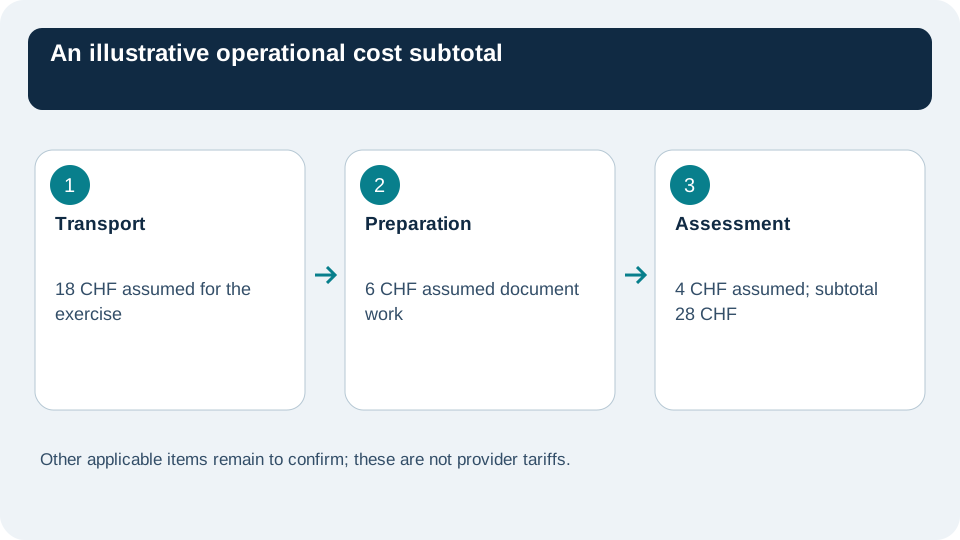
In a purely illustrative example, transport costs 18 CHF, internal documentary preparation 6 CHF and assessment 4 CHF. The known operational subtotal is 28 CHF. These are not service tariffs, customs charges or recommended Basel prices.
The subtotal excludes other items requiring confirmation. Keep each excluded or unknown item visible, with the source needed to establish it. An incomplete estimate should remain labelled incomplete instead of becoming a precise-looking total in the customer message.
Compare costs only for compatible movements and products. A repair returning later and a one-way return may involve different work. Use the worksheet to understand the particular case rather than declare one average cost for every cross-border parcel.
Start by mapping one incoming, one outgoing and one repair scenario conceptually, then seek the relevant current instructions. Check the order line, quantity, flow and responsible actors before producing documents. The useful outcome is a traceable process whose claims follow confirmed evidence, without assuming an exemption, value or reimbursement merely because the shipment is called a return.