
Reliable product pages connect every supplier fact to the correct reference and version. For an event-accessory catalogue serving Las Vegas, resolve conflicting dimensions, outdated photographs and missing pack quantities before writing, then retain the evidence and outstanding questions in a versioned register.

In this article
- Resolve the data conflict before improving the prose
- Identify the reference and version of every source
- Use six references to expose different problems
- Compare dimensions by field, unit and version
- Check photographs against the actual offer
- Define the critical fields that block publication
- Publish a controlled lot with a change record
- Review changes before they overwrite validated facts
Resolve the data conflict before improving the prose
A confident description cannot settle a disagreement between supplier documents. When two measurements or images refer to different versions, the useful action is to identify the sold product and the evidence applying to it. Writing should follow that decision rather than disguise the uncertainty.
This example uses six fictional event-accessory references associated with a catalogue serving Las Vegas. No supplier, certification or real product is claimed. Commercial quotations and prices belong in a separate USD process. Technical facts keep their source units, versions and limits.
Sometimes the correct publication decision is to hold a claim and ask a precise question. An empty internal field is easier to correct than an unsupported public promise. Give each question an owner and source requirement so the delay can be resolved rather than simply marked as pending.
Identify the reference and version of every source
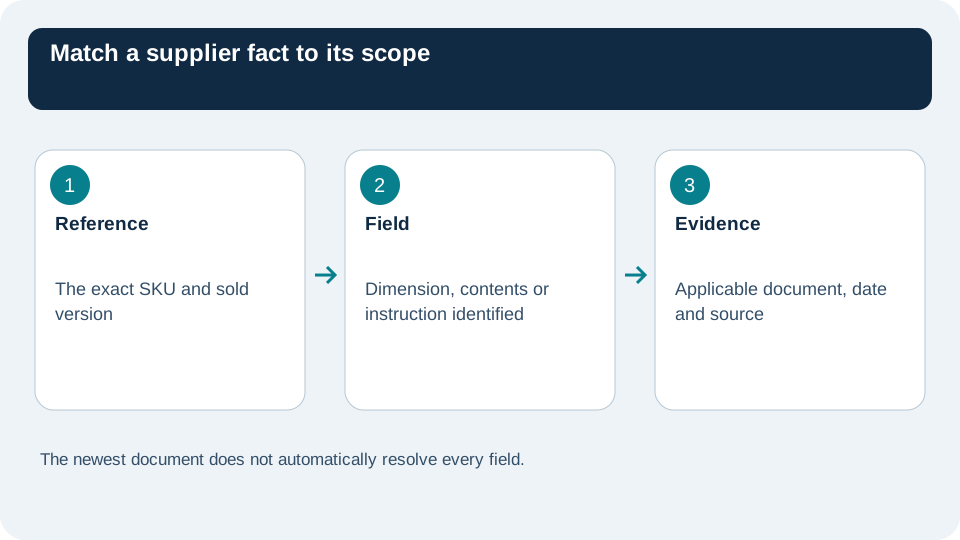
For each SKU, collect the supplier sheet, drawing, instructions and available images. Record the exact reference, version, date and fields covered. A recent range brochure may not establish the dimension of an older model, and an accurate old photograph may show an accessory no longer supplied.
Choose evidence according to the field. A drawing for the exact model can support a dimension, instructions can support use and a packaging confirmation can support included quantities. This is not a universal hierarchy in which the newest document automatically wins every dispute.
Shopify's product detail documentation identifies information used in product records. The platform provides fields; the seller still needs evidence for their contents. A completed field or tidy import does not certify the supplier fact entered there.
Use six references to expose different problems
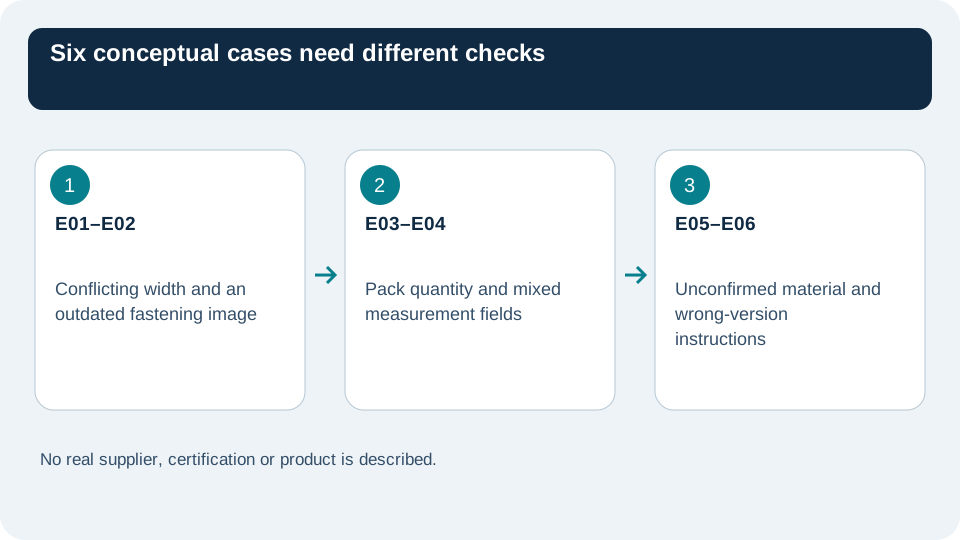
The conceptual references E01 to E06 illustrate distinct review cases. A product measurement and parcel measurement should not be treated as competing values for the same object. Similarly, a photograph can establish what was shown without proving that the shown contents match the current offer.
| Fictional SKU | Conflict or gap | Check required |
|---|---|---|
| E01 | Width 240 or 260 mm | Match drawing and sold model version |
| E02 | Earlier fastening shown | Confirm the current product and image |
| E03 | Pack quantity missing | Obtain applicable packaging information |
| E04 | Product and parcel dimensions mixed | Separate the fields |
| E05 | Material stated without a document | Obtain a relevant confirmation |
| E06 | Instructions for another version | Locate the correct instructions |
Each case receives a specific question rather than a general request for better data. That makes supplier replies easier to evaluate. Keep the unresolved source passages so the person confirming the answer can see exactly what needs to be reconciled.
Compare dimensions by field, unit and version
Before declaring a contradiction, inspect the measurement name. Outer width and usable internal width describe different spaces. Length, width and height can also appear in different orders. A number should be interpreted with its label, unit and relevant model.
For E01, ask which drawing applies to the version physically sold. Retain the supplier reply with its date and scope. If an internal measurement contributes evidence, record the method and sample. It does not automatically establish a guaranteed dimension for an entire production run.
Never average the two disputed widths to create 250 mm. That would invent a third value rather than resolve the documents. Conversion also does not settle a model conflict. Keep the source value and document any conversion or rounding only when it helps the reader understand a validated fact.
Check photographs against the actual offer
For E02, compare the visible fastening, components and shape with the current version. A different background colour is not the same issue as a changed part. The image should represent what is sold, with an explanation when a shown element is outside the offer.
For E03, establish quantity before attaching a price meaning. An illustrative 30 USD price for one item and for a pack of three describes different purchases. This is not a real price; it shows why packaging and commercial wording must share the same reference.
Review media rights separately from factual accuracy. Receiving a photograph does not necessarily establish every permitted use. Keep the authorised source and any relevant restrictions in the record. A correct image with unclear rights and an authorised image of the wrong version both need action.
Define the critical fields that block publication
The critical fields depend on the product and the claims made. Reference, contents, relevant dimensions and use conditions often need resolution before publication. Write the criteria for the catalogue rather than assuming every blank field has the same impact.
E04 may become ready after product and parcel dimensions are separated. E05 may still need a material confirmation. E06 may remain blocked until the correct instructions arrive. These are different outcomes even if all three originally carried a missing-data status.
Keep proposed marketing benefits behind the same evidence check. A statement about durability or compatibility cannot be justified only because the supplier used similar promotional wording for another model. Ask what document supports the actual version and claim.
Publish a controlled lot with a change record
When a reference is ready, retain the validated fields, their sources and the publication date. Keep a master record and identify each place where the facts have been used. This allows a later supplier change to reach the catalogue, images, instructions and related marketing content.
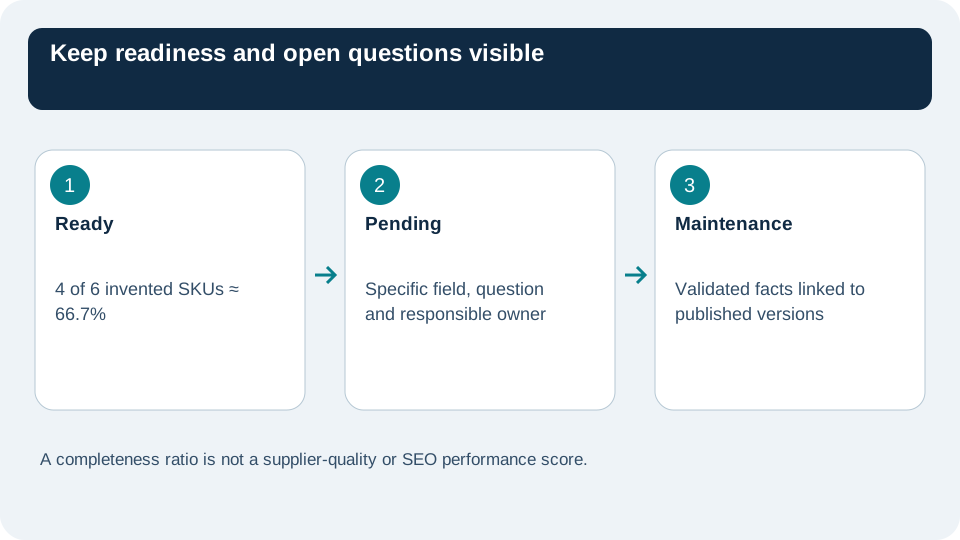
In an invented scenario, four of six SKUs are fully ready after the first review, approximately 66.7%. The remaining two keep specific questions and an owner. This is a completeness measure for the exercise, not a judgement about a real supplier or the catalogue's search performance.
Do not improve the ratio by quietly removing blocked references from the denominator. Show the scope of the lot and the reason each item remains pending. The register should support the decision, not become a score that encourages unsupported publication.
Review changes before they overwrite validated facts
A new supplier file can contain a new version, a corrected field or another error. Compare it with the existing record before replacing every value. Identify the affected SKU and claim, then ask whether the source applies to the stock currently sold.
For a changed image, recheck components and included quantities. For changed instructions, recheck the linked documents and any adapted language versions. Assign an owner to the update so the source version does not advance while the public description remains old.
Start with six representative references and fill the evidence register. Resolve the fields that affect purchase and keep precise questions for the rest. The catalogue becomes reliable through reference-level decisions and traceable sources, rather than through a rewrite that makes uncertain data sound finished.

SEO for Your Online Store
Explore this related DIY Marketing Guide guide to work further on the method. DIY is part of our business group; contents, language and price are shown on its store.
See the English guide