
Useful B2B specifications connect each claim to the exact component model and its evidence. Give procurement teams comparable fields, dated documents and a clear quote path; leave unknown attributes unresolved instead of filling gaps with persuasive wording.

In this article
B2B product specifications should help a buyer reject an unsuitable component before requesting a quote. Put the exact model reference, supported dimensions, materials and operating constraints in comparable fields. Separate verified facts from configurable options, and keep a downloadable document attached to the model it actually describes.
The specification follows the model and the buyer’s requirements. When adapting the table to another market, preserve original units, state the quote currency and verify documents for the actual product. The fictional catalog does not establish certification, stock availability or delivery coverage in any location.
Structure the page for a procurement decision
A hypothetical workshop buying a replacement component needs more than a paragraph about durability. Its buyer must check fit, the maintenance team must check compatibility and procurement must confirm quantities and lead time. Give each reader a route to the same authoritative product record.
Use a technical table for dimensions and stated operating conditions. Preserve units and qualifiers from the verified documentation. A maximum value measured under one condition is not a general operating guarantee. Explain the boundary beside the value rather than burying it in a PDF footer.
Shopify’s B2B catalog documentation covers product availability and pricing by catalog. That selling configuration is separate from evidence quality: a buyer-specific price does not validate an engineering claim.
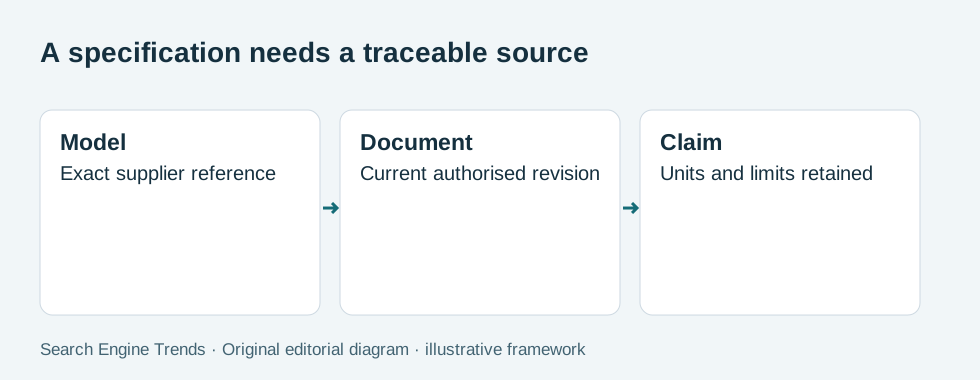
Keep the specification workflow auditable
Assign responsibility for obtaining source documents, normalising fields and approving publication. A copywriter can improve readability without becoming the authority for an undocumented tolerance or certification. Where the supplier has not answered a technical question, publish a contact route or omit the claim.
Reference control
Does the source name the exact item being offered? Match supplier model, internal SKU and drawing reference in one record. If an importer renamed the product, retain the original supplier reference for traceability.
Check against a model mapping with the current source revision. If the drawing covers a neighbouring model rather than this one, review the affected case before continuing. Similar-looking components can have different dimensions, so a family name is not sufficient evidence.
Unit normalisation
Can buyers compare these values without conversion guesswork? Write the unit beside every measurement. Preserve the original value and explain any conversion or rounding used in the comparison table.
Check against a reviewed unit table with original measurements retained. If a conversion changes the apparent tolerance or leaves the unit unstated, review the affected case before continuing. A readable table must not silently weaken the precision of the supplier’s technical record.
Quote boundaries
What must be confirmed before the buyer commits? Separate confirmed specifications from options requiring a custom quote. Record quantity, pack increment and destination without inventing a production commitment.
Check against a quote checklist tied to the requested part reference. If an optional configuration has no approved technical evidence, review the affected case before continuing. Commercial enthusiasm cannot resolve a missing drawing or turn an estimate into an agreed delivery date.
Compare three hypothetical component models
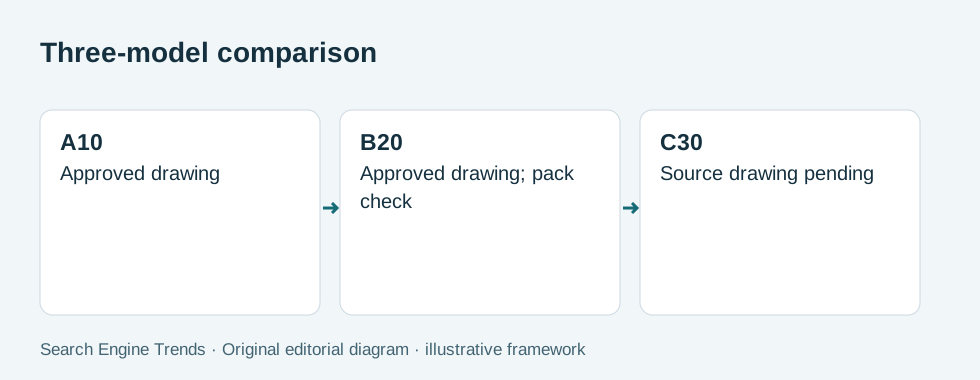
The following table is an invented catalog-planning exercise. References A10, B20 and C30 are fictional, and the figures are not engineering advice or manufacturer specifications. Its purpose is to show how comparable fields expose a missing document before a buyer places an order.
| Field | A10 | B20 | C30 |
|---|---|---|---|
| Nominal length, illustrative | 40 mm | 60 mm | 80 mm |
| Drawing status | Approved revision | Approved revision | Awaiting source |
| Pack quantity, illustrative | 10 | 20 | 10 |
| Buyer action | Check fit | Check fit and pack | Request documentation |
Do not convert “awaiting source” into “standard specification”. Instead, tell the buyer which information is unavailable and who will obtain it. If a custom option changes the part reference, create a distinct quote line so that the eventual purchase order cannot accidentally refer to the standard item.
Separate commercial terms from technical evidence
Display whether the listed amount is a unit price, pack price or indicative estimate. Identify the quantity on which a quote depends. A procurement team comparing three suppliers should not have to infer that one price covers twenty parts while another covers one.
Keep lead times attached to a stated stock and production condition. Distinguish items ready to dispatch from made-to-order components. When availability changes, update the quote workflow and page statement together. A technical document may remain valid while its commercial promise becomes stale.
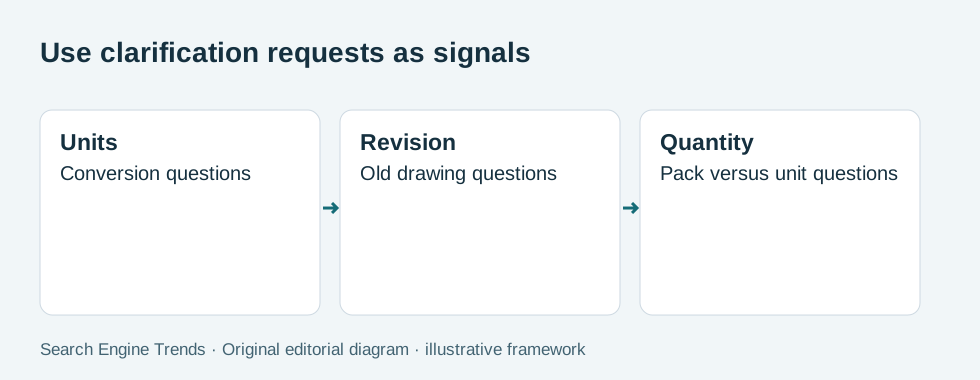
Measure clarification requests rather than just quote submissions. Tag questions about units, drawing revisions, pack sizes and unavailable attributes. Several requests for the same missing measurement signal a catalog problem. A large number of quote leads can conceal pages that fail to qualify buyers properly.
Give procurement a usable clarification request
Create a short request form that distinguishes missing technical evidence from commercial negotiation. A buyer asking for an unlisted mounting dimension needs a drawing or a measured answer; a buyer requesting fifty units needs quantity and delivery terms. Sending both questions into an unstructured sales inbox encourages answers that omit the original model reference.
In the fictional three-model catalog, a request for C30 should carry the exact model and the missing drawing status. The response should identify the document supplied or explicitly state that the attribute remains unresolved. Avoid replacing the technical answer with “our team will advise”, which leaves the buyer unable to decide.
When the evidence arrives, update the public specification and the downloadable file together. Check any existing quotes that relied on the earlier incomplete record. A revised drawing can change a buyer's decision even if the product title stays the same. This is why the model mapping and document revision belong in the quote handover, not only in the marketing asset folder.
Checklist before releasing the catalog page
- Confirm that the model reference matches the supplier evidence.
- Keep units consistent in the table, drawing and downloadable sheet.
- State the conditions attached to performance figures.
- Identify the document revision and its approval date.
- Make unit and pack pricing distinguishable.
- Route custom configurations through an explicit quote record.
- Remove unsupported certifications and broad compatibility claims.
Offer a practical next step: ask the buyer to provide the required model, quantity and delivery destination. Avoid requiring sensitive production details in a public form. The goal is enough information for a meaningful quote without using the form as a substitute for product documentation.
FAQ
Should a product page reproduce the full supplier sheet?
Extract the decision-critical facts in your own structure, retain qualifiers and link the authorised source document. Check reuse permissions rather than copying an entire protected sheet.
Can three models share one PDF?
Yes, when the document clearly identifies each model and the page points to the relevant section. A generic family brochure is weaker evidence for a model-specific claim.
What if an attribute is unknown?
Leave it unknown and obtain confirmation. An empty tolerance field is less damaging than an invented value that reaches a purchase order and the workshop floor.