
A reliable New York delivery promise combines eligible addresses, available stock, preparation capacity and a confirmed route. Offer a slot only when those conditions agree, then communicate changes before a customer has to chase the order.
In this article
For New York local delivery, promise a delivery window that your team can actually reserve. An address inside your service area is only one requirement. The basket must be ready at one dispatch point, a driver must have capacity, and the customer needs to understand whether the displayed window is provisional or confirmed.
Build the promise around the final handover
An apartment delivery can require a building entrance, a floor, an intercom instruction and permission to leave a package. Collect useful access instructions separately from the address. Avoid asking for door codes in publicly visible order notes or analytics fields. Give drivers only the information necessary to complete the stop.
Start with one manageable service area rather than using the whole city as a sales claim. Identify the dispatch location, packing cutoff, loading period and route buffer. A district name cannot establish whether a particular address is reachable within a window. Evaluate actual routes and address exceptions before adding those locations to checkout.
Shopify documents address and inventory eligibility in its local delivery setup guide. Use the platform settings as the eligibility layer; maintain an additional capacity process if your configuration does not reserve timed slots.
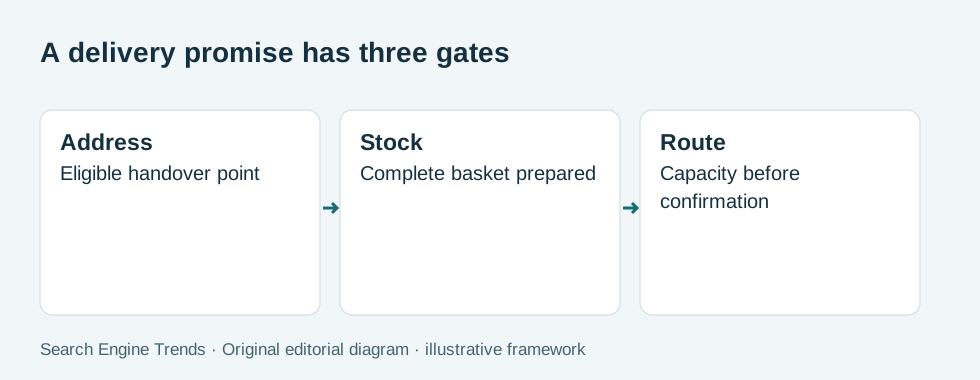
Put three checks between checkout and confirmation
The order receipt acknowledges purchase. The slot confirmation communicates the delivery commitment. Keep these messages distinct if a colleague must assess capacity after checkout. State when the customer will receive confirmation and provide a cancellation or alternative-slot contact route consistent with your policy and applicable requirements.
Address access
Can the driver reach the agreed handover point? Validate the complete address and request an entrance instruction for buildings that require it. Separate recipient contact details from information printed on external packaging.
Check against an address check and a usable access note. If the address is incomplete or the handover location is ambiguous, review the affected case before continuing. An accepted postcode cannot tell the driver which entrance the customer expects.
Packing reservation
Does this basket fit the preparation workload? Reserve the complete order at one dispatch point. Count fragile packing and oversized items explicitly instead of treating all orders as equal.
Check against a picking list linked to the reserved stock and packing queue. If a component is missing or the packing bench is already fully allocated, review the affected case before continuing. A delivery window is only credible when the goods can leave the bench in time.
Route confirmation
Is there space on the route that serves this address? Assign a driver and a route position before confirming a timed window. Preserve a buffer for failed access and record the customer’s requested slot.
Check against the route assignment and the exact confirmation message. If no driver is assigned or the route crosses the planned time limit, review the affected case before continuing. The capacity decision must follow the actual route rather than the number of orders on the dashboard.
Calculate a route before selling its last slot
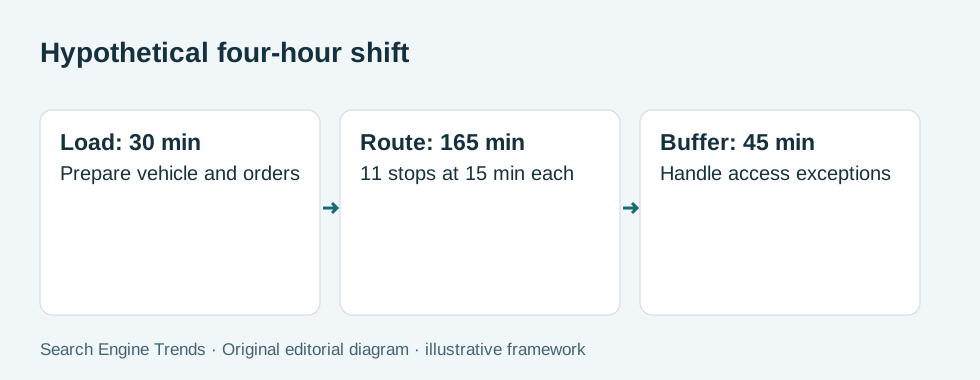
Consider a hypothetical small retailer dispatching from New York. These numbers illustrate planning, not observed driving times. A four-hour shift contains 30 minutes of loading and 45 minutes of contingency. That leaves 165 minutes for travel and doorstep work. If the planned route averages 15 minutes per stop, capacity is 11 stops, before product-specific restrictions.
| Planning input | Hypothetical minutes | Operational consequence |
|---|---|---|
| Shift | 240 | Upper planning limit |
| Loading | 30 | Happens before the first stop |
| Buffer | 45 | Protects against access problems |
| Usable route time | 165 | Supports 11 stops at 15 minutes |
Do not sell an eleventh slot automatically if it sits outside the route sequence. The average hides variation. A single stop requiring a second visit can consume the buffer; an extra bulky order can extend loading. Review the final basket and route position rather than assuming all orders consume one identical unit of capacity.
Measure missed promises rather than delivery volume alone
Track confirmed orders delivered within the stated window, failed access attempts and late confirmations. Keep customer-requested rescheduling separate from merchant delays. Otherwise the service appears unreliable when the customer deliberately changed the appointment, or reliable because late orders were removed from the denominator.
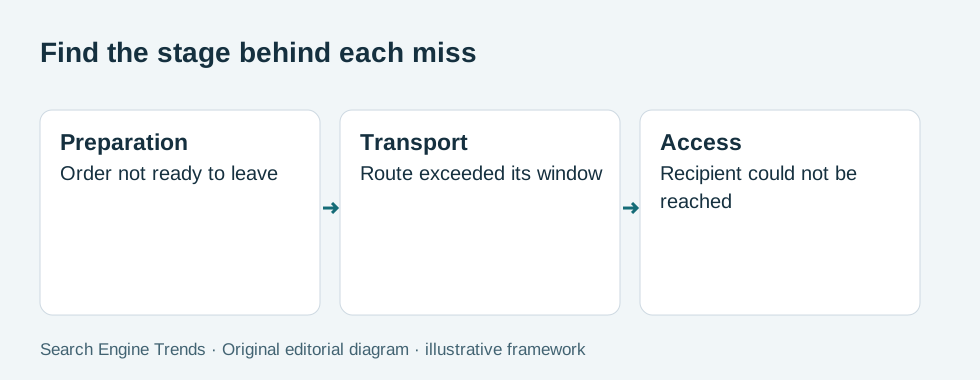
For each miss, record the stage that failed: preparation, route assignment, transport or building access. Correct the bottleneck before advertising more slots. A larger delivery radius is a poor response to an overloaded packing bench. Equally, adding another packer will not fix an address rule that offers delivery to unsupported buildings.
For US merchandise orders, review the FTC shipping-time rule when writing dispatch claims. This operational model does not replace applicable consumer obligations or turn a carrier estimate into a guarantee.
Test a full slot and an incomplete address
Before releasing a new delivery window, simulate the last available reservation and the next attempted booking. The first should consume the remaining capacity. The next should receive a clear alternative, rather than a receipt for a slot the team cannot honour. Check this transition while two staff members are managing the queue, because simultaneous manual confirmations can create an extra reservation.
Also review an order whose building number is missing. The correct response is to request the missing information before allocating a final route position. Keep its payment and preparation status visible while the address is unresolved; do not lose it inside a generic cancelled-order count.
Use the result to improve the confirmation message. It should identify the day, local time window, handover instructions and the next action if access fails. “Your order is being processed” tells the customer almost nothing about when to be available. A precise provisional message is useful while the route is being arranged, provided it states when the final confirmation will arrive.
Checklist for the next delivery day
- Confirm sellable stock at the actual dispatch location.
- Remove unsupported addresses before checkout accepts the method.
- Reserve packing time and driver time separately.
- Send a clear confirmed window and access instructions.
- Prepare a customer contact message for missed or changed windows.
- Review yesterday’s failed stops before releasing today’s capacity.
Start with a limited number of slots and keep the route worksheet. Expand after the team can explain the exceptions, rather than after one unusually easy day. The useful deliverable is a repeatable promise with a visible owner for every order.
FAQ
Should every New York order offer same-day delivery?
Only offer it where address, payment, stock and capacity checks support the claim. A narrower honest option is more useful than a citywide label followed by manual cancellations.
Is a radius enough to define the delivery area?
A radius is an eligibility tool. It does not calculate building access or the route workload. Test representative addresses and maintain exclusions where the actual service requires them.
What should happen after an unsuccessful attempt?
Record the attempt, contact the customer through the agreed channel and arrange the next action. Do not mark an undelivered parcel as delivered merely to close the queue.