A bilingual pickup service needs one shared product and inventory record, with equivalent English and French instructions. Reserve stock for the order, send ready status after preparation and record actual handover once. Language preference should never create a second quantity or reservation.
In this article
Raleigh bilingual store pickup should give English- and French-speaking customers access to the same service and the same inventory. Keep one SKU for the sellable item, one order reference and one stock reservation. Translate the instructions without duplicating the underlying quantity or changing what “ready” means.
Keep the service separate from its language labels
This example concerns a hypothetical Raleigh retailer offering collection at one pickup point. It does not claim that Search Engine Trends operates a store there. The merchant’s real address, hours and handover process would replace the illustrative fields before any service is offered.
The language preference controls customer-facing wording. It should not create another product, inventory location or order. Both versions need the same current availability and the same point of collection. A translated item name can remain readable while preserving the internal SKU that picking staff use.
Shopify’s pickup configuration documentation describes store pickup setup. Check the actual eligibility, preparation and notification behavior in the merchant’s configuration; translating the interface alone does not establish a working pickup process.
Define received, reserved, prepared and handed over
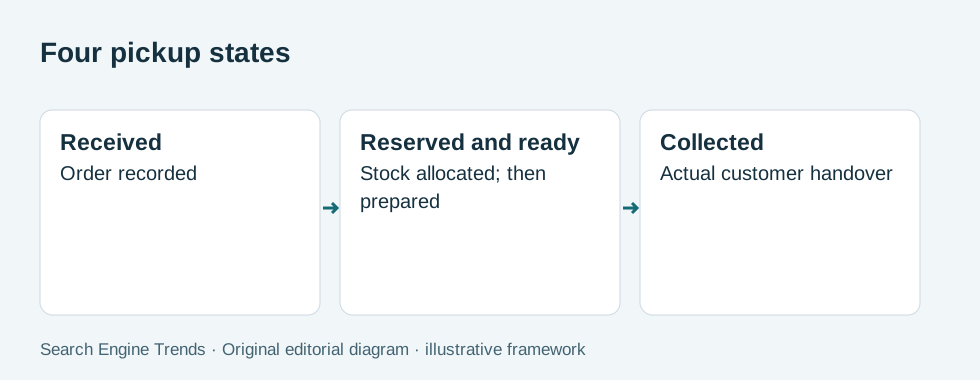
An order received is recorded in the system. Stock reserved is allocated to that order. Prepared means the items have been picked and are ready at the pickup point. Handed over means the customer or appropriately authorised collector has actually received them.
Use the same operational states for both languages. Do not translate a preparation status in a way that implies collection is complete. The customer should know whether to wait for a ready message or travel to the pickup point.
An order might move through these states at different times. If a product needs special packing, payment completion does not prove the bag is ready. If a customer does not collect promptly, the prepared order remains uncollected; its reservation should follow the defined policy rather than silently disappearing.
Write two equivalent ready messages
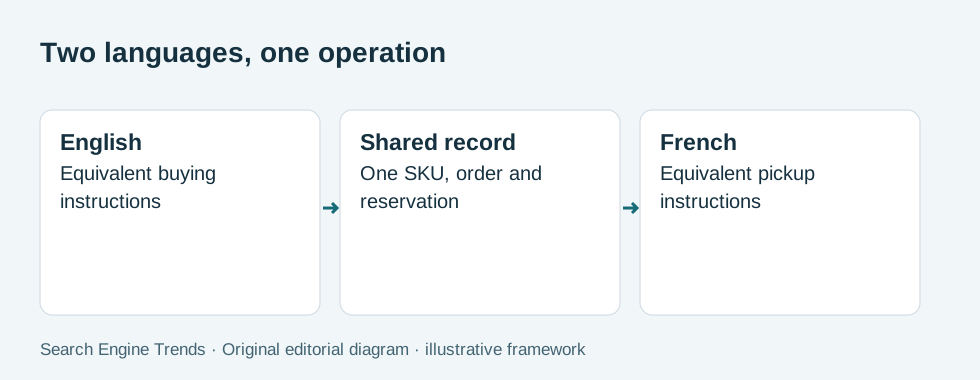
The two versions should contain the same order reference, pickup point, collection arrangement and next action. For example, an English message can say “Your order is ready for pickup” and the French version “Votre commande est prête à être retirée”. The surrounding instructions must accurately describe the actual store procedure.
Review essential fields, not just the translation’s tone. A wrong street number or different collection period can create a wasted trip. A contact link that exists in English but is absent in French can leave the customer unable to resolve a problem.
Shopify’s localization documentation is a useful implementation reference. Inspect the entire language journey: product, basket, checkout, receipt, ready notice and help page. Record any unexpected language change and whether it affects an essential instruction.
Test concurrent orders against one quantity
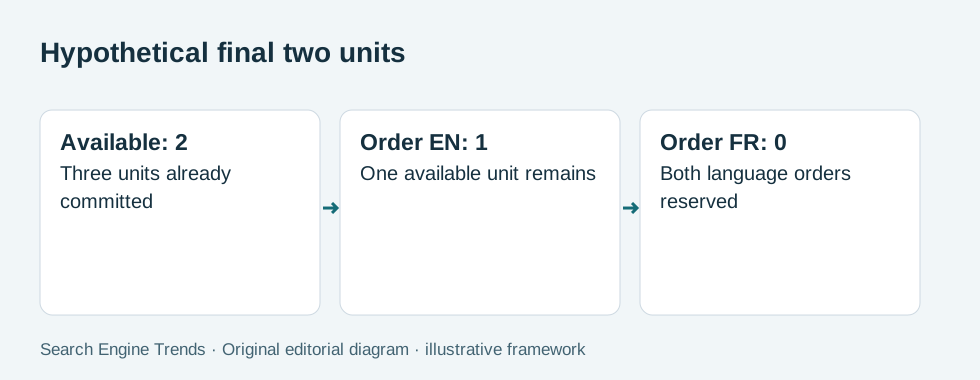
Suppose the hypothetical pickup point has five units of one SKU. Three are already committed to orders and two are available. Two customers using different languages each order one unit. The intended result is two new reservations and zero units remaining available, not one remaining quantity per language.
| Illustrative stock event | Available units | Committed units |
|---|---|---|
| Starting position | 2 | 3 |
| English-language order reserves one | 1 | 4 |
| French-language order reserves one | 0 | 5 |
These counts illustrate one simplified state transition. Use the actual platform definitions when implementing it. Shopify explains inventory states in its inventory-state guide.
Now simulate a cancellation before preparation. Confirm that the relevant reservation releases once and that any queued ready notice is removed. Also inspect a cancellation after preparation, which may require a physical shelf action. A language switch or message resend must not repeat the stock movement.
Reconcile exceptions and final collection
Create a clear route for unavailable items, incomplete contact information, missed collections and changed pickup arrangements. The customer message should reflect the unresolved condition rather than presenting a completed state the staff have not achieved.
At handover, identify the exact order through the merchant’s defined procedure. A familiar name is not sufficient when the buyer has several orders or another customer shares the name. Record the collection once and check that both the stock and the customer-facing status agree.
At the end of the operating period, reconcile received orders, active reservations, prepared uncollected bags and actual handovers. Differences often identify the stage that was skipped or duplicated. Review individual exceptions rather than forcing the stock total to match a spreadsheet without an explanation.
Bilingual pickup checklist
- Keep one SKU and one quantity across languages.
- Reserve the basket at the actual pickup location.
- Translate equivalent instructions and preserve order identity.
- Send ready status only after preparation.
- Test two simultaneous orders for the final available units.
- Check cancellation, message resend and language switching.
- Record actual collection and unresolved no-shows separately.
Test a language change after the reservation
Take the hypothetical English-language order after its unit has been reserved and switch the customer-facing view to French where the platform supports it. The order reference and stock allocation should remain the same. Only the supported wording changes. Inspect the ready message and help destination so the customer can still identify the location and next step.
Then resend a notification through the actual supported process. A resend should communicate the existing state rather than create another reservation or handover. Record the test scenario before implementation so the team knows exactly what to inspect.
Finally, check a mixed message containing an English product name and French pickup instructions. Preserving a product name can be appropriate, but the operational instructions must remain understandable. Explain any deliberate untranslated identifier rather than asking staff to guess which bag the buyer means. This edge case is especially useful when translated display labels differ from the labels printed on the physical order.
FAQ
Do translated product pages need separate inventory?
Language versions of the same sellable variant should retain the appropriate shared product identity and quantity. Verify the actual platform mapping before offering stock through both versions.
Can a ready notice count as proof of collection?
No. Readiness and handover are different events. Record the physical collection through the store’s defined process.
What is the most useful bilingual test?
Follow the same SKU through both language journeys and inspect stock, instructions and final state. This exposes contradictions that a translation-only review can miss.