
Ebook delivery should give the buyer the exact language, version and format described in the offer. For a seller serving Sacramento, verify the product-to-file mapping, confirmation email and download journey, then prepare a recovery process that can resolve access failures without unnecessary customer data.

In this article
- Treat payment and useful delivery as separate events
- Create a published-version register
- Keep language and version mappings explicit
- Prepare a purchase and access check without inventing results
- Review mobile readability and usable resources
- Prepare support for three different failure types
- Change files through a documented release step
- Measure delivery with appropriate boundaries
Treat payment and useful delivery as separate events
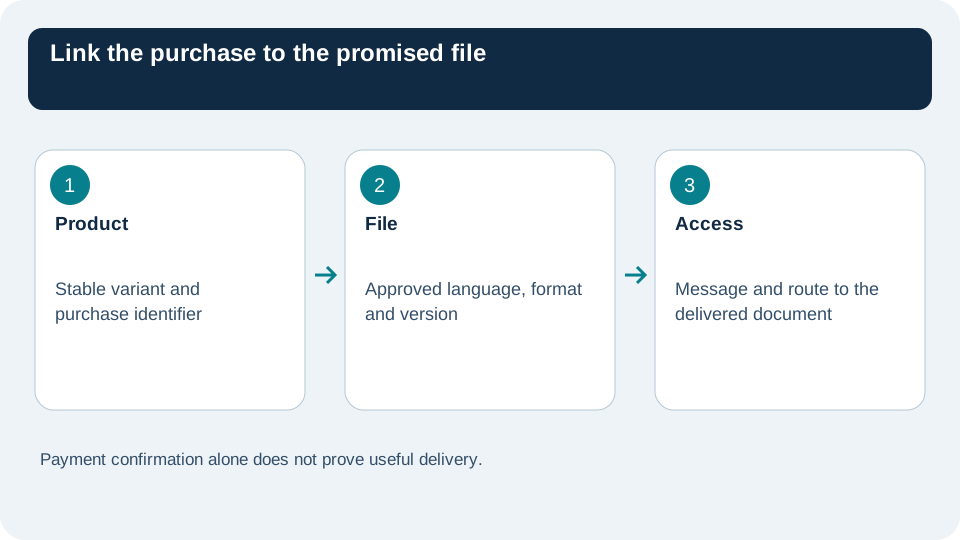
A confirmed payment does not prove that the reader received or opened the ebook. Reliable digital delivery needs a correct product-to-file relationship, an accessible message and a usable document. Check all three before promoting the offer widely.
This example uses a fictional gardening guide sold in USD to illustrate a seller's workflow associated with Sacramento. No purchase, local reader or sales result is reported. Legal conditions for selling digital content require a separate check for the actual business and markets. The guide below concentrates on operational delivery.
Begin with the promise shown before purchase. List the language, format, resources and access arrangements actually included. The delivery process must fulfil that promise rather than provide whatever file happens to be stored in the last upload field.
Create a published-version register
Record the ebook title, product identifier, language, format, version, validation date and active file. A filename helps locate the document, but it is not proof of its contents. Open the file and inspect the cover, contents page, links and final page.
Different formats may suit different reading habits. A PDF can preserve layout while an EPUB offers a different reader experience. Describe the formats supplied and the devices or readers you have actually checked. Do not claim universal compatibility after one successful opening.
Shopify's digital product documentation describes its delivery application and options. Check the current features of the installed solution and plan. Do not assume that replacing a file automatically gives previous buyers the updates your commercial offer promises.
Keep language and version mappings explicit
Imagine a guide called Preparing a Small Growing Space, offered in French and English. Two digital variants point to reviewed files FR-v2 and EN-v2. Earlier versions FR-v1 and EN-v1 remain archived and must not be attached accidentally to a new order under our fictional offer.
| Illustrative record | French variant | English variant | Check |
|---|---|---|---|
| Active file | FR-v2 | EN-v2 | Exact language and version |
| Offered format | Document opens correctly | ||
| Archived file | FR-v1 | EN-v1 | Not linked by mistake |
| Access message | French | English | Instructions match the purchase |
These files are conceptual examples, not resources claimed to exist on Search Engine Trends. The mapping matters because a correct payment flow can still deliver the wrong language or an outdated guide. Use stable identifiers and an approval record when changing the active association.
Prepare a purchase and access check without inventing results
Build a checklist covering mobile and desktop, each language and each offered format. Use a suitable test mode or environment rather than causing an unnecessary real payment. Record what has been checked, the evidence and the items still awaiting verification.
After order confirmation, inspect the product named in the message and the link destination. Use an authorised test address and examine the relevant email folders. Simulate a typing error where the tool permits it, and establish how support would recover access. Closing the confirmation page should not leave the customer without an understood route to the purchase.
Download and open the actual delivered file. Check its contents against the version register rather than merely confirming that the button works. A download can succeed while the document is blank, corrupt or associated with the wrong product.
Review mobile readability and usable resources
Inspect headings, diagrams and linked exercises on the devices relevant to the audience. A document that opens technically may still require constant zooming or present a table that cannot be read comfortably. The check should reflect the use promised by the offer.
If the guide supplies editable resources, confirm their names, formats and relationship to the instructions. An exercise that refers to a missing worksheet creates a delivery defect even if the main PDF is correct. Keep the resource list alongside the active version.
Review external links and any software procedure that could change. Date the sources and identify how future corrections will be handled. A maintenance plan should match the actual offer; do not promise lifetime updates because a checkout field permits file replacement.
Prepare support for three different failure types
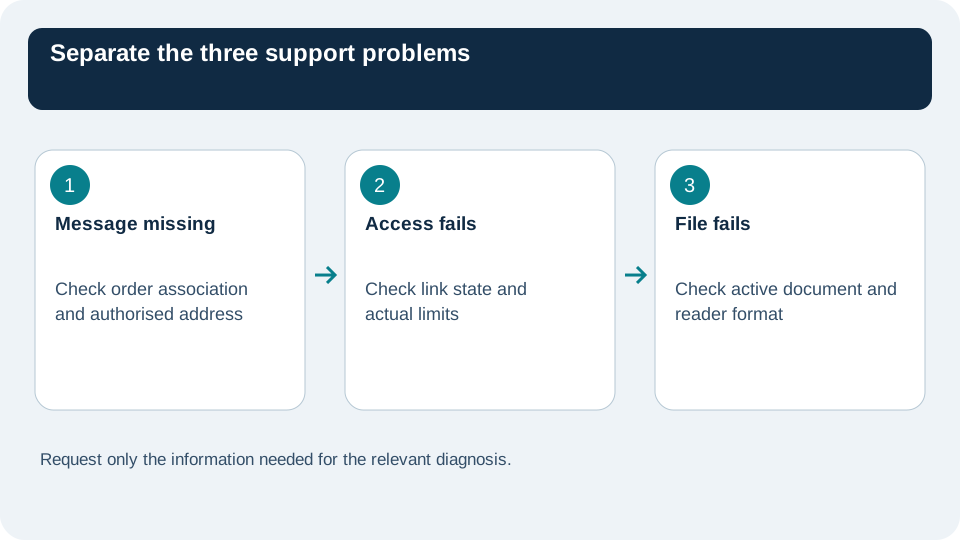
The help route should let a buyer distinguish a missing message, an invalid access link and a file that will not open. These problems need different checks. Request the minimum information needed to locate the order and understand the stage, rather than asking for screenshots of payment-card details.
For a missing email, confirm the order association and address through the authorised process. For a link problem, check the access state and relevant limits. For a document problem, verify the active file and the format the reader is trying to use. Keep each resolution attached to the case identifier.
Confirm any real download limit or expiry before publishing it. If support can resend access after verification, explain the actual conditions. Do not announce permanent access or automatic delivery of all future versions unless the commercial and technical arrangements support that promise.
Change files through a documented release step
A new version should pass the same content and access checks before becoming active. Record which purchase variant it belongs to and retain the previous file in the intended archive. Avoid replacing several language versions from memory during a hurried correction.
Determine what happens to earlier buyers under the real offer. Technical capability and customer entitlement are different decisions. The update message should identify the version and explain the relevant change without implying that all buyers receive a benefit absent from their purchase conditions.
If a release is wrong, the register should allow the team to identify affected orders and restore a valid association. A rollback procedure is most useful when it can locate the actual file and variant, not simply an approximate filename in a downloads folder.
Measure delivery with appropriate boundaries
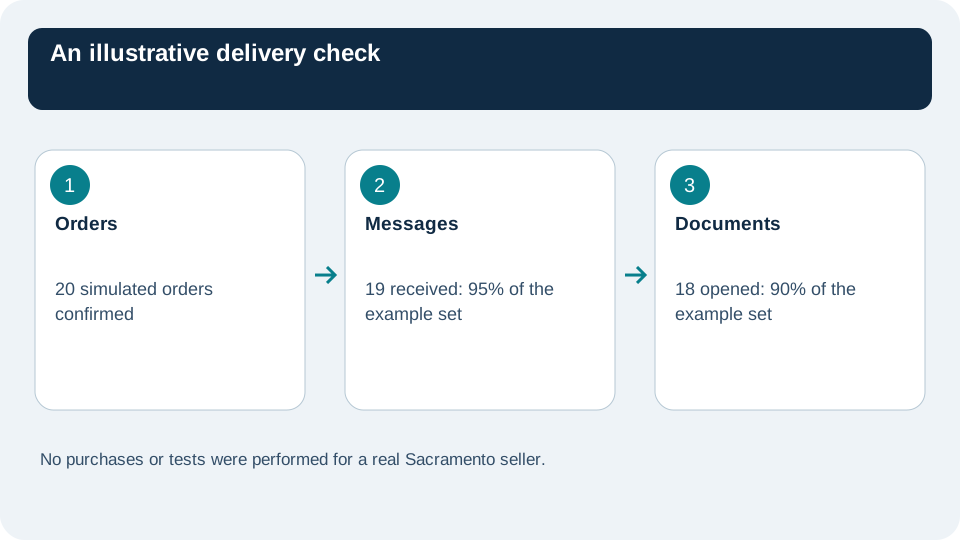
In an invented exercise, twenty test orders are confirmed, nineteen messages arrive and eighteen files open correctly. Message receipt is 95% of test orders, and successful opening is 90% of the same defined set. These are teaching figures, not platform performance or Sacramento sales statistics.
Classify failures by mapping, message, access and document. Fewer support tickets can mean improvement, but may also mean the help route is difficult to find. Keep journey checks and known incidents alongside ticket volume so the conclusion remains grounded.
Begin with one ebook and two simulated orders for its language versions. Verify the files, messages and recovery route, then record the remaining uncertainties. Digital delivery becomes dependable when the buyer receives the promised resource and the seller can diagnose an access problem without reconstructing the entire sale from memory.

Build Your Own Website
Explore this related DIY Marketing Guide guide to work further on the method. DIY is part of our business group; contents, language and price are shown on its store.
See the English guide