
Model a cross-border sale by shipment direction, product and destination. Separate seller costs, buyer charges and unresolved duties or processing fees. Obtain a dated quote and the applicable official guidance before presenting a complete customer-facing cost.

In this article
Show which costs belong to the seller and buyer
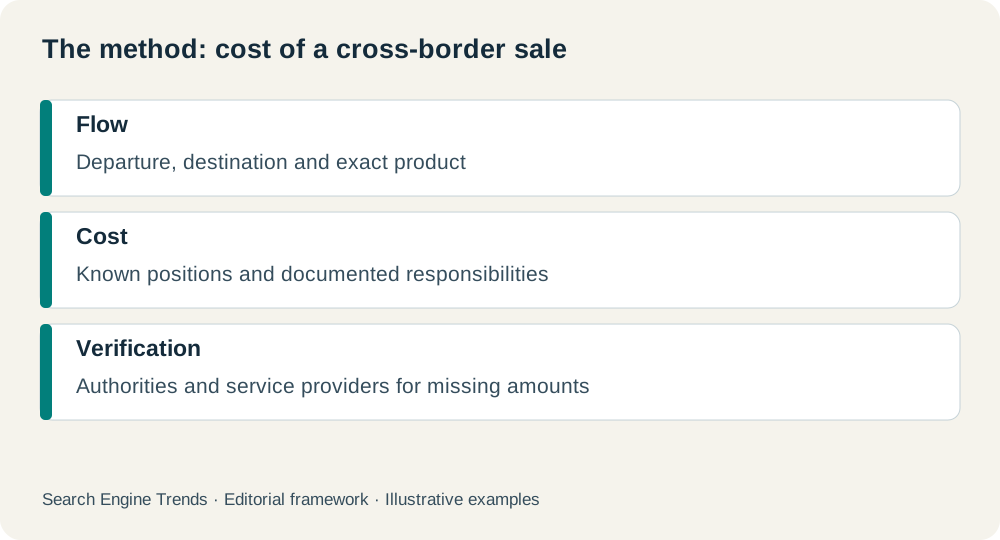
The cost of a cross-border sale must distinguish what the seller pays, what the customer pays and which amounts remain unconfirmed. For a Vancouver store, start with the shipment direction, the product and the exact destination. A shipping estimate does not automatically cover applicable paperwork, taxes or processing fees.
This guide provides an operational framework. It does not set any exemption threshold, tax rate or customs rules. Consult the authorities of the origin and destination countries for your actual product, then have the declaration and responsibilities confirmed by the appropriate specialist.
The scenario is fictional and expressed in CAD for easier reading. If a supplier or carrier offer arrives in another currency, keep its currency and the conversion method used. An old rate copied into a form is not a reliable basis for quoting a current order.
Define the shipment route before calculating
Record the seller, dispatch location, buyer, destination and nature of the goods. Distinguish between an import to Canada and an export from Canada. The procedure for one direction does not automatically apply to the other; a table bearing only the word “international” leaves this difference invisible.
Document the product reference, quantity, value, origin and composition using the available evidence. The classification and applicable rules require appropriate verification: do not infer them from a marketing category. A description useful to the client may be insufficient for a declaration file.
The Canada Border Services Agency publishes a guide for commercial imports. Use it as the official source for an applicable import into Canada, then review the information applicable to your case. This example does not replace this reading or an updated confirmation before shipping.
A hypothetical seller and customer table
Let's imagine a product sold for 120 CAD, costing the seller 45 CAD. An illustrative quote for transport costs 18 CAD and packaging costs 4 CAD. Customs amounts and processing costs are unspecified: we have not specified a real shipment or verified its product classification. They should remain “to be confirmed”, rather than given an arbitrary value.
| Illustrative cost item | CAD amount | Payment responsibility to confirm |
|---|---|---|
| Product sold | 120 | Customer according to offer |
| Seller product cost | 45 | Seller |
| Hypothetical transport | 18 | According to confirmed conditions |
| Hypothetical packaging | 4 | Seller in this scenario |
| Applicable duties and taxes | To check | Depends on the shipment and agreed terms |
| Processing Fees | To obtain | According to service provider |
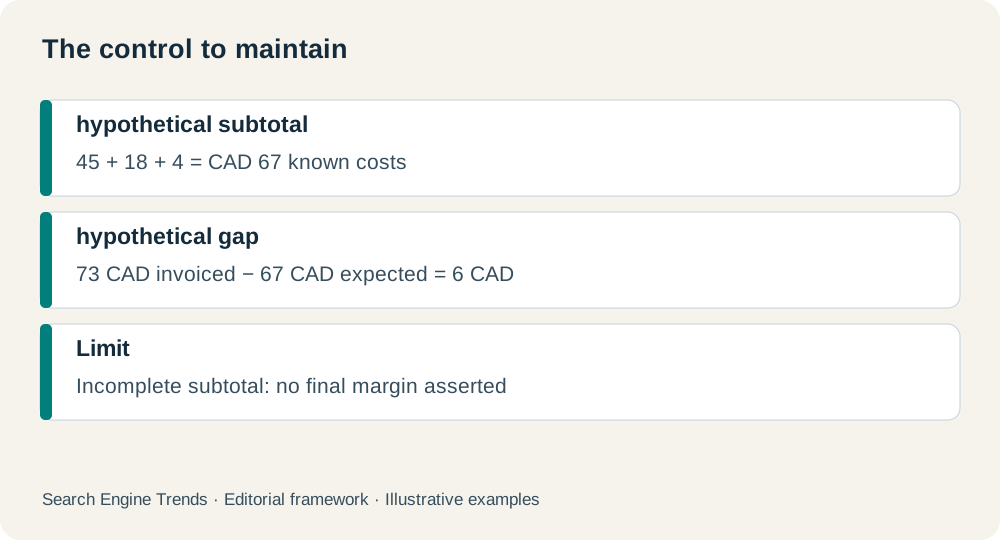
The documented cost subtotal is CAD 67. It does not establish a final margin of CAD 53, because cost items and responsibilities remain unresolved. A provisional calculation must carry its status into the commercial presentation.
Obtain a complete and dated quote
Send the dimensions and weight of the ready package, destination, contents and special needs. Ask what services are included, what operations are excluded, and what fees may be billed separately. A commercial term such as “all-inclusive” must be specified by a verifiable list.
Keep the expiration date, currency, volume assumptions and quote conditions. Check that the compared rate corresponds to the same delivery and processing responsibility. The name of the carrier is not enough to identify the scope: two offers from the same company can cover different services.
Ask how a refused delivery, incorrect address or return would be handled and charged. These costs should not be introduced only after the first incident. A quote may leave a question unanswered; then leave a decision line open and avoid turning the gap into an amount of zero.
Explain the costs before the customer orders
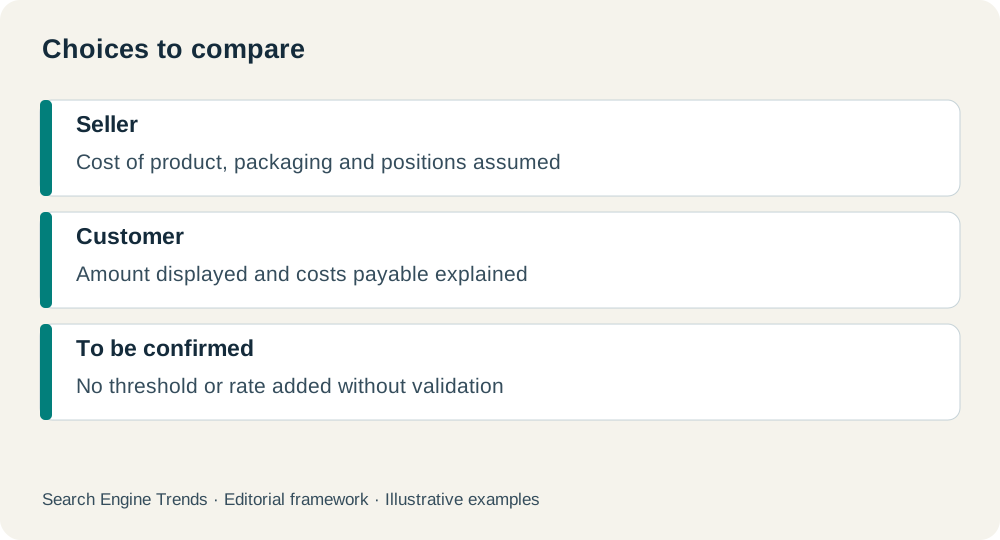
The purchase form and cart must show the billing currency, the known costs and any amounts remaining payable by the recipient according to the conditions actually verified. Communication should be visible before the order is placed, with wording that the reader can understand without knowing your logistics jargon.
Do not promise no paperwork or fees based on an old threshold found in an article. The rules depend on the goods and shipment route. An unverified condition must be resolved before presenting the offer as complete, especially when the final amount could change the purchasing decision.
Prepare the commercial invoice and other required documents according to the applicable instructions. Match each invoice line to its product reference and the item actually shipped. Commercial transparency and document accuracy are two complementary controls; a good sales page doesn't fix an inaccurate merchandise description.
Test a limited case and track deviations
Before expanding sales, choose one shipment route and a few documented products. Have the responsibility table reviewed and ask for confirmation of uncertain cost items. The pilot phase must respect all real obligations; it does not allow a simplified declaration invented to save time.
Then compare planned cost and invoiced cost, quoted delivery times and actual shipment events. In one illustration, a planned cost of CAD 67 and a final invoice of CAD 73 produces a variance of CAD 6, or about 9%. This discrepancy must be explained by item: material, transport or missing operation. It does not indicate any pricing rules.
To move forward, fill in the table for a product, identify the direction of flow and obtain the corresponding documents. Only generalize the procedure after validation of data and responsibilities. You can then publish precise conditions without passing off a cost assumption as a complete promise to the customer.
Cross-border quote checklist
- Identify the shipment direction and destination before using any authority's guidance.
- Record the exact goods, origin evidence and declared-value basis.
- Ask the carrier or broker which services and fees the quote covers.
- Assign responsibility for known costs and unresolved charges.
- Check currency, expiry date and the conditions of the offer.
- Review refusal, address correction and return handling before launch.
Keep unknown duties or processing fees out of the hypothetical subtotal. A blank value means the calculation is incomplete, not that the transaction is exempt. Obtain the missing confirmation before presenting a final customer-facing cost.
FAQ on cross-border costs
Does paid transportation cover duties?
Not automatically. Check the written scope of the offer and the distribution of responsibilities applicable to the actual transaction.
Can we use the same calculation in both directions?
Not without re-examining the authorities, the product and the conditions. Importing goods into Canada and exporting a sale require different reviews.
What should you do when an amount remains unknown?
Obtain confirmation or a suitable quote before announcing a final cost. A “to be confirmed” line is useful internally, but should not become a hidden surprise after purchase.
Official reference consulted: CBSA: guide to commercial imports into Canada. The scenarios and calculations are hypothetical editorial examples, not measured results from a local business.