
Define a period and question, inspect URLs associated with intents and topics, and choose information to verify. Citation Share describes citation presence for a grounding query; it is neither a ranking nor commercial traffic.
In this article
- Bing AI Performance helps you choose a content check
- Define the question before opening the charts
- Treat Intents and Topics as leads to investigate
- Keep Citation Share at its defined level
- Compare periods that support an actual decision
- Turn an observation into one specific improvement
- Keep commercial outcomes in a separate ledger
- Frequently asked questions
Bing AI Performance helps you choose a content check
Bing AI Performance can help an editorial team choose a page to improve when its observations answer a defined question. Start with a period, a URL and a topic, then inspect whether that page properly addresses the suggested need. Citation counts alone do not establish visits, recommendations or sales.
Microsoft introduced the initial report on February 10, 2026 to observe citations across supported AI experiences. On June 16, it announced four global preview capabilities: Intents, Topics, Citation Share and Compare. They cover context, themes, a grounding query's citation share and comparisons over time.
This article proposes a workflow for turning observations into decisions. The example catalogue and all its figures are fictional. We are not claiming access to a Bing account, citations earned by a real business or any measured commercial result.
Define the question before opening the charts
Our fictional shop sells desk accessories. Its team wants to choose which guides need work before a campaign. It asks: “do our pages support compatibility comparisons, or are they mostly answering general definitions?” That question connects the analysis to a practical editorial assignment.
Write it at the top of your working file. Specify the property, reporting period and filters actually available in the account. Record the observation date and preserve whatever raw data the interface lets you save, together with the reporting scope. A cropped chart cannot replace that context.
If there is no usable data, say so. Do not populate empty cells with an estimate from another tool. You can still review the site's existing explanations, but that work should be described as an editorial proposal rather than an observation from Bing's report.
Choose a question narrow enough to lead to one decision. Asking whether the entire brand is “good at GEO” encourages ambiguous scores. Asking whether a comparison guide states the limits a buyer needs gives an editor a clear task when the report points towards it.
Treat Intents and Topics as leads to investigate
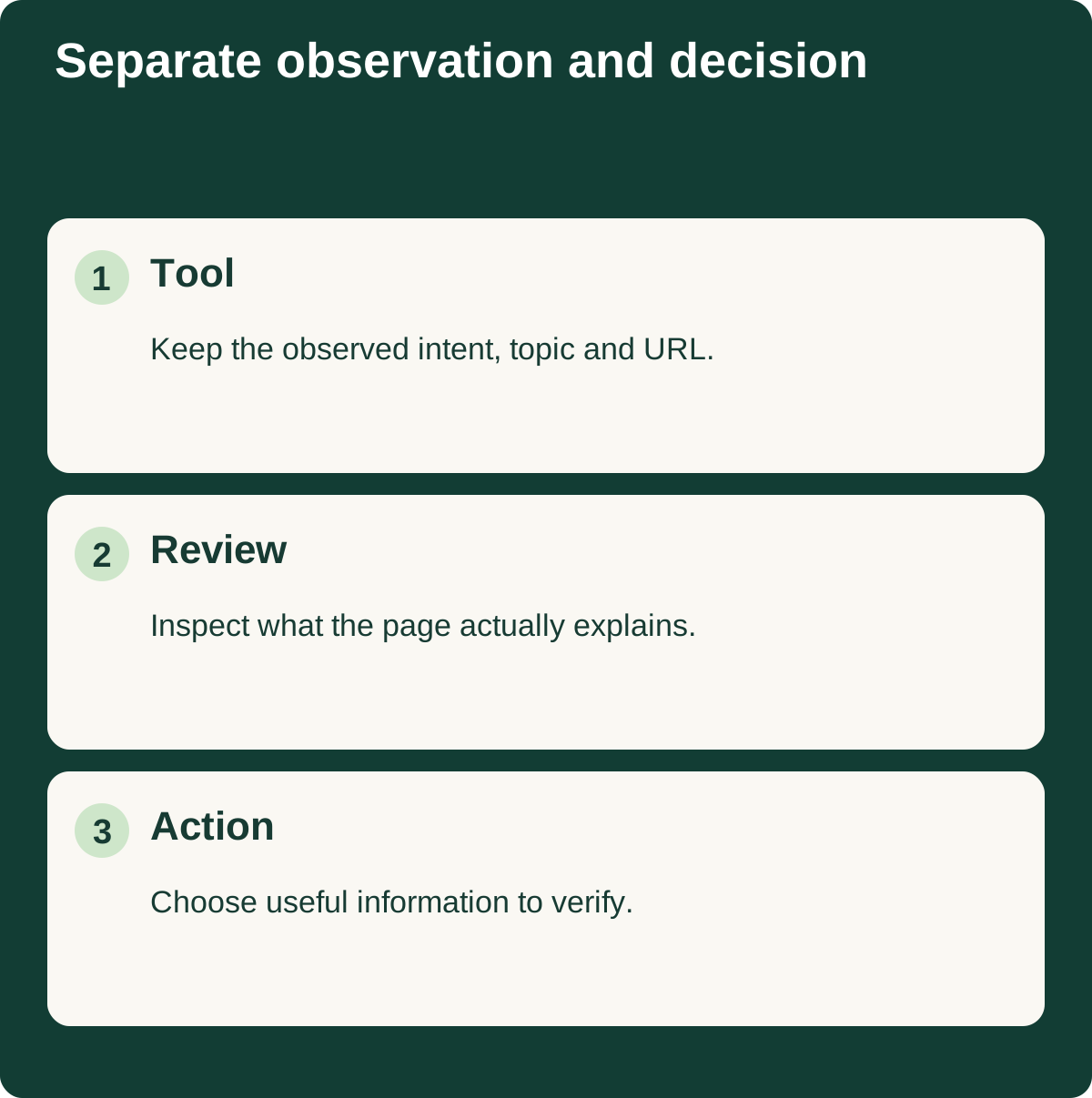
In our scenario, several observations sit under a broad desk-work theme. Some appear related to information gathering; others suggest comparison before purchase. The team reads the associated pages before deciding what those groupings might mean for its content.
A broad topic can conceal different needs. Does the support guide explain maximum weight, height adjustment or mounting type? The label cannot decide that by itself. Put your own reading of the page in a separate column so nobody mistakes editorial interpretation for a field supplied by the tool.
The official Bing FAQ describes using grounding-query data. The preview classifications continue to evolve. A retrieval query is not necessarily the exact phrase typed by an end user, so avoid inventing evidence of a customer's request from its label alone.
The distinction between brand mentions, citations and clicks provides the starting vocabulary. This workflow adds a concrete decision: which page deserves a closer inspection and what information should the editor verify there?
Keep Citation Share at its defined level
Microsoft defines Citation Share for a grounding query: citations attributed to your site divided by citations across all sites for that query. It does not reveal competitor domains, represent traffic share or assign a quality score. The definition appears in the announcement of the four capabilities.
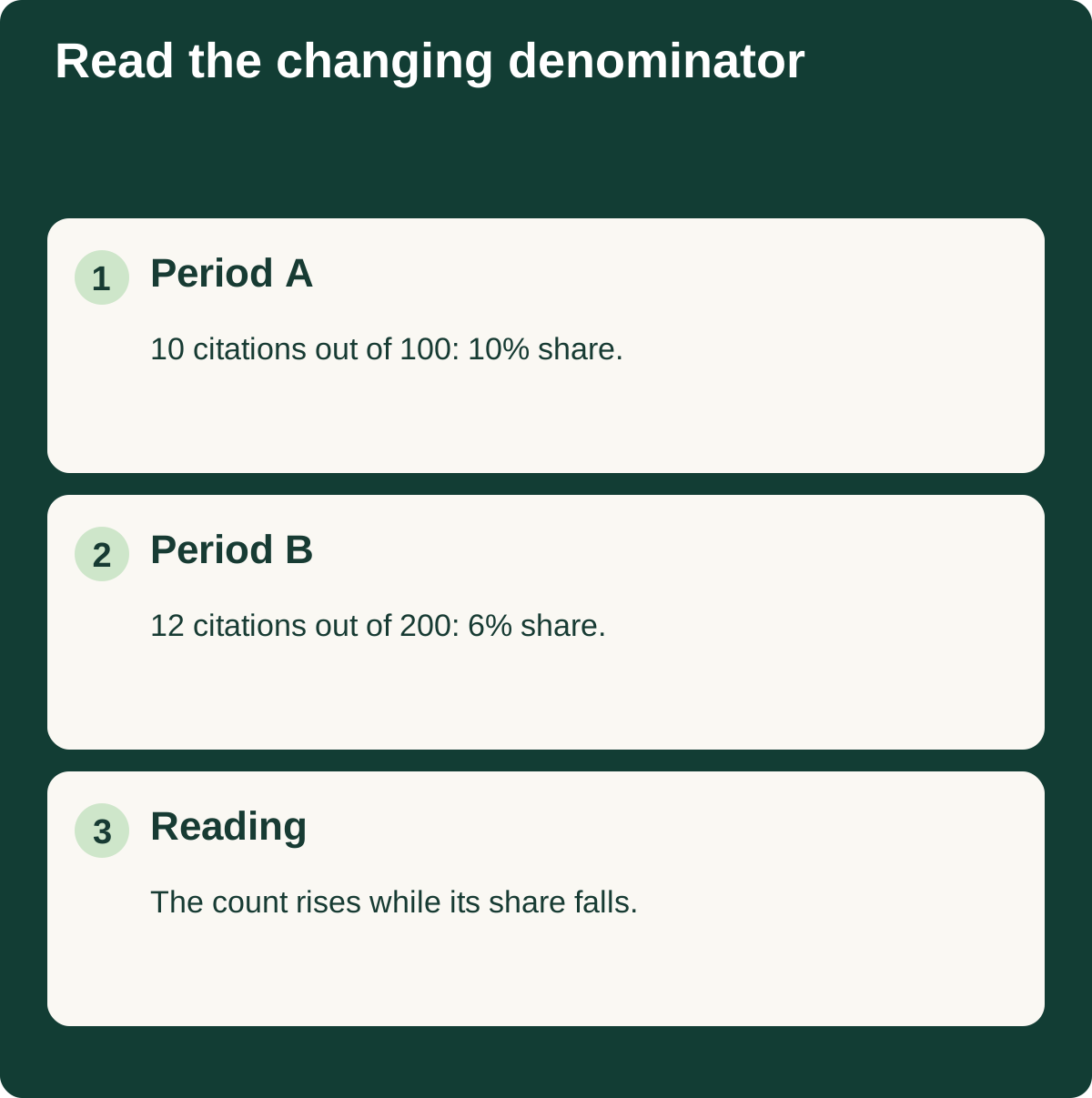
The following fictional arithmetic explains the denominator without claiming to reproduce a live export. A query has 10 citations for the site out of 100 total: 10%. Later it has 12 out of 200: 6%. The site's own count rises while its calculated share falls.
| Illustrative calculation | Site citations | Total for the query | Calculated share |
|---|---|---|---|
| Period A | 10 | 100 | 10% |
| Period B | 12 | 200 | 6% |
This table does not explain why the denominator changed. It prevents the unsupported conclusion that the page must have become worse. Preserve the observed context and choose a verifiable question before rewriting it. Adding percentages from different queries cannot establish a universal market share.
Compare periods that support an actual decision
For an initial comparison, use periods of equal length. Note campaigns, publications, removals and catalogue changes between them. If one period contains an exceptional promotion, keep that difference in the commentary rather than hiding it inside a percentage.
Our fictional shop compares two thirty-day windows. Its compatibility guide receives more citations after an update that coincides with an email campaign. The team can describe both events. It cannot attribute the whole change to the edit simply because they occurred in that order.
Write a useful observation: “this page appears more often within the measured scope; we will verify its compatibility criteria and monitor visits separately.” That statement opens an action. “Our GEO works” leaves the reader without scope, evidence or a next check.
The SEO reporting guide helps keep periods, actions and owners together. Include a short change log next to the comparison so a later reviewer can understand the conditions under which you made the decision.
Turn an observation into one specific improvement
Suppose the cited guide compares three supports but never states compatible dimensions. The proposed first task is to verify their specifications and add an accurate choice table. Creating five more articles around nearby wording spreads the work before fixing that omission.
For every proposed action, record the observation, the gap found on the page, the evidence needed and the intended change. One fictional row reads: “comparison theme observed; dimensions missing; check manufacturer documents; add compatibility limits.” Do not enter a future traffic increase as though it has already happened.
Use the principles in SEO writing from a question and evidence to build the update. The topic label starts the investigation. Verified information supports the answer that readers eventually see.
Give the task a boundary. If the page already handles the need, record that decision and move on. A dashboard does not require a content change every time a number fluctuates. The team can retain a satisfactory guide without inventing a reason to rewrite it.
Keep commercial outcomes in a separate ledger
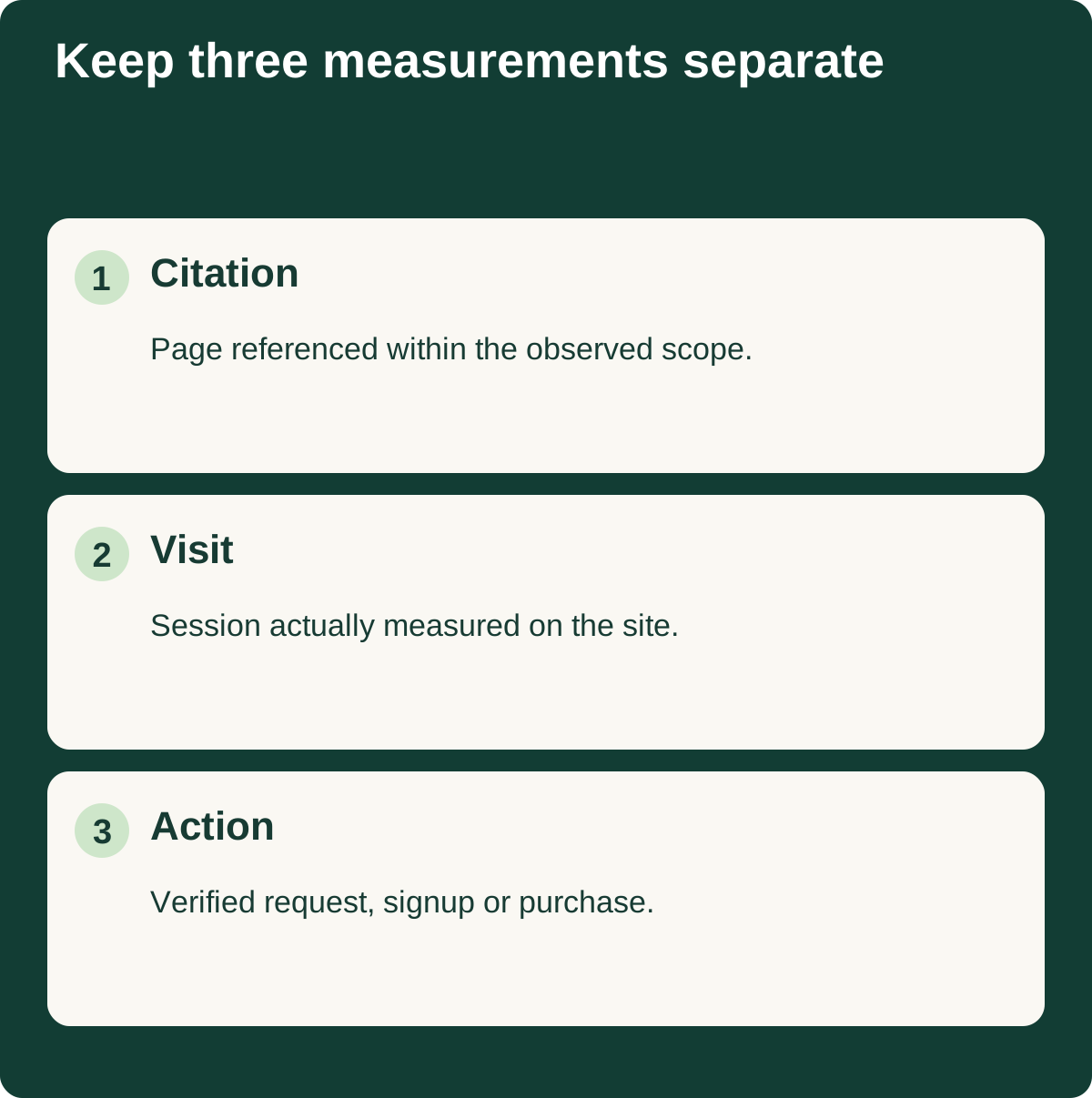
Alongside the citation log, track visits and actions you can actually measure. Define the action first: a quote request, signup, download or purchase. Check the analytics setup before deciding that a lack of recorded conversions proves the page failed.
Attribution can remain incomplete. Someone might read an AI response and return directly later. Do not assign those sessions to citation activity without evidence. Describe the limitation and preserve each observable source in its own column.
Our proposed review returns to the page, its correction and available data after two comparable periods. If nothing supports another concrete action, stop editing merely to raise a counter. Return to missing information, the commercial need and questions readers have actually sent you.
Keep the original export or capture rather than overwriting it with the new period. This lets a colleague check your interpretation and prevents an evolving preview label from silently rewriting the history of an earlier decision.
Frequently asked questions
Does Citation Share show my position inside an answer?
It describes a citation share for the relevant query. Do not convert it into a ranking, a quality score or proof that the system recommended your product. Inspect the page's actual claims separately.
Does an increase justify publishing a new article?
First check whether an existing page already handles the need and identify what it lacks. A new page needs a distinct question and a useful answer. An additional topic label alone does not establish either.
Can I compare these observations with Google data?
You can place them alongside each other while naming the platform and definition. Avoid adding them together: they do not automatically represent matching experiences, periods, counting rules or populations.
Do I need Bing data before improving a guide?
No. A verified compatibility error or missing explanation deserves correction when you find it. Describe that work as an editorial improvement without claiming that the report established its effect.