
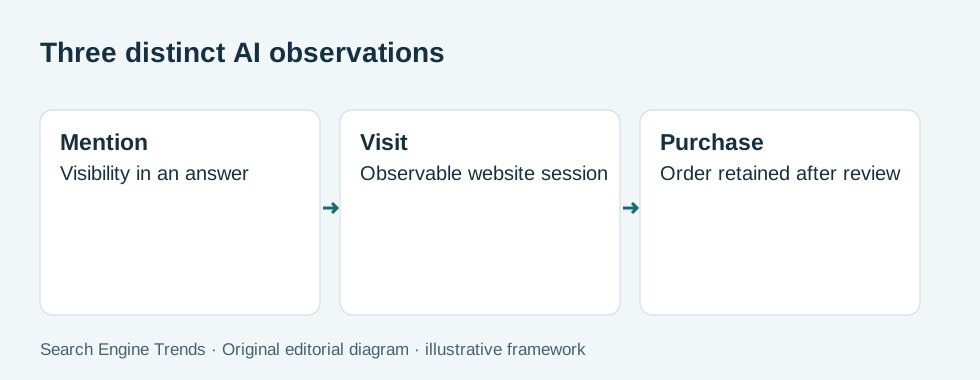
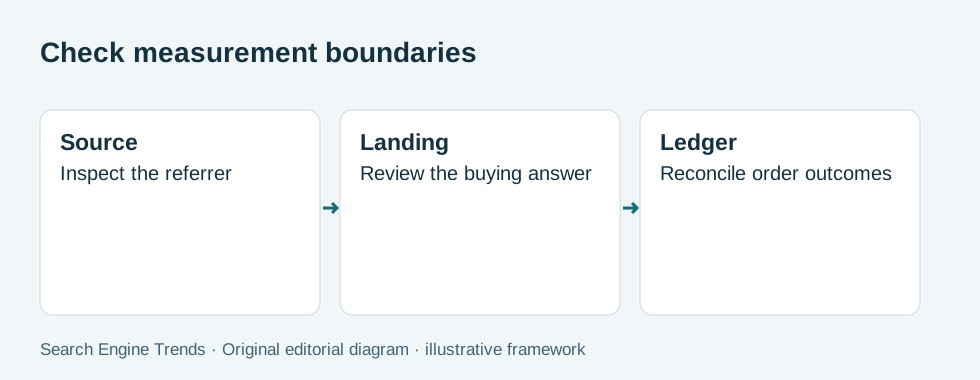
An AI mention, a referral visit and a retained purchase are different events. Measure identifiable AI referrals in analytics, inspect the landing journey and reconcile orders; treat missing referrer information as an attribution limit rather than proof of no AI influence.
In this article
San Francisco AI referral traffic should be evaluated as a chain: identifiable referral, useful visit and commercial outcome. An answer engine can mention a store without sending a click. A visitor can arrive without a usable referrer. Report what your measurement actually observes rather than combining all AI visibility into a sales claim.
Establish what counts as an AI-origin visit
For a hypothetical San Francisco software-accessory store, build a source list from observed referrers. Review hostnames and exclude your own test sessions. Keep an unclassified bucket for uncertain sources rather than assigning every unfamiliar domain to AI.
Google’s campaign URL documentation explains campaign parameters. Use them for links you control; you cannot assume an answer engine will preserve every parameter or reveal every referring conversation.
Follow the click to a useful landing journey
Inspect which product or guide receives the visit and whether it answers the promised question. A landing page that mentions the cited topic but omits the required compatibility detail can attract attention without helping someone buy.
Source classification
Which observed hostname supports this source label? Maintain an inspected list of referrers and distinguish known domains from uncertain traffic. Exclude staff checks using the measurement setup available to the store.
Check against a reviewed source rule and sample landing sessions. If an unfamiliar domain is classified without inspection, review the affected case before continuing. Source labels should describe observed evidence rather than speculation about how a visitor discovered the brand.
Journey usefulness
Did the referred page answer the buying question? Follow the landing page to the relevant product or guide. Inspect compatibility, availability and the next action instead of equating time on page with purchase readiness.
Check against a documented landing-to-product path. If the cited page sends the visitor to an unrelated offer, review the affected case before continuing. A useful referral needs a coherent destination after the click, not just a recognisable source name.
Retained outcome
Which orders remained after cancellations and refunds? Match reporting totals with commerce records for the chosen period. Keep assisted influence separate from a directly observed referral purchase.
Check against a reconciled order and refund summary. If visibility counts are used as a purchase denominator, review the affected case before continuing. Different measurement populations cannot support a reliable conversion claim when they are merged.
Compare an explicitly hypothetical referral cohort
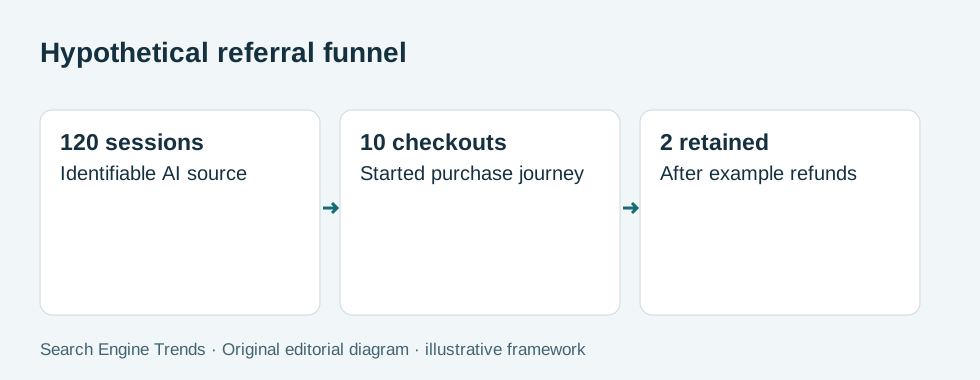
Assume 120 identifiable AI-referral sessions in a reporting period. Forty-eight reach a relevant product page, ten start checkout and four complete orders. Two orders are later refunded. These invented numbers illustrate the separation between visit progression and retained business; they are not San Francisco benchmarks.
| Illustrative stage | Count | Interpretation |
|---|---|---|
| Identifiable AI-referral sessions | 120 | Observed source subset |
| Relevant product visits | 48 | Useful progression |
| Completed orders | 4 | Before later adjustments |
| Retained orders | 2 | After the example refunds |
Do not divide four orders by a count of AI mentions collected from another tool and call the result a conversion rate. The populations differ. State the session denominator and reconcile retained value before using the result to set a content budget.
Keep attribution limits visible in the report
Use the report to inspect specific landing problems and to prioritise maintained explanations. A source with few visits but repeated high-intent compatibility questions can justify improving that guide. It does not justify promising that a particular article will appear in every AI answer.
Inspect a referred product page before crediting the source
Suppose an identifiable AI referral lands on a guide about choosing a laptop adapter. The visitor opens a product, but the compatibility table does not include the device they own. That progression is not yet a successful buying answer. Record the missing information and route it to the product-data owner before deciding that the channel simply attracts low-quality traffic.
Now consider a visit that reaches the correct product through an unlabelled source. It can still generate a useful order, but the attribution remains uncertain. Keep that uncertainty in the report instead of assigning the order to AI because an earlier answer mentioned the brand.
Compare sources with a stable measurement scope
Keep session-scoped and first-user-scoped source reporting distinct. A returning buyer may have first discovered the store through search and later arrived through an AI referral. Those two reports answer different questions about discovery and the current visit. Google's traffic-source scope documentation explains why the dimensions should not be substituted casually.
Use a fixed event definition for product progression and checkout. Reconcile example orders with the store's payment and refund records. If consent or browser restrictions leave part of the journey unobserved, state that limitation and avoid filling the missing events with an estimated conversion count.
Preserve the next review task
For each meaningful landing problem, record the destination, missing buying answer and affected product family. A broken next link can be corrected immediately; a missing compatibility claim requires evidence first. This distinction prevents a reporting team from asking copywriters to invent the fact needed to explain a weak funnel. The next reporting period should check whether the repaired journey is available and used, while keeping any causal performance claim separate.
For a campaign link the store controls, document the chosen source, medium and campaign values before distribution. Reuse those values consistently for the same campaign and avoid placing order numbers or customer details in the URL. Inspect the landing destination after redirects, because an intermediate link can change or discard the measurement parameters. Then compare a known test journey with the reporting view and remove that test activity from commercial totals. A working tagged link demonstrates the controlled path; it does not establish that every AI-generated link will preserve the same attribution information.
AI-referral review checklist
- Verify observed source hostnames and remove test sessions.
- Separate mentions, clicks and sessions.
- Review the destination’s actual buying usefulness.
- Reconcile completed orders with refunds.
- Label unattributed influence as unknown.
- Preserve source rules and extraction dates.
FAQ
Does an AI citation prove a website visit?
No. A citation is a visibility observation. A visit requires a click and observable site activity, and the referrer may still be missing.
Should AI visits replace organic-search reporting?
No. Keep source categories distinguishable and compare the outcomes they actually support. A combined total can hide both attribution gaps and channel-specific problems.
What should a small store improve first?
Fix the landing page’s missing answer, broken next step or unclear product facts. Those changes help the observable visitor without requiring a claim about AI ranking mechanics.

GEO: Understand and Act
Explore this related DIY Marketing Guide guide to work further on the method. DIY is part of our business group; contents, language and price are shown on its store.
See the English guide