
Choose an AI workflow by defining the source record, expected output and errors that block use. Compare manual review, rule-based import and AI drafting on the same cases. Keep drafts separate from publication, route exceptions to a reviewer and model the full handling cost.

In this article
AI product-data workflow automation should start with a task whose output can be checked. For a hypothetical store with two hundred products, a useful task is sorting supplier information, flagging missing fields and preparing descriptions from approved facts. The workflow should expose mistakes before they reach a customer-facing page.
Choose according to source quality, permitted actions and review cost. The USD amounts are teaching assumptions, not local rates or vendor prices. Substitute your verified costs in the simulation and keep approval separate from publication.
Define the record and the publication boundary
A minimal record needs the supplier reference, internal SKU, source document revision, approved attributes and unresolved fields. Preserve the original source value when normalising units or labels. The review team should be able to determine where a fact came from without reading an entire automation log.
Keep “draft created” separate from “approved for publication”. A generated paragraph may contain the expected words while changing a qualifier or adding an accessory. A human reviewer must compare the buying-critical claims with the record and decide whether the item can progress.
The hypothetical store excludes unsupported compatibility, certification and performance claims from this task. It also excludes publishing directly from a supplier attachment. These are scope boundaries for this illustrative workflow, not a claim that a real API integration has been tested.
Compare three processes on the same inputs
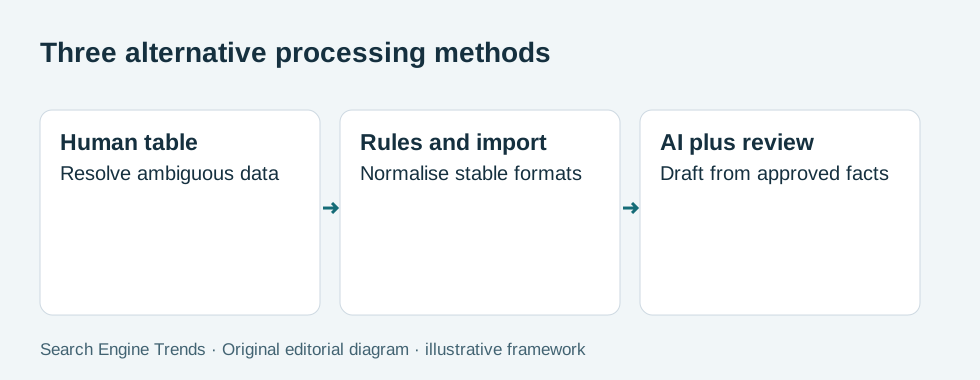
A spreadsheet and human review handles ambiguity directly but needs consistent data entry. A rule-based import can detect predictable format errors but requires maintained rules. AI drafting can improve language from complete facts, while adding a claim-review and exception workload.
| Process | Potential use | Workload to inspect |
|---|---|---|
| Spreadsheet and reviewer | Resolve ambiguous supplier records | Entry time and consistency |
| Import with explicit rules | Normalise stable formats | Rule maintenance and rejected rows |
| AI draft with approval | Produce readable source-bound copy | Review time and unsupported claims |
Do not compare them using different product samples. If one process receives tidy records and another receives conflicting supplier sheets, the apparent performance difference says little about the process itself. Use the same representative cases and the same acceptance criteria.
n8n documents human review for AI tool calls. Use current official documentation when implementing a review step, and test the actual configuration. A diagram containing an approval box does not prove that the workflow prevents an unapproved action.
Make the draft and exceptions visible
Each draft should retain a reference to its source record and identify fields withheld from copy. Give the reviewer a compact claim list: dimensions, materials, supplied parts, quantities and relevant limitations. This is easier to check than asking someone to approve a paragraph solely because it sounds plausible.
Create explicit exception categories for missing source, conflicting values, unrecognised SKU and changed qualifier. A conflict should not be resolved by averaging values or choosing whichever appears more persuasive. Route it to the person who can verify the underlying product fact.
Decide what an approval authorises. Approval of a product description should not silently grant permission to change prices, inventory or payment settings. Keep those operations outside the workflow unless separately defined and supported by the required controls.
Plan a hypothetical thirty-record simulation
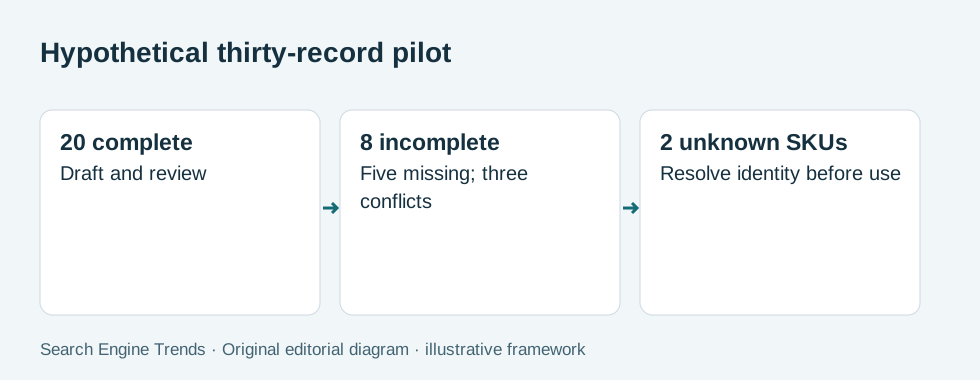
Use a planned batch of thirty records: twenty complete, five missing a buying-critical attribute, three with conflicting values and two with an unrecognised reference. These counts are invented for the simulation; no actual store test or API call is claimed.
The acceptance expectation is not thirty published descriptions. The twenty complete records may produce drafts for review. The ten incomplete or conflicting records should enter the appropriate exception process. A workflow that drafts all thirty without revealing those gaps has failed the evidence requirement even if it appears faster.
Check a rejected record through correction and retry. After the reviewer supplies an approved value, confirm that the workflow uses the updated source and does not duplicate the original draft. Reprocessing should preserve the history needed to explain why the earlier record was blocked.
Calculate full handling cost before expanding
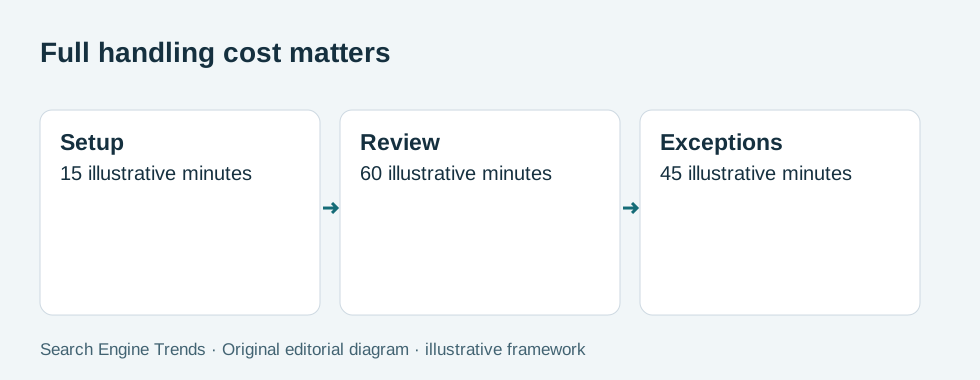
Suppose a fictional thirty-record run requires fifteen minutes of setup, two minutes of review for each record and forty-five minutes of exception handling. Total human time is 120 minutes. At an illustrative USD 30 hourly internal cost, that is USD 60, before actual tool charges and other costs.
If a hypothetical tool charge of USD 6 is added, the planned batch cost is USD 66, or USD 2.20 per record processed. This is not the cost per published page: some records remain unresolved. Divide by approved outputs separately when that measure is relevant, and avoid using an invented model price as a current vendor tariff.
Compare the complete cost with the manual and rule-based alternatives. Include setup, maintenance, reviewer time and recurring exceptions. A shorter drafting step is useful only if the resulting review and correction work does not consume the apparent saving.
Workflow acceptance checklist
- Preserve exact SKU and source revision.
- Keep unknown and conflicting fields explicit.
- Separate draft generation from publication approval.
- Test the exception queue and a corrected retry.
- Bound what an approval can change.
- Calculate setup, review, exception and actual tool costs.
- Increase volume only after the acceptance checks pass.
Check an interrupted approval and a duplicate retry
Simulate a record that reaches review while its supplier evidence changes. The approval should apply to the reviewed source version, not automatically to any newer draft bearing the same SKU. If the source changes materially, return the relevant claims for another review.
Also simulate receiving the same record twice. Define how the system recognises a retry and avoids creating two unrelated publication tasks. A duplicate draft can cause competing edits or leave a stale version approved after a corrected one. Preserve the record identifier, source revision and review state together.
These cases are part of the proposed simulation plan, not results of a completed test. They assess whether the workflow remains controllable when ordinary operational interruptions occur, rather than only when thirty clean inputs arrive in perfect sequence.
FAQ
Is AI always better than an import with rules?
No. Stable structured data may need reliable rules rather than generative drafting. Compare the processes on the same records and the same acceptance criteria.
Should every exception stop the entire batch?
Define the scope of the failure. An isolated missing attribute can block one record, while a broken source mapping may invalidate the batch and require a wider pause.
What should the first pilot demonstrate?
Correct source use, visible failures, reliable approval and repeatable correction. Drafting speed alone does not establish that the output is safe to publish.

SEO Writing and Conversion
Explore this related DIY Marketing Guide guide to work further on the method. DIY is part of our business group; contents, language and price are shown on its store.
See the English guide