
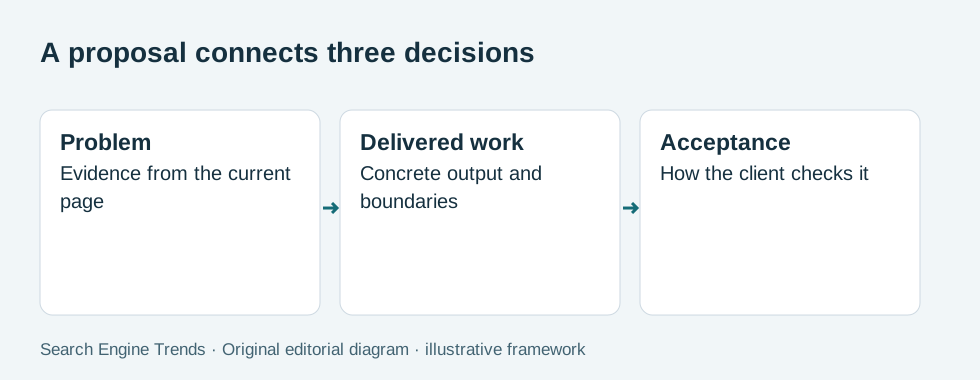
A useful agency proposal connects an observed problem to a reviewable deliverable, then states dependencies, exclusions, price and acceptance. Separate current evidence from hoped-for outcomes and make the next client decision clear before treating the project as ready to start.

In this article
Dallas marketing agency proposals should let a shop owner understand what they are buying before reaching the price. Describe the current problem, the delivered work and how the result will be reviewed. Keep goals such as improved discovery separate from deliverables the agency can directly complete and demonstrate.
Ask three questions before proposing the work
For a hypothetical agency offering a website and SEO improvement to a Dallas retailer, begin with three questions. What customer decision is currently difficult? Which product facts and access can the merchant supply? Who will approve the finished work? These questions establish a usable scope without inventing an audit of a real business.
A request for “more traffic” may hide an incomplete product catalog, unavailable stock or a confusing sales page. Ask for the relevant existing pages and the actual commercial next step. If the owner cannot identify the offer the site should support, the proposal may need a defined discovery stage before page production.
Check access and source responsibilities early. A writer cannot verify product composition from a category name. A technical reviewer cannot inspect a restricted checkout without appropriate access. List these dependencies beside the work so the client understands which inputs affect timing and acceptance.
Separate evidence, hypothesis and objective
An observed broken link is a current issue. A belief that a clearer category will improve qualified visits is a hypothesis. A target for retained sales is an objective. Putting all three into one list of “results we will deliver” creates a misleading promise.
Google’s guidance on choosing an SEO provider helps frame questions about proposed work. Use it alongside a concrete scope; do not sell a guaranteed ranking or present an educational example as a completed client result.
Write a short current-state statement with the supporting evidence. Then specify the action the agency will take and the observation used to review it. For example, “five product pages lack an approved contents table” can lead to “five reviewed tables based on merchant-supplied packing records”. That is substantially clearer than “optimise five pages”.
Describe outputs the client can accept
The following scope is hypothetical and does not represent a Dallas agency contract or an audit already performed.
| Proposed output | Acceptance criterion | Dependency |
|---|---|---|
| Priority page map | Each URL has a justified action | Catalog and access |
| Five product revisions | Facts match approved source records | Merchant product review |
| Journey check | Scenarios and observations documented | Authorised test environment |
| Maintenance guide | Owner can follow the procedure | Named internal maintainer |
Define what each file or page includes. For the priority map, record the URL, page job, issue, proposed action and evidence required. For a product revision, identify which attributes are changing and who verifies them. Acceptance should not require the client to infer those details from a polished screenshot.
State exclusions with their commercial consequence. If photography is outside the proposal, the pages need client-provided images or a separately agreed asset task. If translation is excluded, the source-language update may leave other versions pending. Those boundaries should be visible before the price is accepted.
Price the actual work and its dependencies
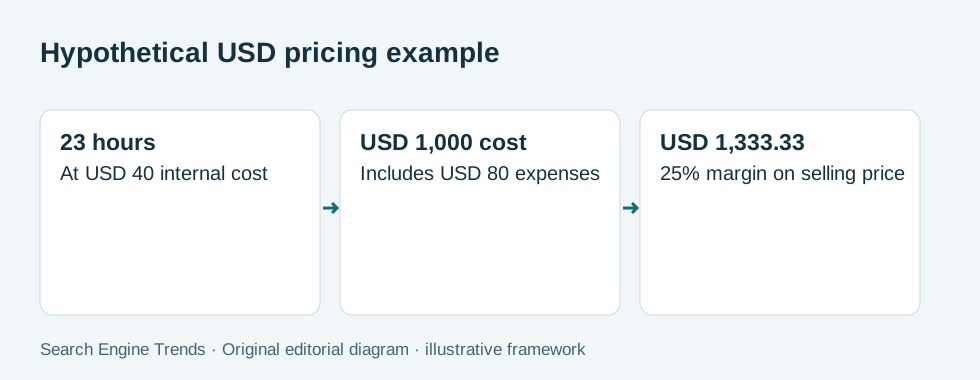
Consider a fictional estimate of six hours for the page map, ten for the product revisions, four for the journey check and three for documentation. At an illustrative internal cost of USD 40 per hour, the twenty-three hours cost USD 920. Adding USD 80 of direct project expenses gives a hypothetical cost base of USD 1,000.
If the agency chooses a 25% margin on selling price, the illustrative price is USD 1,000 ÷ 0.75, or about USD 1,333.33 before other stated items. These figures demonstrate a method, not local fees. A 25% markup on cost would instead produce USD 1,250 and a 20% margin, so label the formula accurately.
Show whether the quote includes tax, optional work or ongoing support according to the actual offer. Keep advertising spend outside production fees unless expressly included. An attractive fixed amount is difficult to compare if the proposal leaves its scope and recurring costs unclear.
Build the schedule from prerequisites. Product revisions begin after approved source records arrive; journey review occurs when the revised pages are available in the authorised environment. Use milestones the client can recognise instead of assigning a completion date that assumes every missing asset appears immediately.
Agree the review process before delivery
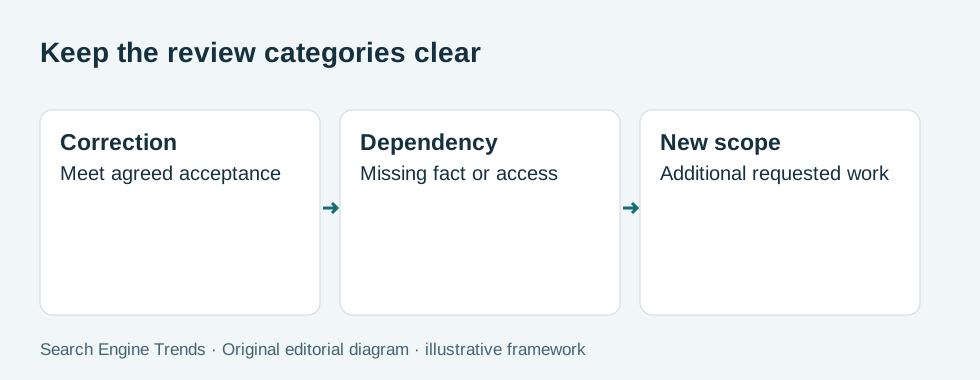
Give the client a defined review window and a way to report corrections against acceptance criteria. A factual mismatch belongs in the correction list. A newly requested product family is a scope change. Distinguish them so ordinary quality review does not become an unpriced expansion.
Keep an unresolved-dependency list. If a supplier document remains unavailable, identify the affected page and the claim withheld. Delivering the rest of the project should not turn the missing attribute into an invented fact merely to make the spreadsheet look complete.
Proposal checklist
- Connect each deliverable to a specific customer or site problem.
- Label evidence, hypotheses and commercial objectives separately.
- State required product records, assets and access.
- Define outputs, exclusions and acceptance criteria.
- Show the USD cost basis and pricing assumptions.
- Separate correction work from new scope.
- End with the next approval or information decision.
A practical proposal ends by asking the client to confirm the scope, provide missing inputs or approve a defined discovery step. “Let us know what you think” leaves the next action unclear. The method here is a commercial planning framework; use an appropriate agreement for the actual engagement rather than treating this article as a legal contract.
FAQ
Should every proposal include an SEO ranking target?
Only use a target as a clearly labelled objective with suitable measurement. Do not substitute a ranking promise for concrete work and acceptance criteria.
How should missing product evidence affect the quote?
List it as a dependency and identify the affected output. Add a defined research task if appropriate, or withhold unsupported claims until the merchant supplies evidence.
What makes a scope change different from a correction?
A correction brings the agreed output into line with its acceptance criteria. A scope change adds or alters the work the client originally agreed to purchase.

Find Your First Prospects
Explore this related DIY Marketing Guide guide to work further on the method. DIY is part of our business group; contents, language and price are shown on its store.
See the English guide