
Price SMMA work from a defined scope and its full delivery cost. Estimate creation, moderation, reporting and coordination separately, then use the correct margin formula. Show the agency fee and platform advertising budget as different allocations, with clear approval and revision boundaries.

In this article
Tampa SMMA pricing should explain what the fee funds. Content creation, scheduling, replies, advertising management and reporting require different work. A single monthly number without a scope forces the shop owner to guess what the agency will do and makes profitability difficult for the agency to assess.
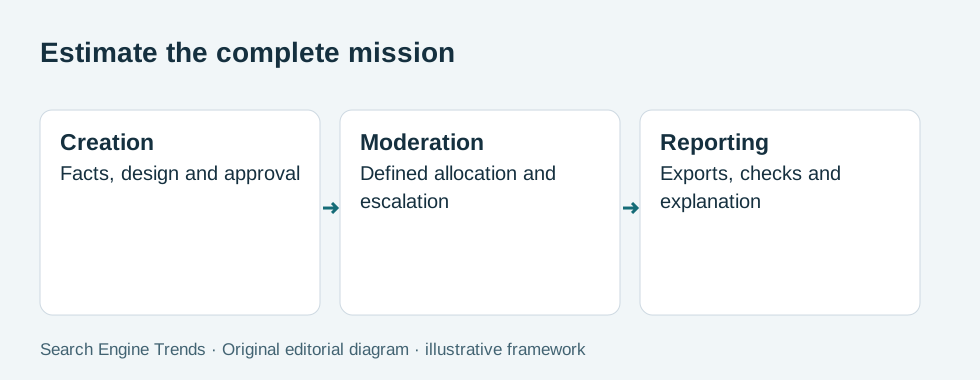
Break the mission into work the team can estimate
For a hypothetical Tampa agency, define each content unit by format, source materials, drafting, design and review. Estimate comment moderation and customer escalation separately. A content calendar does not automatically include unlimited product advice or continuous customer support.
Add coordination tasks that are easy to miss: obtaining product facts, requesting approval, checking landing links and recording changes. Those minutes are part of serving the client even when they do not produce a new visible post. Include them in the estimate rather than hoping they will fit between other projects.
Use an internal hourly cost that reflects your actual business assumptions. The USD 40 figure used later is entirely hypothetical. It is not a salary benchmark, contractor rate or Tampa market price. The method remains useful when the agency replaces it with its own documented cost basis.
Estimate time with explicit production units
A static post might include reviewing the supplied facts, creating the visual, drafting the caption and checking the destination. A short video adds source-media handling and editing. A report requires extracting figures, checking definitions and writing an explanation that does not invent causality.
Define how many revision rounds the estimate includes and what counts as a new request. Correcting a factual error in the agreed product post is different from replacing the topic after approval. Both require a clear process, but their commercial treatment should follow the actual scope.
Keep advertising management visible if it is included. Campaign setup, budget changes and platform reporting do not disappear into a generic social-content line. Google documents campaign budget settings; platform spending controls and an agency’s service fee are separate parts of the financial plan.
Calculate margin rather than confusing it with markup
Cost includes the estimated work and direct expenses under the chosen scope. If the agency chooses a 25% margin on selling price, divide cost by 0.75. Adding 25% to cost is a markup and produces a different margin.
The table below contains fictional hours, expenses and prices solely to illustrate the arithmetic. It is not a price list, market comparison or recommended agency package.
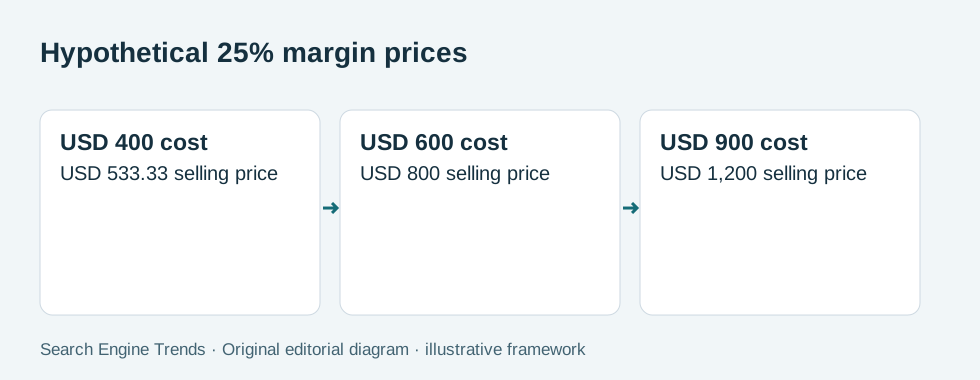
| Hypothetical scope | Time and direct expenses | Assumed total cost | Price at 25% margin |
|---|---|---|---|
| Defined creation work | 8 h × USD 40 + USD 80 | USD 400 | USD 533.33 |
| Creation and moderation | 12 h × USD 40 + USD 120 | USD 600 | USD 800 |
| Creation, moderation and deeper analysis | 18 h × USD 40 + USD 180 | USD 900 | USD 1,200 |
For the USD 600 case, a USD 800 price leaves USD 200 before any costs omitted from the model. If additional support costs USD 100, the remaining amount falls to USD 100 and the effective margin becomes 12.5% of the same selling price. This is why an undefined support promise can undermine an otherwise correct calculation.
Show three genuinely different scopes
The packages should differ in delivered work, not merely in flattering names. The first might fund a bounded content batch. The second adds a defined moderation allocation and escalation process. The third adds deeper journey analysis and a more detailed report. State the quantities and acceptance criteria for each actual proposal.
Avoid inventing results to justify the highest fee. More production can provide more useful explanations and testing opportunities, but it does not guarantee followers, enquiries or retained sales. Sell the work and describe outcomes as measures to observe under the chosen reporting setup.
Separate advertising money from the agency fee. In an illustrative proposal, USD 800 of service work plus USD 300 of platform spend produces USD 1,100 of planned cash allocation before other stated items. The agency should explain who approves and pays that spend, and whether management is already included in the service scope.
Review approval, support and actual profitability
Set a practical approval sequence: facts supplied, draft reviewed, destination checked and scheduling authorised. A late product change can affect visuals and captions already prepared. Record the resulting work rather than treating every change as a small invisible favour.
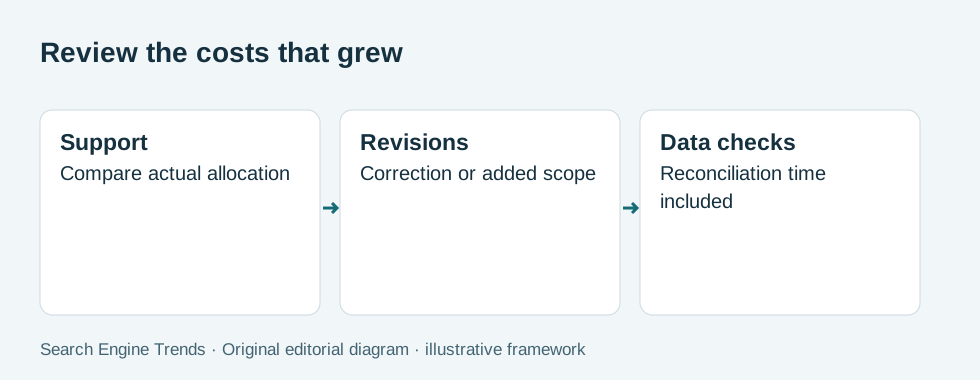
After a real mission, compare estimated and actual time by task. If the reporting line took twice as long because the exports required reconciliation, use that evidence in the next quote. If moderation regularly exceeds its allocation, review the supported service and escalation path before simply raising all prices.
Review cost and client usefulness together. Removing the link check to preserve margin can damage the mission if customers then reach an incorrect destination. Look first for clearer dependencies, better source records and simpler approval units, so the agency reduces avoidable work while maintaining acceptance quality.
Pricing checklist
- Define creation, moderation, advertising management and reporting separately.
- Include coordination and approval work in the estimate.
- State the internal cost assumptions and direct expenses.
- Label margin and markup correctly.
- Separate the service fee from platform spend.
- Limit support and revisions through an explicit scope.
- Compare actual task time with the estimate after delivery.
For each scope, show what happens when the merchant delays approval or changes product facts after design. The estimate should identify the work that can continue and the output that remains blocked. A defined delay process helps the agency use production time responsibly and prevents a missed client dependency from being disguised as an agency promise to deliver unchanged dates.
FAQ
Should an agency copy competitor prices?
Competitor offers can inform positioning, but their costs and scope may differ. Build your own delivery model before deciding which price your business can sustain.
Is advertising spend part of agency revenue?
Use the accounting treatment appropriate to the actual arrangement. In the proposal, make the platform allocation and service fee distinguishable so the client understands what each funds.
Does a 25% markup produce a 25% margin?
No. On a USD 400 cost, a 25% markup gives a USD 500 price and USD 100 difference, which is a 20% margin on that selling price.

Find Your First Prospects
Explore this related DIY Marketing Guide guide to work further on the method. DIY is part of our business group; contents, language and price are shown on its store.
See the English guide