
A useful SMMA offer explains which product questions the agency will answer and where each piece of content will lead. For a store-focused agency serving San Diego, define service levels by deliverables and acceptance criteria, keep advertising spend separate, and avoid guaranteeing sales.

In this article
- Connect the agency offer to a product decision
- Set a small initial scope
- Offer three levels with visible differences
- Define acceptance for each deliverable
- Separate agency fees from paid distribution
- Plan cooperation as part of the schedule
- Check the journey before distribution
- Report observations without claiming causation
Connect the agency offer to a product decision
A store does not buy a social media package simply to accumulate files. The service should help customers understand products and reach the page that answers their next question. Define that task before choosing post formats or presenting three prices.
Our example concerns an entirely fictional agency and bag retailer associated with San Diego. No local business, client result or campaign is claimed. The USD figures are illustrative quotation structures, not market rates. SMMA here means social media marketing agency services with a defined content and review scope.
Begin with questions the retailer can support with facts. Dimensions, capacity and care may require different evidence. A photograph does not establish a capacity claim by itself. The agency should locate validated product information and agree how each statement will be checked before drafting promotional copy.
Set a small initial scope
For the example, choose three products, one language, authorised source media and one confirmed distribution channel. Record the product references and the pages that will receive traffic. The client supplies the facts and identifies the person able to validate them.
Check platform features in the actual account before quoting them. Do not sell an integrated purchase option that is unavailable to the client, or assume that every video format can be distributed through the intended route. A quoted feature needs both technical availability and an operational plan.
The SBA's business-management resources include marketing planning as part of business operations. Use that broader planning approach to connect audience, methods and measurement. The example below adds a specific store-content scope rather than claiming one universal agency package.
Offer three levels with visible differences
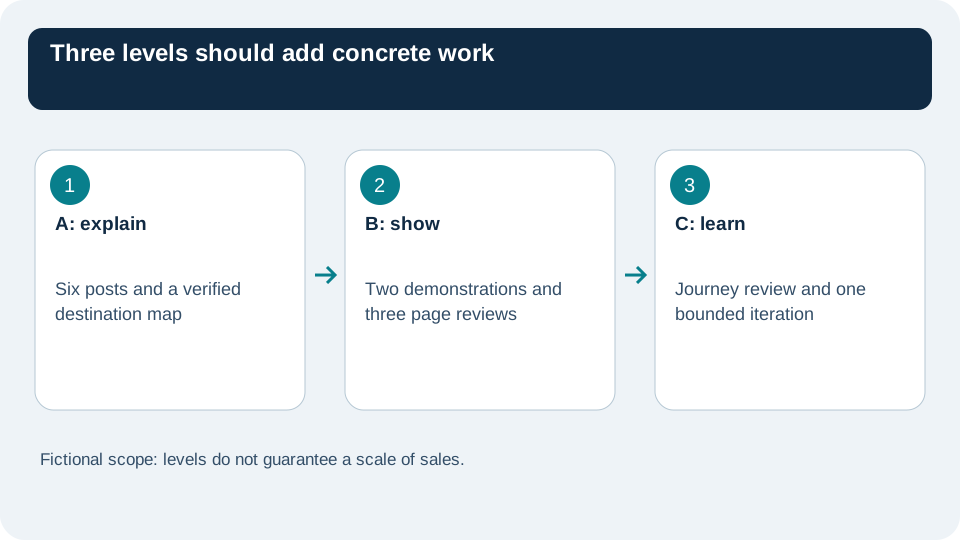
Level A prepares six posts from supplied facts and a destination map. Level B adds two visual demonstrations using authorised media and a review of three product pages. Level C adds a measured journey review and one bounded iteration after observation. Every level still requires accurate product facts.
| Illustrative level | Work delivered | Acceptance basis |
|---|---|---|
| A: explain | Six posts and a destination map | Facts and links approved |
| B: show | A plus two demonstrations and three page reviews | Media matches the offer |
| C: learn | B plus journey review and one limited iteration | Data, period and changes recorded |
The levels describe added work, not promised sales. A higher level may be unsuitable if the store lacks the media or data needed to perform it. Explain those dependencies before the customer compares prices. The cheapest useful phase can be a better start than an ambitious scope built on missing evidence.
Define acceptance for each deliverable
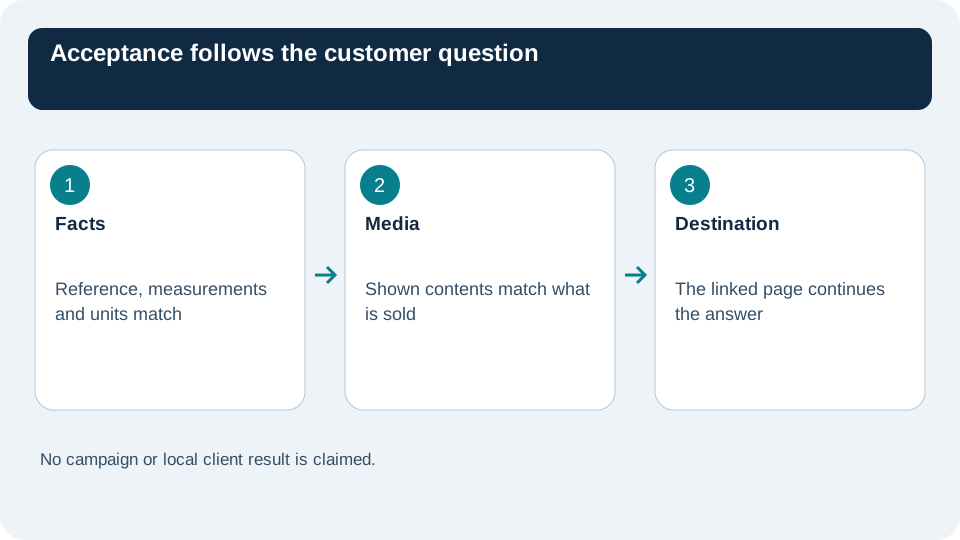
For a dimensions post, the retailer checks reference, measurements, units, image and destination. For a demonstration, the shown product must match the current offer, with any excluded accessory identified. A polished layout cannot substitute for a factual review.
The destination map links each question to a page that continues the answer. A homepage may suit a general introduction, but it rarely answers a detailed compatibility question. Open the destination on mobile and check that the promised information is present. Also inspect variant selection so the linked page does not lead to a different item.
Describe revision categories. Correcting a wrong fact differs from changing the campaign direction or introducing a new product after approval. Agree the number of review cycles and how additional work will be scoped. The proposal should make those decisions understandable without inventing legal terms for every client.
Separate agency fees from paid distribution
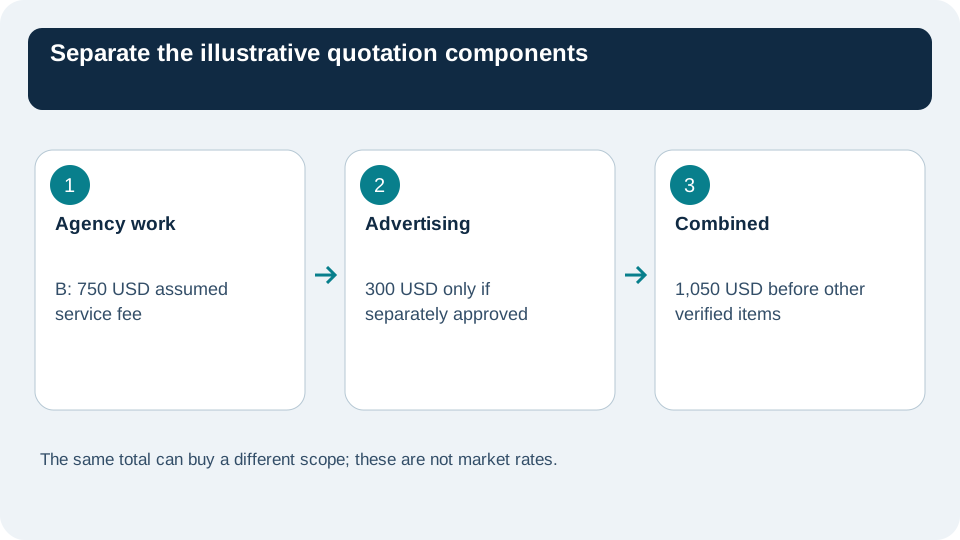
Suppose illustrative agency fees are 450 USD for A, 750 USD for B and 1,050 USD for C. These invented prices explain the structure only. A hypothetical advertising budget of 300 USD is added when a separate paid-distribution task has been defined and approved.
Under those assumptions, B plus advertising totals 1,050 USD before other items to verify. That equals the illustrative agency fee for C, but the purchases are different: one includes media spend, the other a review and iteration. Showing a single total without its components can conceal the distinction.
Identify who pays the platform, who owns the account and who authorises a budget change. Include production tools or third-party costs according to the actual offer. A client should know which part of the expense buys agency work and which part buys distribution.
Plan cooperation as part of the schedule
List the media, documents, access and approvals needed before work begins. A calendar without the client's review capacity can fail even when the agency has time available. Use milestones that depend on completed inputs rather than an unconditional publication date.
Assign a validator to each subject. Product facts may need the merchant, visual rights may need another responsible person and technical changes may need the store maintainer. A page review can identify an issue without including its implementation. Make that distinction visible in the level descriptions.
Keep decisions in a versioned brief. If the retailer changes a product or its contents, identify affected posts and destinations before continuing. The agency should not rely on a conversation fragment when an earlier file now contradicts the current offer.
Check the journey before distribution
Review the lot's links, facts and media in a suitable environment. Where measurement is planned, use a public campaign naming convention without customer information in URLs. A platform click, a site visit and a purchase remain different observations.
Prepare scenarios for the relevant pages and devices. Check that the customer sees the right product, understands the demonstration and can reach the next action. These are proposed checks; no posts were published or store journey tested for this fictional San Diego case.
If a destination is not ready, defer the corresponding content or change the scope. A publication date does not justify sending traffic to an inaccurate page. The client and agency need a clear decision on the unresolved issue before launch.
Report observations without claiming causation
In an invented example, six contents lead to 120 identified visits and five observed orders. Five divided by 120 is approximately 4.2%. This ratio does not establish that the agency caused five additional sales. Other activity, attribution limits and refunds still need consideration.
Report the period, source and definitions. Evaluate each content according to its question and expected next action. A care guide may support product understanding without generating an immediate purchase. Explain what was produced and observed before proposing the next iteration.
Start with three product questions and prepare one representative content unit from each level. Review the evidence, scope and acceptance criteria with the store. The resulting offer is easier to compare because the additional work is visible, its dependencies are known and the agency's commitments can be checked independently of sales outcomes.

Find Your First Prospects
Explore this related DIY Marketing Guide guide to work further on the method. DIY is part of our business group; contents, language and price are shown on its store.
See the English guide