
Qualify a sales enquiry by clarifying the intended deliverable, available evidence and buying decision before setting a price. For a catalogue-service entrepreneur serving Detroit, compare scope, budget and validation responsibilities, then propose a bounded mission, request missing inputs or explain why the request is unsuitable.

In this article
- An enquiry does not automatically become a quotation
- Examine four parts of the request
- Compare three requests that look similar at first
- Use a short qualification conversation
- State the provisional assumptions in writing
- Connect the budget to an observable deliverable
- Track decisions and missing information separately
- Measure the enquiry process without hiding its workload
An enquiry does not automatically become a quotation
A prospect can ask for better product pages while expecting anything from a short rewrite to a complete store rebuild. Qualification establishes what the person wants to receive and what the entrepreneur can actually deliver. It may lead to a quotation, a preliminary data phase or a reasoned decision not to proceed.
This guide uses three fictional requests for a catalogue service associated with Detroit. No real conversations or businesses are claimed. USD budgets are teaching assumptions rather than recommended rates. The example distinguishes inbound enquiries from outbound prospecting; receiving one request does not authorise unrelated contact with other people.
The service offered is limited to writing and structuring product information. It does not include a full technical rebuild or a sales guarantee. Keeping that boundary visible helps the entrepreneur recognise an unsuitable request before spending time on an attractive but impossible proposal.
Examine four parts of the request
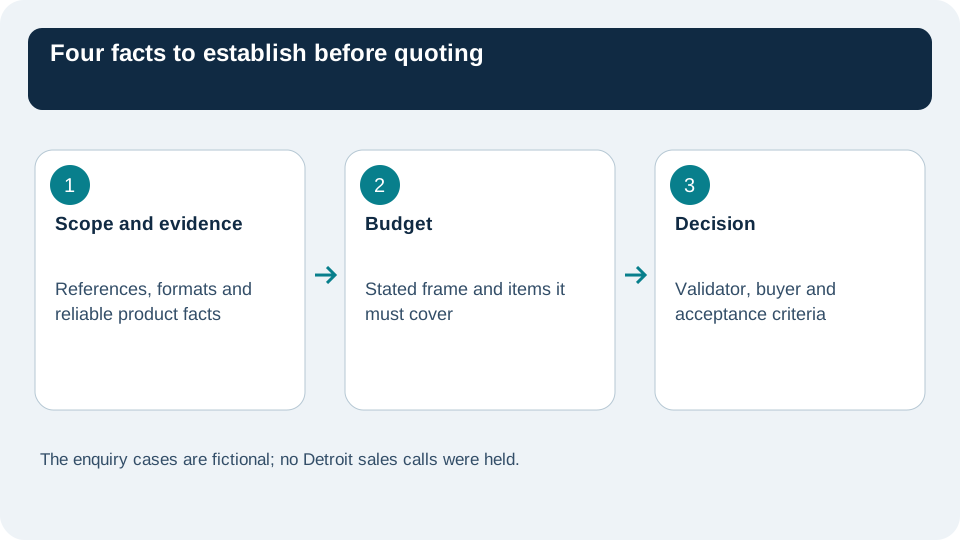
Scope covers product references, languages, formats and expected interventions. Evidence covers specifications, source documents, images and relevant rights. Budget provides the stated financial frame or an unresolved question. Decision ownership identifies who can approve the work and how acceptance will be judged.
Treat a requested date as something to clarify. It may be a preference, a fixed commercial dependency or an untested assumption. Ask what makes the date important and which inputs must arrive first. A calendar without the supplier information or client validation capacity cannot be assessed honestly.
The SBA business-management resources place marketing and sales within business planning. Apply that connection between objectives and means to the qualification record. The practical worksheet here turns a general enquiry into a specific deliverable and decision.
Compare three requests that look similar at first
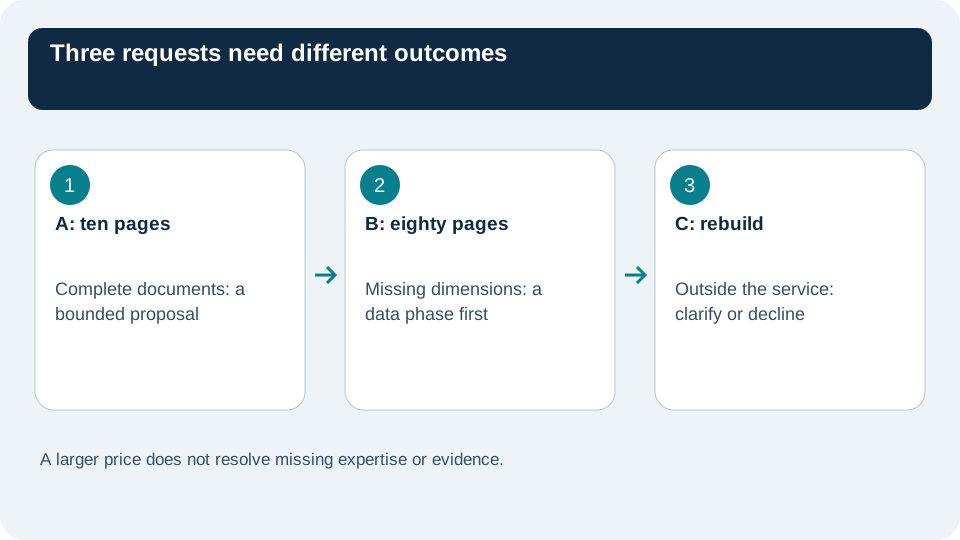
Case A asks for ten clearer product pages and has complete documents. Case B asks for eighty references but lacks verified dimensions. Case C requests a store rebuild and immediate sales promises. All three mention catalogue improvement, but they require different responses from the same limited service.
| Fictional case | Expressed request | Available basis | Qualification outcome |
|---|---|---|---|
| A | Ten readable pages | Product documents available | A bounded proposal is possible |
| B | Eighty references | Important facts missing | Define a data phase first |
| C | Rebuild and guaranteed sales | Outside the offered scope | Clarify or decline |
Do not turn missing evidence into a commercial promise. For B, confident wording cannot establish unknown dimensions. For C, a higher fee would not make the entrepreneur qualified to deliver a service outside the operation. The response should name the actual issue rather than hide it behind a vague delay.
Use a short qualification conversation
For A, ask which questions the ten pages need to answer, which documents correspond to those references and who validates the facts. Establish the intended language and format. These are suggested questions, not quotations from an invented client conversation.
For B, ask where the missing dimensions can be obtained and who can confirm their applicability to the sold version. Define which claims must remain unpublished until the evidence arrives. A preliminary assignment might organise the sources and outstanding questions without promising finished pages.
For C, separate development, acquisition and writing. Explain the work your service can provide and the work requiring another arrangement. If a referral is appropriate, use an actual qualified contact and the permission needed for any introduction. No external outreach or referral is performed by this guide.
State the provisional assumptions in writing
After qualification, prepare a concise summary: requested result, included references, inputs, exclusions and acceptance. Mark each unresolved point. A price indication can be provisional when its assumptions are explicit; a firm offer requires enough scope to understand the work.
Use a document version and date. If the prospect later adds languages, integration or more products, revise the scope rather than leaving the original price attached to a different task. A clear history prevents a conversation from becoming a collection of incompatible promises.
Keep sensitive business material in the intended system and limit access to the people who need it. A qualification table can use a case identifier and required-input status without reproducing every document or contact detail in several locations.
Connect the budget to an observable deliverable
Suppose Case A has an illustrative budget of 600 USD for ten pages. The arithmetic gives 60 USD per page, but the number has no meaning until collection, writing, revisions and integration are defined. It is not a recommended Detroit rate.
Acceptance can cover exact references, sourced attributes, reviewed language, agreed format and working links. A sales increase should not become the acceptance test for a mission that only delivers content. If the client wants to examine an effect, define a separate measurement phase with its own inputs and limits.
Record the change process. A factual correction differs from adding another product after approval. Explain how additional work will be reviewed and quoted, while leaving the legal and contractual details to conditions checked for the real parties.
Track decisions and missing information separately
Use specific states such as information awaited, proposal ready, quotation sent, decision confirmed and case closed. A follow-up should relate to an agreed decision or input. Do not schedule automatic messages simply because a contact field exists; check the actual context and applicable contact rules.
Waiting and refusal have different meanings. Waiting concerns an input that could make the assignment feasible. Refusal concerns a mismatch with the service or its conditions. Record the reason so a later team member can understand whether reopening the case would be useful.
If several people are involved, identify the person expected to decide and the people validating facts. A helpful initial contact may not be able to commit the business. The qualification process should clarify that situation respectfully before the quotation depends on their approval.
Measure the enquiry process without hiding its workload
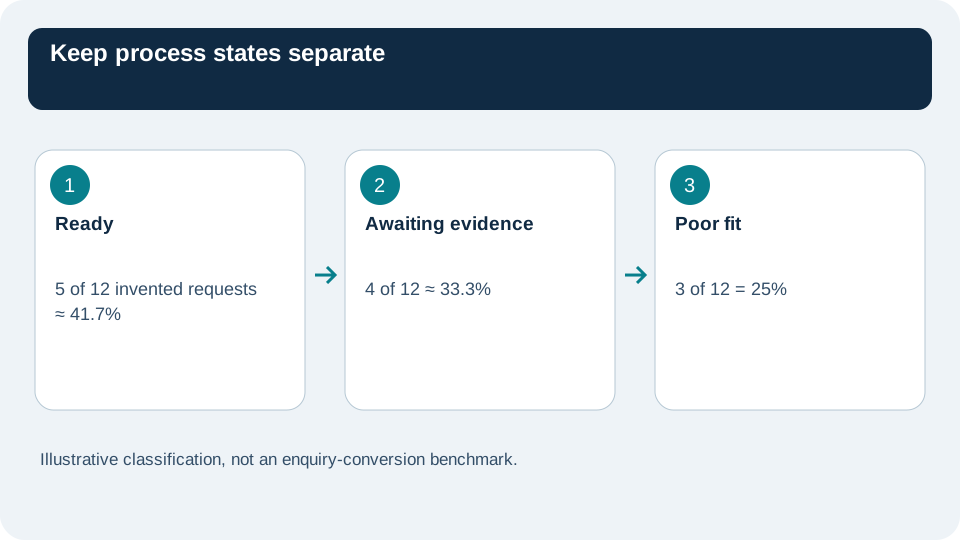
In an invented set of twelve inbound requests, five are ready for a quotation, four await evidence and three do not fit the offer. The illustrative shares are about 41.7%, 33.3% and 25%. A single conversion rate would hide the work caused by missing data.
Track time spent obtaining inputs and the reasons a case remains unresolved. Do not describe an enquiry as unqualified merely because the client has not purchased immediately. The process should distinguish fit, readiness and actual decision, each with its own evidence.
Start by reviewing three anonymised or simulated requests and writing a qualification summary for each. Check scope, evidence, budget and acceptance before quoting. The result is a sales process that produces useful proposals where the service fits, and clear explanations where more information or a different provider is needed.

Find Your First Prospects
Explore this related DIY Marketing Guide guide to work further on the method. DIY is part of our business group; contents, language and price are shown on its store.
See the English guide