
Start a commercial calendar with the offers you can deliver, the questions buyers ask and the evidence available. Give each content item a job, schedule its dependencies and define measurement before distribution. Review outcomes against capacity and retained orders rather than publishing volume alone.

In this article
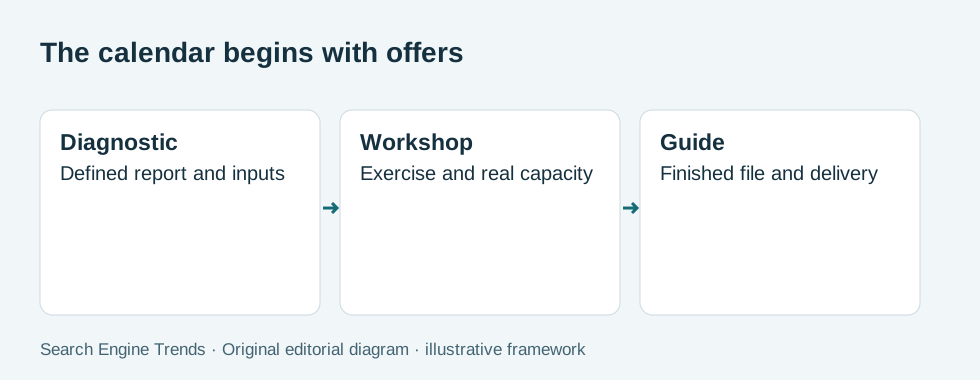
A Minneapolis commercial marketing calendar should support an offer and a buying decision before it fills a date. For a hypothetical entrepreneur with a diagnostic service, a workshop and a digital guide, each content item needs a purpose: clarify suitability, demonstrate the deliverable or help someone choose the right level of support.
Give each offer its own operating brief
Record the audience, problem, delivered result, prerequisites and available capacity. A diagnostic appointment needs a defined input and output. A workshop needs a usable exercise and actual participant capacity. A guide needs a finished file and a purchasing journey that delivers the correct version.
These are fictional offers used to explain planning. The calendar does not assume Minneapolis weather, holiday patterns or local demand. The entrepreneur should use their own observed buying cycle and capacity when replacing the assumptions with a real plan.
Keep the offer’s readiness visible. A workshop can be commercially attractive but unavailable until its materials are approved. A guide can have an appealing title while its examples remain unfinished. Scheduling promotion before resolving these dependencies can create interest that the business cannot serve.
Match content to the question before purchase
For the diagnostic, a buyer may ask what information to supply and what the final report contains. For the workshop, they may need to understand the skill level and practical exercise. For the guide, they may need a sample page, file format and an honest statement of the method’s limits.
Write one primary question for each planned item. An article explaining “what the diagnostic delivers” should show an illustrative output and point to the relevant service description. It should not spend most of its space promoting the unrelated guide. Clear content jobs make the calendar easier to review and the next link easier for readers to understand.
Choose evidence before a format. A sample worksheet can explain a process better than a generic motivational video. A short demonstration may make sense for an exercise that is difficult to describe in text. The decision should follow the buyer’s question rather than a fixed requirement to publish every available format.
Plan eight hypothetical weeks around dependencies
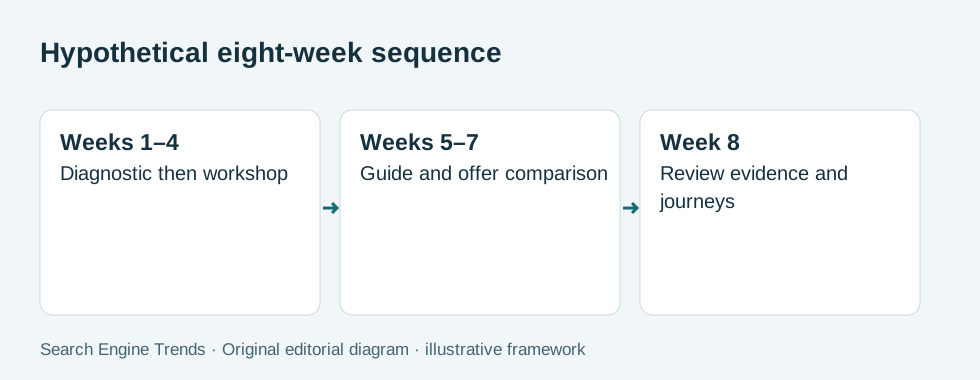
| Illustrative period | Main offer | Useful content | Readiness condition |
|---|---|---|---|
| Weeks 1–2 | Diagnostic | Output example and scope questions | Reviewed report template |
| Weeks 3–4 | Workshop | Preparation and one exercise | Confirmed materials and capacity |
| Weeks 5–6 | Digital guide | Applicable excerpt and method limits | Finished file and delivery journey |
| Week 7 | Offer comparison | Choose DIY or supported work | Current terms and availability |
| Week 8 | Review | Inspect questions and buying paths | Usable measurement records |
The schedule is invented, not an optimal cycle for every business. Its useful feature is the dependency column. If the guide file is not ready in week five, move a prepared task forward and reschedule the guide promotion. Do not replace the sample with a vague promise that the missing method will solve every reader’s problem.
Avoid selling all three offers in every item. Week seven can explicitly compare autonomy and support, because choosing among offers is its job. Earlier content should help the reader understand the particular offer and the evidence behind it.
Reserve production time and a transparent budget
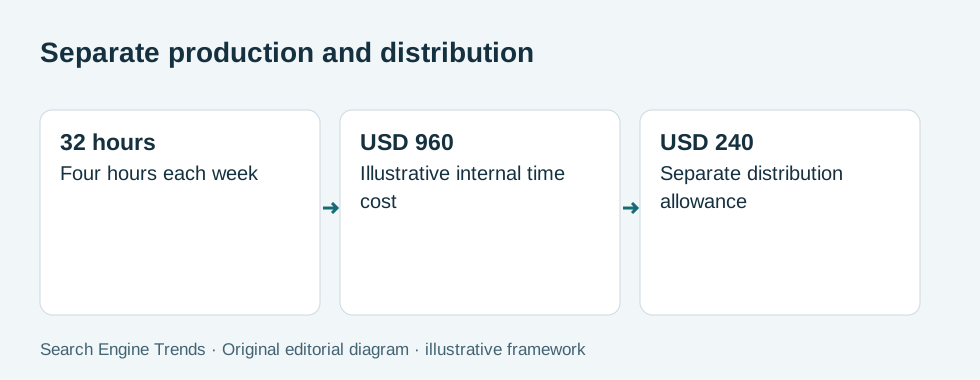
Suppose the hypothetical entrepreneur allocates four hours each week to research, drafting and review. Across eight weeks, that is thirty-two hours. At an illustrative internal cost of USD 30 per hour, the time allocation is USD 960. A separate hypothetical USD 240 distribution allowance gives a planned USD 1,200 total before other stated costs.
These figures are assumptions, not market rates or a required budget. Track production and distribution separately so a delayed article does not conceal unused or misallocated advertising money. An increased publishing target also needs a corresponding review allocation; drafting more quickly cannot replace checking the facts and destination.
Use a production status that reflects the next task: evidence pending, draft ready, review requested or destination checked. “In progress” alone does not tell the entrepreneur whether a supplier reply, a writing session or a technical fix is required.
Define measurement before sharing the links
Google explains campaign parameters in its campaign URL documentation. Name campaigns consistently for links you control and keep personal information out of them. A source label should describe the distribution channel and campaign, not the individual reader.
Measure useful progression for each offer. A diagnostic enquiry needs enough scope information to be actionable. A workshop purchase needs available capacity and a completed registration. A guide purchase needs successful delivery and retained revenue after refunds. Counting every click as a commercial success hides these differences.
Review each stage with the evidence available. A content item can reveal repeated questions even when sales volume is too small for a confident performance comparison. Use those questions to improve the offer or explanation, while avoiding a claim that one post caused all orders during its publication week.
Calendar review checklist
- Confirm the offer and available capacity.
- Identify the buyer’s question for each content item.
- Obtain the evidence before drafting.
- Schedule review and destination checks.
- Separate production cost from distribution allocation.
- Reconcile enquiries, purchases, delivery and refunds by offer.
- Keep postponed and blocked work visible in the next review.
Add a readiness check immediately before distribution. A workshop that was available when the calendar was drafted may now be full, and a guide excerpt may reference a file updated yesterday. Confirm capacity, current terms and destination availability at the point the link is shared. Keep the original plan as history, but let the current offer determine what readers are promised. This prevents a completed production schedule from becoming an outdated sales message.
FAQ
Does a commercial calendar need local holidays?
Only use dates that matter to the actual audience and can be verified. The hypothetical plan here works from offer readiness and buying questions rather than an invented local seasonal pattern.
Can the same article promote three offers?
It can help readers compare them when comparison is its purpose. For a focused buying question, prioritise the relevant offer and avoid sending the reader through unrelated sales choices.
What should happen when capacity fills?
Update the offer and destination before promoting more availability. Use an appropriate later date, waiting arrangement or alternative only where the business actually supports it.

SEO Writing and Conversion
Explore this related DIY Marketing Guide guide to work further on the method. DIY is part of our business group; contents, language and price are shown on its store.
See the English guide